Loading...
Contents
Back to BlogInterview Preparation
What Is the Best Answer for a Reason for a Job Change in an Interview
With Sample Answers
Apr 25, 202620 min readUpdated Oct 6, 2026
One of the most common interview questions you will face is: “Why do you want to change your job?” It sounds simple. But many candidates feel uncomfortable answering it. You may worry that your reason will sound negative. You may feel confused about how much to explain. Or you may overthink and give a long, unclear answer. The truth is, your answer to this question can either build trust or create doubt. In this guide, you will learn: What is the best answer for reason for job change How to explain job change professionally Sample answers for freshers, experienced candidates, and career switchers Mistakes you should avoid Let’s break it down in a simple and practical way
FREE TO USE
25K+ INTERVIEWS4.8★ RATING68% IMPROVEMENT
Crack Your Dream Job
Real Interviews. Real Pressure. Practice until it feels easy.
- Seamless Interview Experience
- Resume & JD Questions
- Instant Personalized Feedback
Why Do Interviewers Ask About Reasons for Job Change?
Before you prepare your answer, you need to understand why this question is asked. When an interviewer asks, “Why do you want to change job?” they are trying to understand: Are you leaving for the right reasons? Are you stable and committed? Do you have a growth mindset? Will you leave this company quickly too? Do your career goals match this role? They are not trying to trap you. They just want clarity. If your answer sounds emotional, negative, or unclear, it creates risk in their mind. But if your answer sounds thoughtful and growth-focused, it builds confidence.
What Is the Best Answer for a Reason for a Job Change?
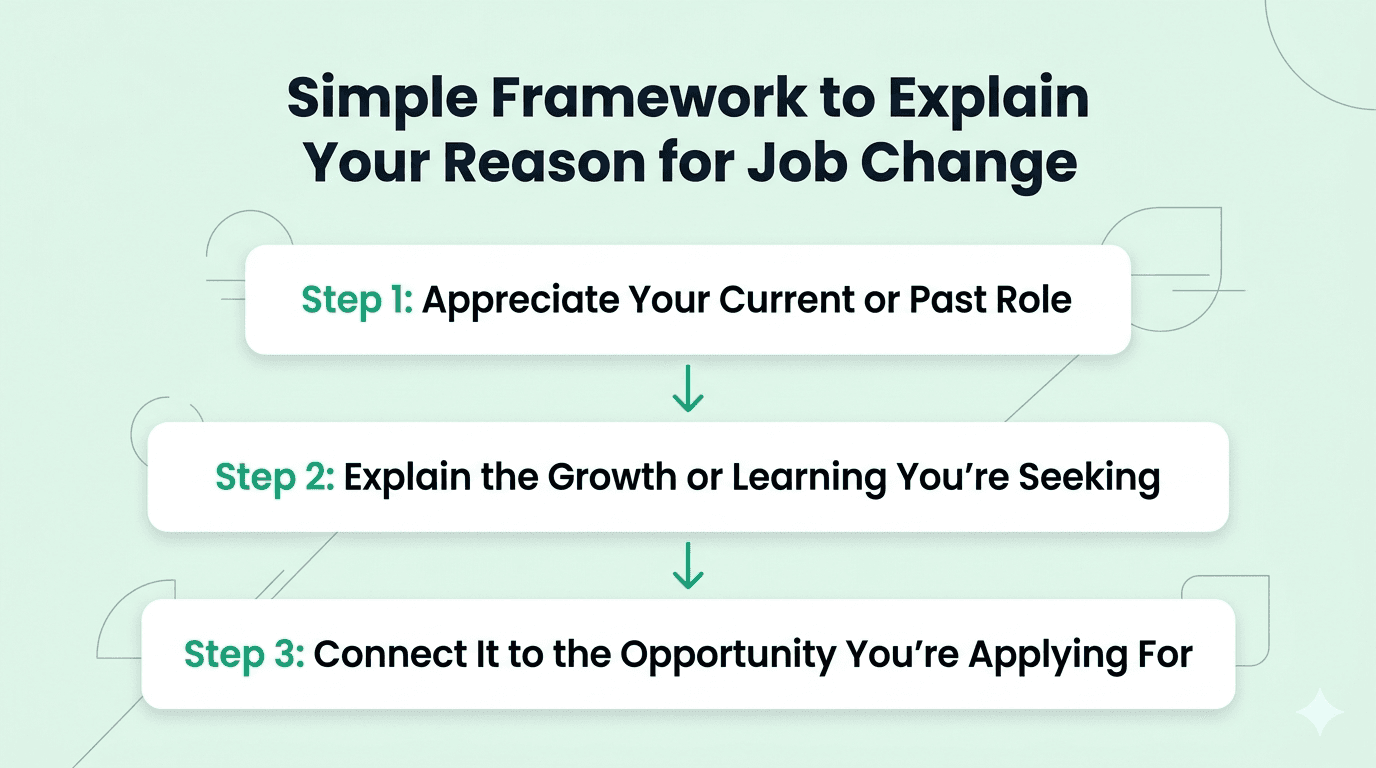
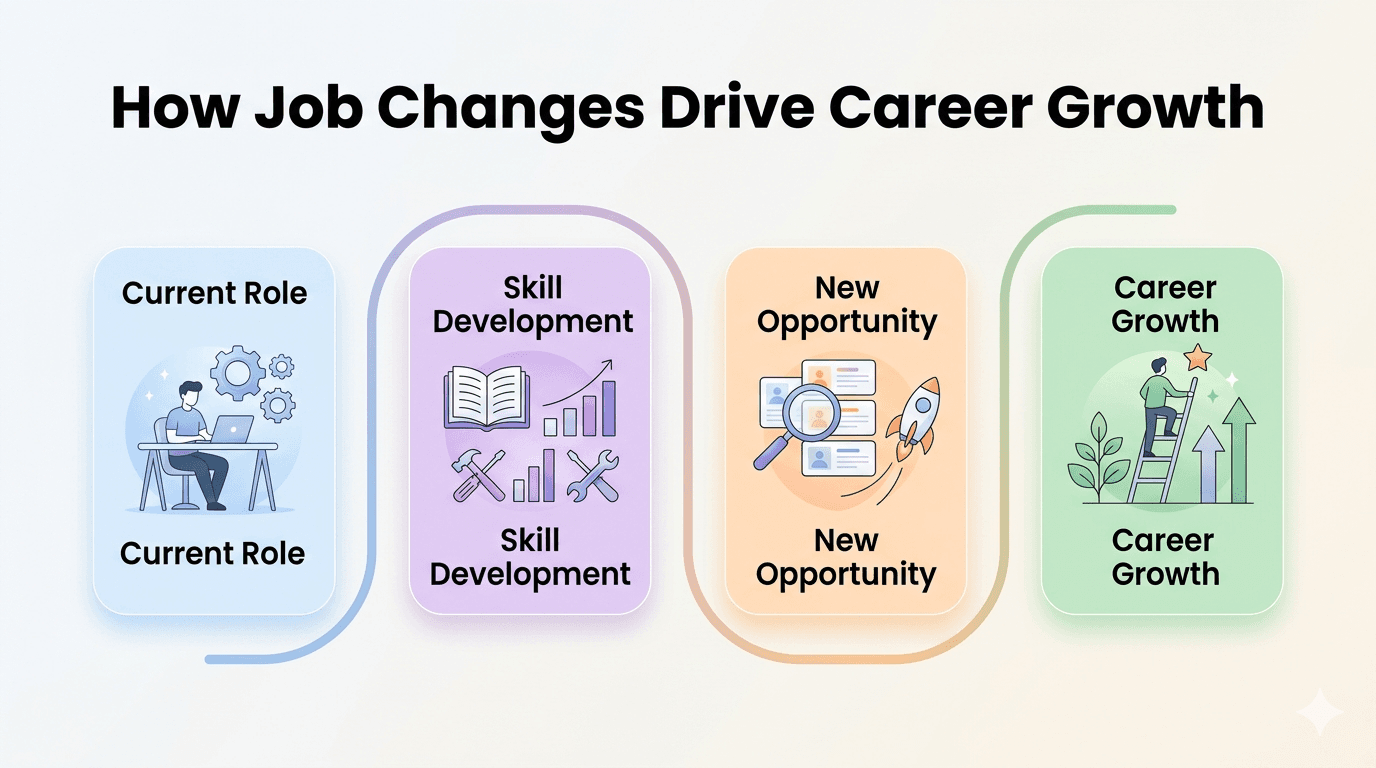
The best answer for reason for a job change is: Positive, professional, growth-oriented, and future-focused. Your answer should never focus on complaints. Instead, it should focus on your learning and your next step. You can follow this simple structure: Past → Learning → Growth Need → Future Alignment Let’s understand this clearly. 1.Talk about your experience positively 2. Mention what you gained. 3. Explain what you are looking for next 4. Connect it with the new role Make it clear why this job makes sense for you. When you follow this structure, your answer feels mature and professional.
Sample Answers for Different Situations
Best Answer for Freshers If you are a fresher and changing from internship or first job, you can say: “I recently completed my internship where I learned practical skills and understood how the industry works. Now I am looking for a full-time role where I can take more responsibility and grow professionally.” This answer shows learning and growth. It does not sound confused or unstable. Best Answer for Experienced Candidates If you have 3–8 years of experience, your answer should show maturity. Example: “I have spent the last four years working in my current organization, where I gained strong experience in managing projects and working with cross-functional teams. I feel I have learned a lot, and now I am looking for a new challenge where I can contribute at a higher level and take on more responsibility.” Notice something important. You are not saying anything negative. You are focusing on growth. Best Answer for Career Switchers If you are changing your career path, you must explain it clearly. Example: “Over time, I realized that my interests and strengths align more with the technology field. I have completed relevant training and worked on practical projects to build my skills. Now I am looking to transition into a role where I can apply this new knowledge and grow in this direction.” This shows planning and preparation. Avoid saying, “I got bored in my previous field.” That sounds unstable.
How to Explain Job Change in Difficult Situations
Sometimes your reason for job change may involve a difficult situation. You still need to frame it professionally. Let’s see how. If Salary Is the Reason It is okay to look for better pay. But do not make it the main reason. Instead of saying: “I want a higher salary.” Say: “I am looking for a role that offers growth both in terms of responsibility and compensation, aligned with my skills and experience.” It sounds balanced and professional. If There Is No Growth Instead of saying: “There was no growth and my company was not good.” Say: “I have reached a learning plateau in my current role, and I am looking for new challenges that help me expand my skills and contribute more effectively.” This shows maturity. If Work Environment Was Not Good Never criticize your boss or company. Instead say: “I am looking for a more structured and growth-oriented environment where I can contribute better and develop professionally.” Keep it neutral, not negative. If You Were Laid Off Be honest and simple. Give a simple explanation. You can simply say: “Due to organizational restructuring, my position was impacted. During this time, I have been upskilling and actively looking for opportunities that match my experience.” Do not over-explain. Just stay calm and confident.
FREE TO USE
8k+ SESSIONS92% FLUENCY4.9★ RATING
Speak With Confidence
Real Conversations. Real Scenarios. Speak until it feels natural.
- Real-Time Speaking Practice
- Guided Conversation Flows
- Instant AI Feedback
Common Mistakes to Avoid
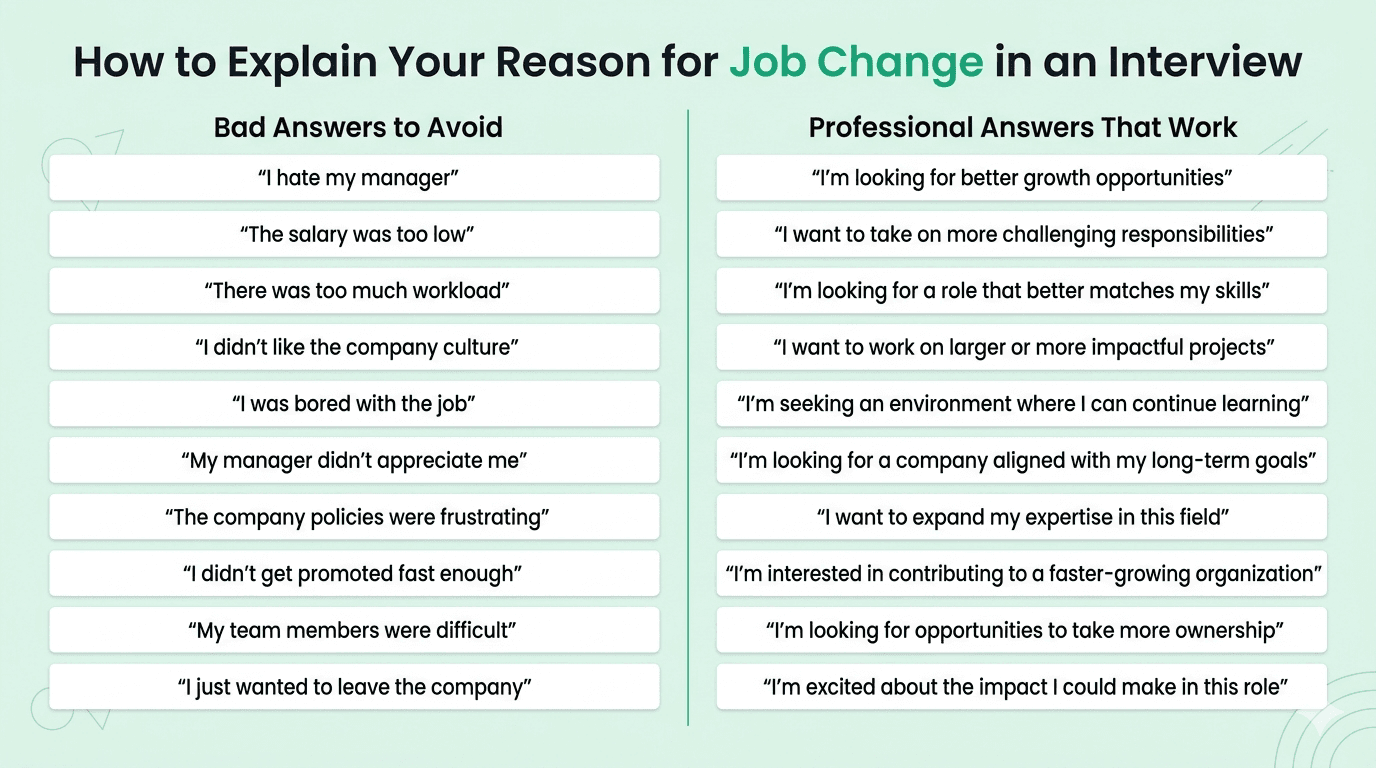
Many candidates lose opportunities because of small mistakes. Here are some common ones: Speaking negatively about your manager Complaining about company politics Saying you were bored Giving a very long emotional explanation Saying you change jobs frequently without clear reason Your answer should build trust. If your answer makes the interviewer worry about your stability or attitude, it reduces your chances.
Why This Question Is More Important at Senior Level
At senior levels, expectations are higher. Companies invest more in experienced professionals. They want stability, leadership, and long-term commitment. If your job changes look frequent and your explanation is unclear, it may raise concerns. That is why your answer must show: Clear thinking Long-term goals Professional maturity Alignment with the new role Even experienced professionals fail interviews because they do not prepare this answer properly. Company expectations matter while answering. Read here about
How You Can Practice Your Answer
Many candidates think they have a good answer in their mind. But when they speak, it sounds unclear or scattered. You should: Write your answer in short format Practice speaking it in under 60–90 seconds Keep your tone calm and confident Avoid memorizing word by word When you practice aloud, you will notice where you sound negative or unclear. Refine it until it sounds natural. With Mocklingo you can practice such behavioral questions. It helps you prepare for Behavioral and follow up questions in a realistic manner. Read More: How Ai mock interview feedback help you improve your interview performance.
Conclusion
The best answer for a job change is one that is positive, clear, and focused on growth. When you explain your job change in a professional way, you show maturity and direction. Changing jobs is normal, but how you present your reason makes all the difference. Keep your answer simple, future-focused, and aligned with the new opportunity, and you will leave a confident and trustworthy impression.