Loading...
Contents
Why Python Developers Don't Get Interviews Despite Having GitHub Projects
Jun 27, 202633 min readUpdated Oct 3, 2026
You spent months building Python projects. Your GitHub profile has clean repositories, regular commits, and projects you are genuinely proud of. Maybe you've built a FastAPI application, a web scraper, an automation tool, or a REST API connected to a database. Yet your inbox is empty. No interview invitations. No recruiter messages. No technical assessments. Just silence. If you're wondering why your GitHub projects aren't helping you get Python developer interviews, you're not alone. Thousands of aspiring developers face the same problem every year. The surprising truth is that most developers are focusing on the wrong thing. The issue is usually not the quality of the code. The real issue is visibility. Recruiters often evaluate resumes, LinkedIn profiles, and job applications long before they ever look at a GitHub repository. If those earlier stages fail, your projects never get seen. This guide explains why GitHub projects alone rarely generate interview calls, what recruiters actually look for, and how to turn your projects into stronger hiring signals.
FREE TO USE
25K+ INTERVIEWS4.8★ RATING68% IMPROVEMENT
Crack Your Dream Job
Real Interviews. Real Pressure. Practice until it feels easy.
- Seamless Interview Experience
- Resume & JD Questions
- Instant Personalized Feedback
Why Don't GitHub Projects Get Python Developer Interviews?
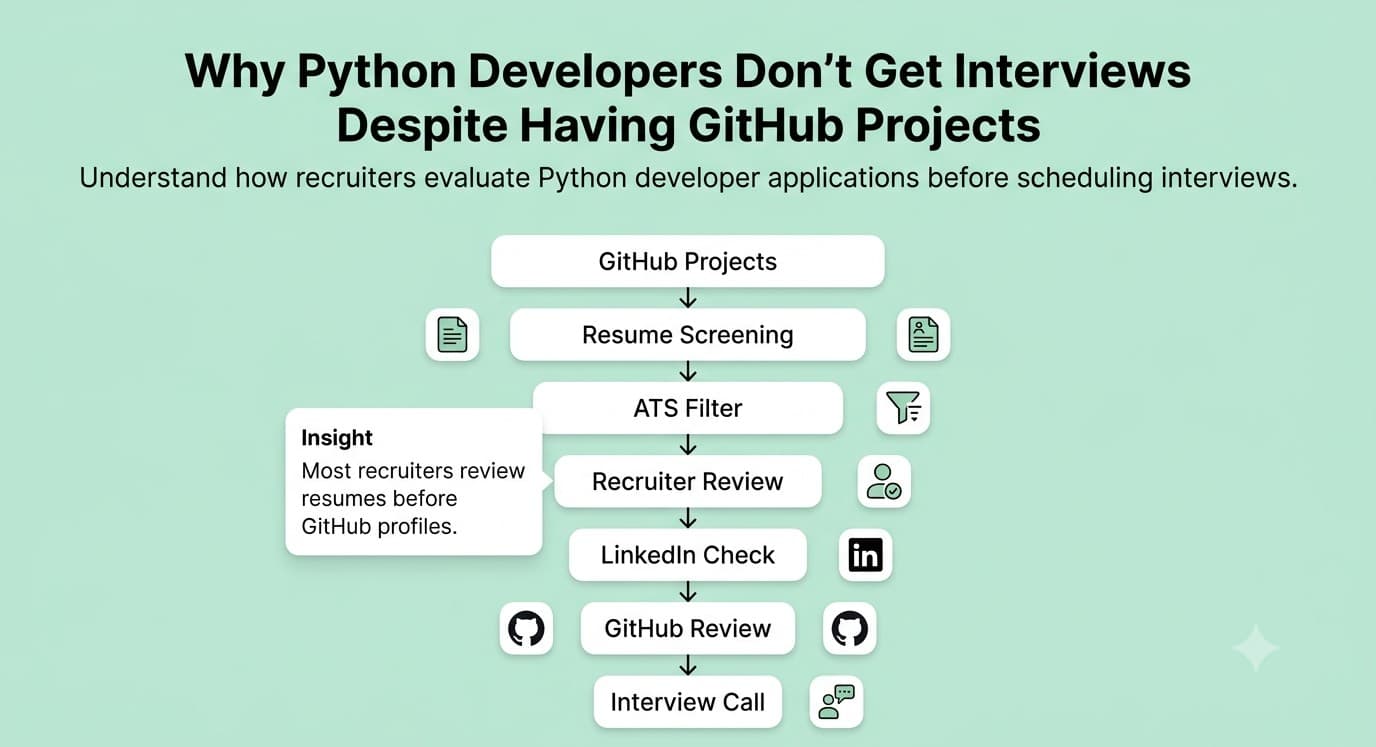
GitHub projects alone rarely lead directly to interview calls because recruiters evaluate resumes before portfolios. If your resume fails Applicant Tracking System (ATS) screening, lacks relevant keywords, or does not clearly communicate your skills, recruiters may never visit your GitHub profile. Projects support your application, but they do not replace a strong resume, optimized LinkedIn profile, or targeted job search strategy. This is the biggest misconception many self-taught developers have. They assume: Good code → Recruiter sees project → Interview invitation In reality, the hiring process usually looks like this: Resume Submitted GitHub often appears near the end of the screening process, not the beginning.
↓
ATS Screening
↓
Recruiter Review
↓
LinkedIn Review
↓
GitHub Review
↓
Technical Interview
Why Recruiters Don't Check GitHub First
Most recruiters are not software engineers. Their job is to identify candidates who match hiring requirements as quickly as possible. When a company receives hundreds of applications for a Python developer position, recruiters must make decisions rapidly. Before clicking your GitHub profile, they typically look for: Relevant job titles Python-related experience Matching technical keywords Industry alignment Education or certifications Location and eligibility requirements If those signals are missing, the GitHub link may never be opened. This doesn't mean GitHub is unimportant. It means GitHub is usually validation rather than discovery. Your projects serve as proof of your skills after a recruiter becomes interested in you.
The Real Reason Your Python Resume Isn't Generating Interviews
Many developers spend hundreds of hours improving projects while spending only twenty minutes improving their resume. That is often the wrong priority. The resume is what determines whether anyone sees the projects. Common resume mistakes include: Bad example: Python, FastAPI, PostgreSQL, Docker This tells recruiters what tools you know. It does not tell them what you accomplished. Better example: Built a FastAPI backend connected to PostgreSQL with Docker-based deployment and JWT authentication. Now the recruiter understands how you used those technologies. Bad example: Built a task management API using FastAPI. Better example: Built a multi-user task management API using FastAPI and PostgreSQL with JWT authentication, role-based access control, and automated email reminders. Specificity creates credibility. For many entry-level developers, projects are the strongest evidence of technical ability. If your projects are your biggest strength, they should appear near the top of the resume. Recruiters want evidence. Examples: Live deployment Active users Performance improvements Real-world usage Technical complexity Even small achievements help.Listing Technologies Without Context
Writing Weak Project Descriptions
Hiding Projects Below Education
Not Showing Real Outcomes
GitHub Is Evidence, Not a Job Application
This distinction is important. GitHub is a code hosting platform it is not a hiring platform. Your repositories are supporting evidence for claims made elsewhere. Think of it this way: Your resume says: "I built a scalable API." Your GitHub proves it. Your LinkedIn says: "I specialize in Python backend development." Your GitHub supports that claim. Without those initial signals, recruiters may never reach the evidence.
FREE TO USE
8k+ SESSIONS92% FLUENCY4.9★ RATING
Speak With Confidence
Real Conversations. Real Scenarios. Speak until it feels natural.
- Real-Time Speaking Practice
- Guided Conversation Flows
- Instant AI Feedback
What Recruiters Actually Look For in a GitHub Project
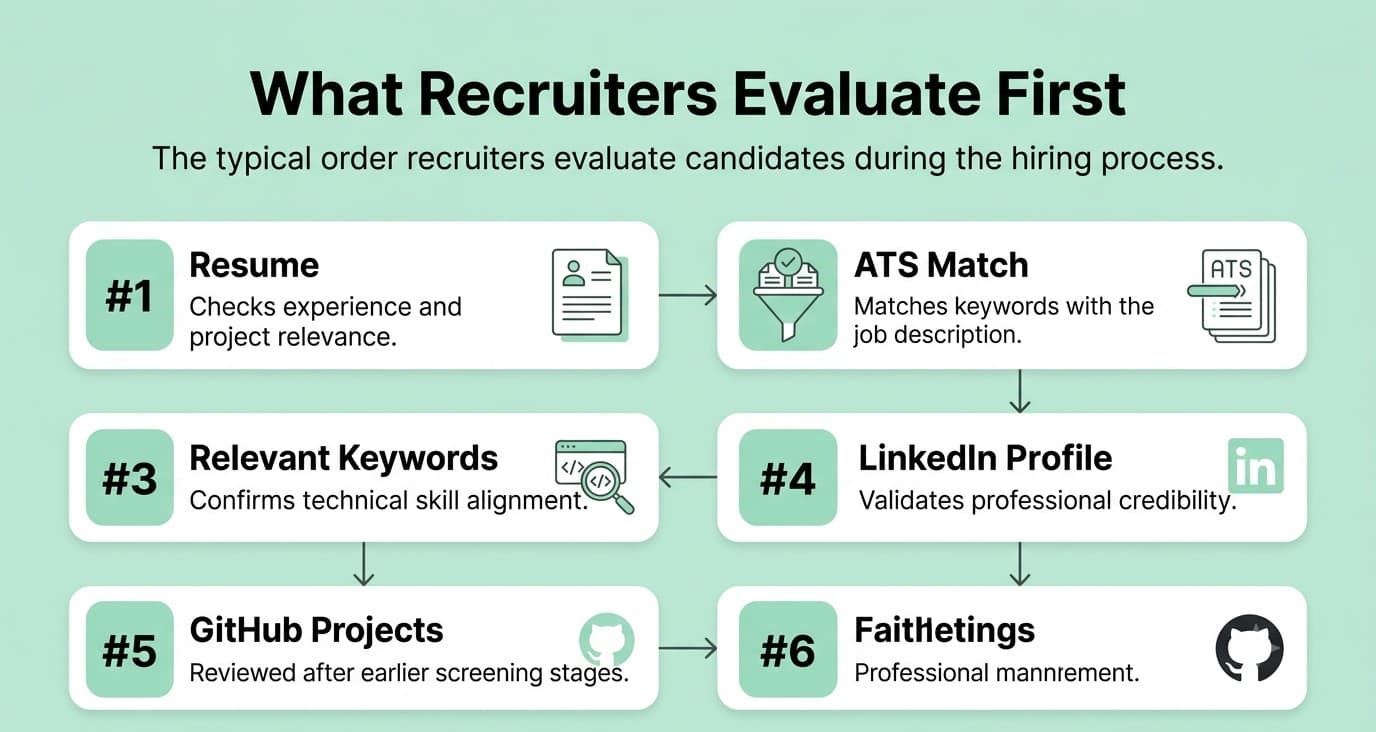
Many developers assume recruiters care primarily about code quality. While code quality matters, it is rarely the first thing evaluated. Most recruiters and hiring managers initially look for: Does this project solve a genuine problem? Projects connected to real-world use cases are more memorable than tutorial exercises. Can people actually use the application? Live projects often stand out more than local-only projects. Features such as: JWT authentication User authorization Password management Security best practices show stronger engineering skills. Projects involving structured data, relationships, and scalability typically create stronger signals than simple CRUD applications. Third-party integrations demonstrate practical development experience. Examples: Payment gateways Messaging services Analytics platforms Cloud storage providers A strong README immediately increases credibility. Recruiters often want to understand why you made specific engineering choices.1. Real Problem Solving
2. Deployment
3. Authentication and Security
4. Database Design
5. API Integrations
6. Documentation
7. Technical Decision-Making
What Your GitHub Profile Actually Needs
Many developers focus entirely on code and ignore presentation. That is a mistake. Every major project should include: One sentence explaining: The problem The solution The target user Focus on functionality rather than technology. Example: Instead of: FastAPI PostgreSQL Docker Use: User authentication Automated notifications Multi-user collaboration Dashboard reporting Explain why technologies were chosen. Visuals help recruiters understand projects quickly. A live application creates trust. Explain: Challenges encountered Trade-offs considered Lessons learned This often separates real projects from tutorial projects.Clear Project Summary
Key Features
Technical Stack
Screenshots or Demo GIFs
Deployment Link
Technical Decisions Section
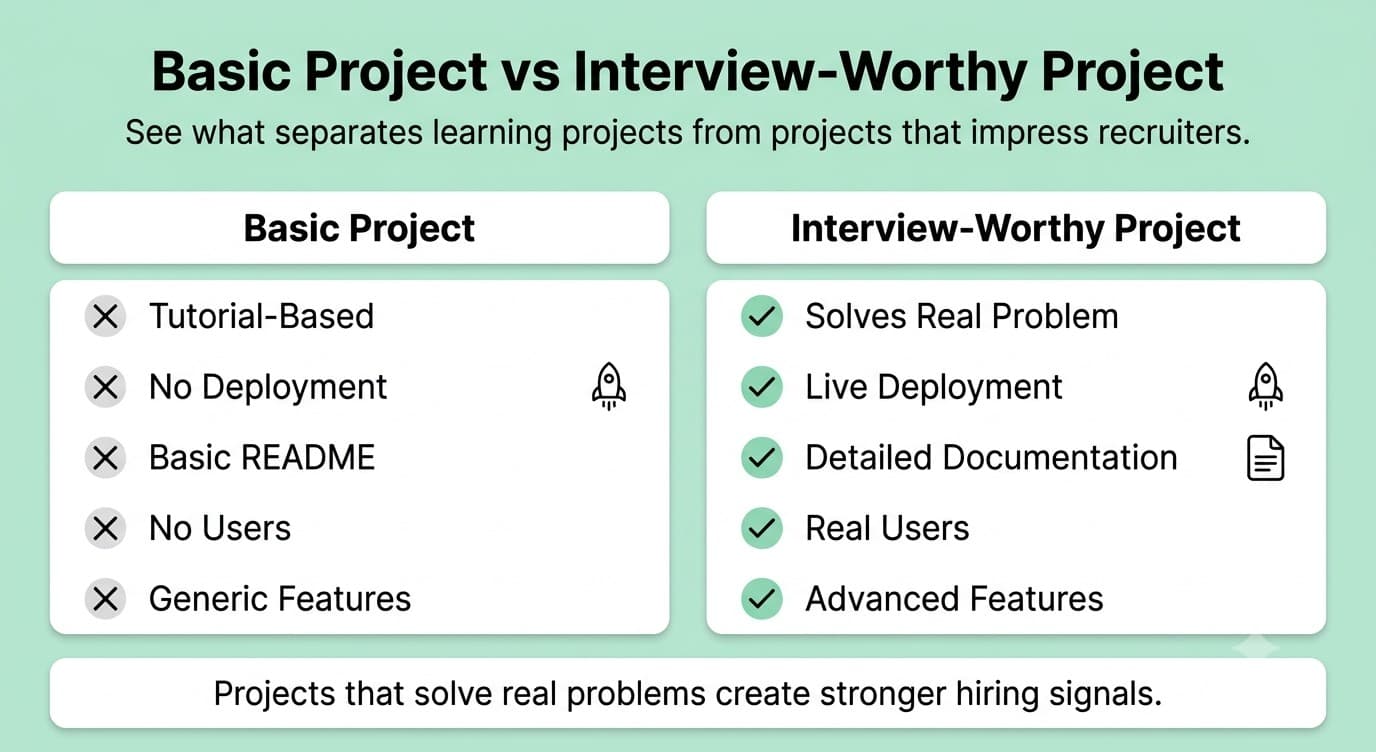
GitHub Project vs Interview-Worthy Project
The Skill Signaling Problem
Many developers build projects that demonstrate learning. Few build projects that demonstrate business value. Examples of common beginner projects: Weather apps To-do lists Calculator apps Basic CRUD systems These projects are useful for learning. However, recruiters see them constantly. Projects become more impressive when they: Solve a real problem Support actual users Integrate external services Process real data Demonstrate domain expertise For example: A Python developer with logistics experience who builds an inventory forecasting system stands out more than someone who builds another generic to-do application. Domain knowledge creates differentiation.
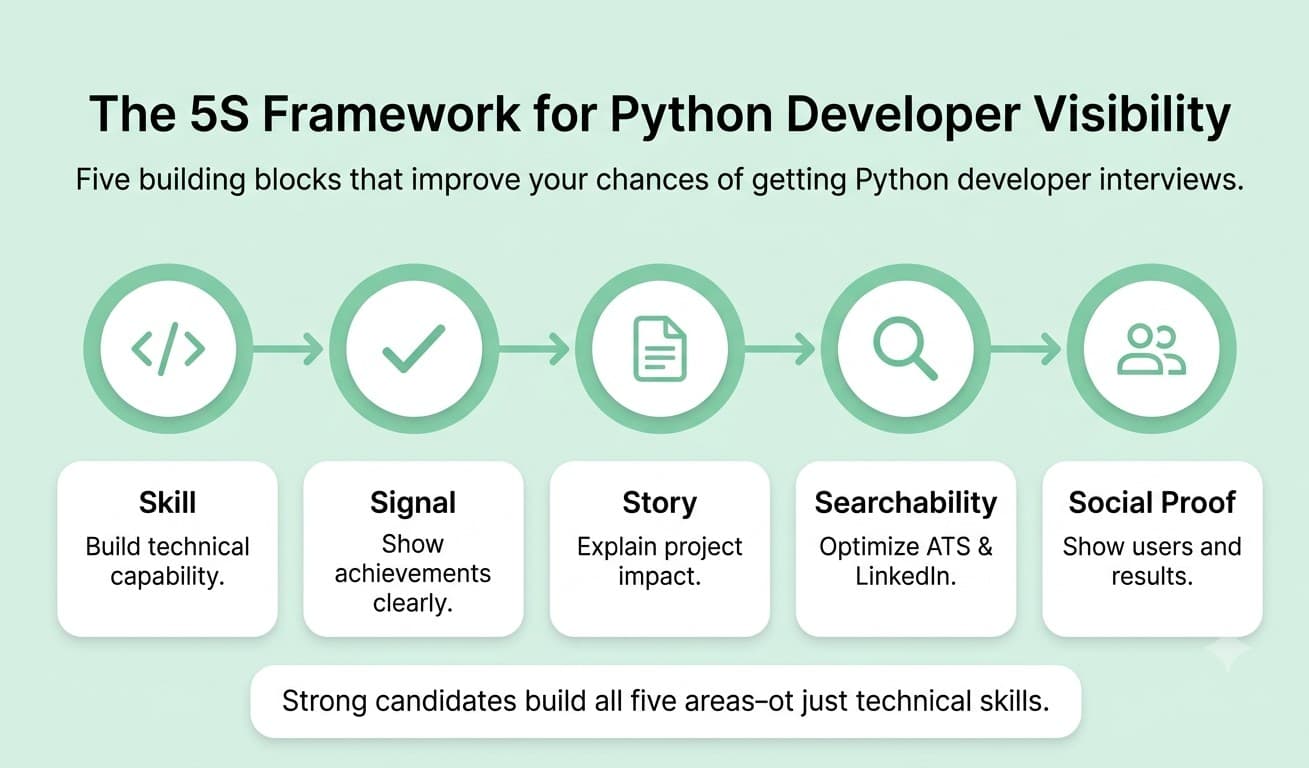
The 5S Framework for Getting Python Interviews
Build technical capability through projects. Communicate achievements effectively on your resume. Explain why your work matters. Optimize LinkedIn and ATS keywords. Show evidence of usage, users, testimonials, or adoption. Strong candidates perform well across all five areas. Weak candidates often focus only on Skill.Skill
Signal
Story
Searchability
Social Proof
How to Get More Python Developer Interviews in 2026
Use language that matches job descriptions. If employers mention: REST APIs FastAPI PostgreSQL Docker those exact terms should appear where relevant. A strong LinkedIn profile should include: Clear headline Technical summary Featured projects Skills section Open to Work status Strong READMEs can dramatically improve project presentation. Target: Startups Agencies Healthtech companies Fintech companies Logistics companies EdTech companies Many receive fewer applications than large technology firms. One outstanding project often creates more opportunities than ten average projects. Focus on: Real users Real deployment Real value1. Optimize Your Resume for ATS
2. Improve LinkedIn Visibility
3. Improve GitHub Documentation
4. Apply More Strategically
5. Build One Exceptional Project
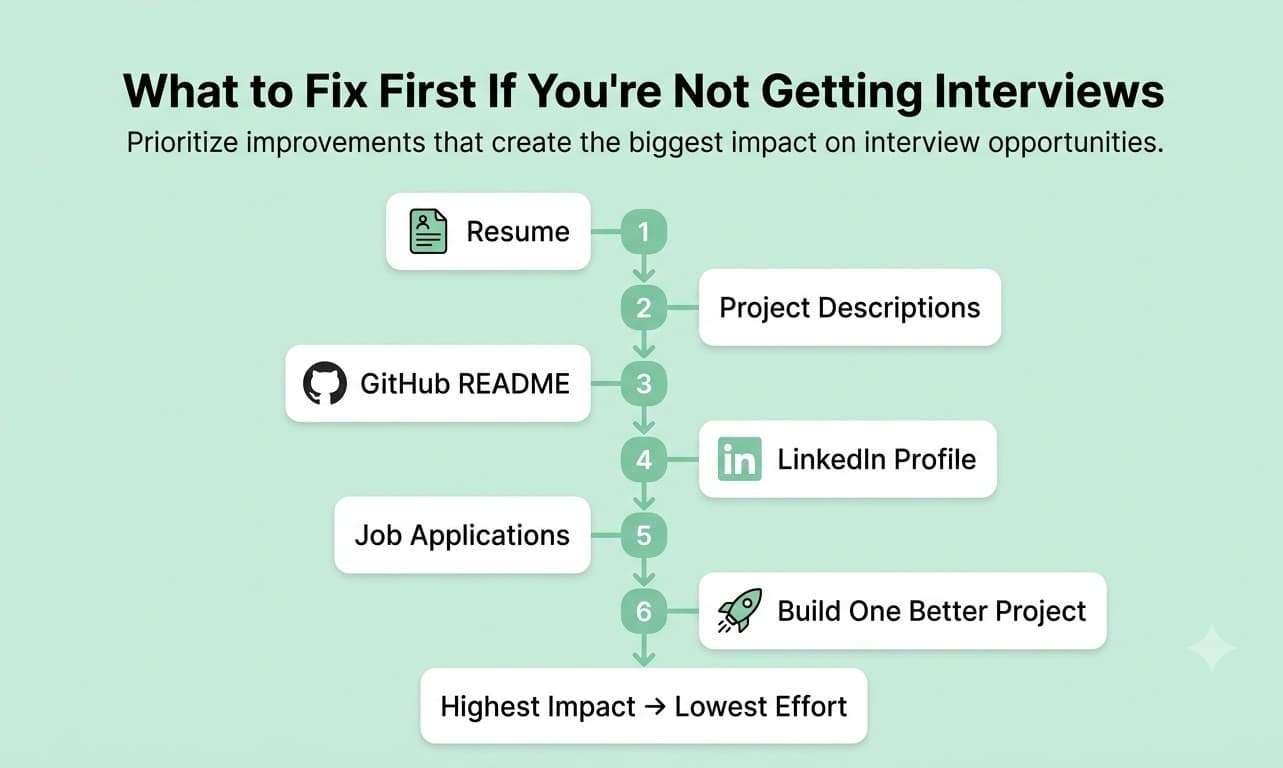
What to Fix First: Priority Order
If you are not receiving interview calls, follow this order: Improve your resume. Improve project descriptions. Improve GitHub READMEs. Optimize LinkedIn. Expand application targets. Build one stronger project. This sequence typically produces faster results than simply creating more repositories.
Quick Summary
Most Python developers do not struggle because their projects are weak. They struggle because recruiters never see those projects. Hiring decisions typically begin with ATS screening, resume evaluation, and LinkedIn visibility. GitHub repositories act as supporting evidence rather than primary hiring signals. To improve interview opportunities, focus on presenting your work effectively, improving project documentation, optimizing your resume, and building projects that solve real-world problems. The goal is not simply to write better code. The goal is to make sure the right people actually see it.
FAQs
More Blogs
Sep 30, 2026
React Developer Interview Preparation Guide: A Complete Roadmap for 2026
31 min read
