Loading...
AI-Powered Mock Interview Practice
Crack Business Analyst Interview with AI
Practice business analyst interviews with AI-powered mock interviews covering requirements gathering, stakeholder management, SQL, Agile, case studies, business analysis frameworks, and behavioral questions. Receive instant feedback to improve your interview performance.
Adaptive Follow-up Questions
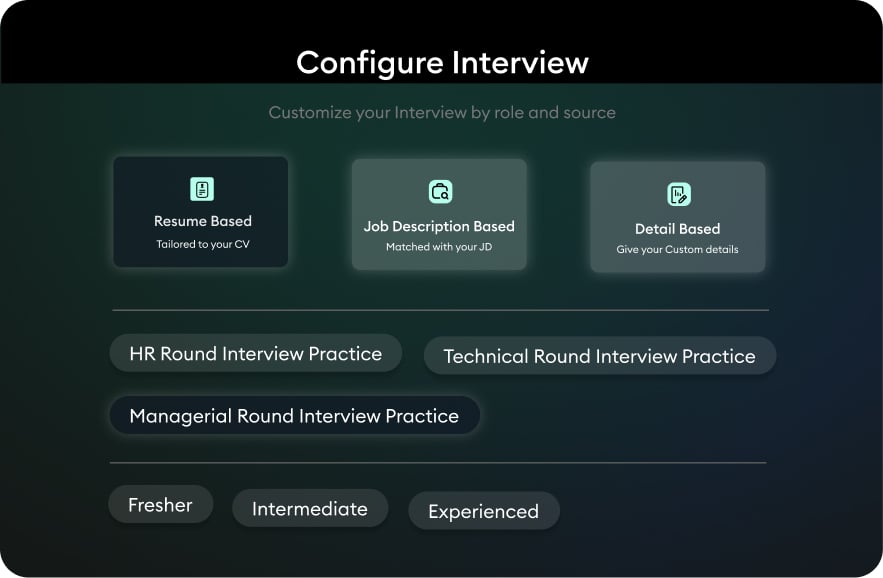
Role-Specific Interview Questions
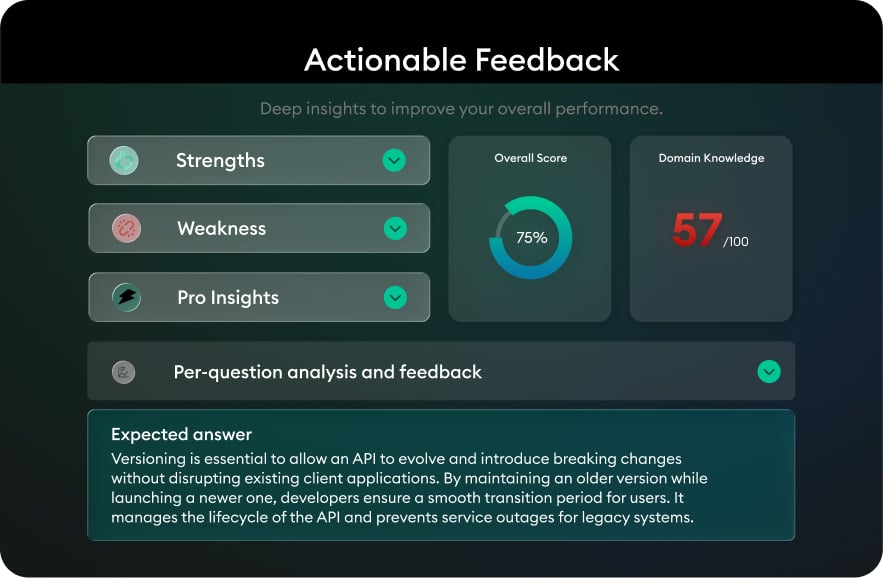
Personalized AI Feedback
Question-by-Question AI Insights


4.8/5
• Loved by 10K+ Candidates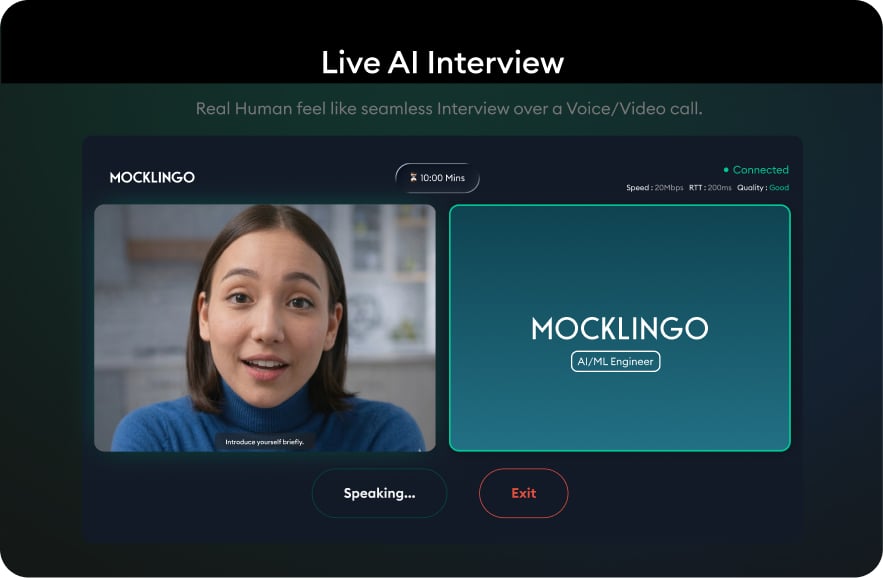
10,000+
Engineers Practicing
50,000+
Mock Interviews Done
85%
Interview Success Rate
4.8/5
Average Rating
Browse by Topics
1 / 4
Browse by Interview Type
1 / 2
Trusted by Students and Professionals
See how users built confidence, improved their interview skills, and cracked interviews with Mocklingo's AI-powered feedback.
I practiced for a week before my interviews. The follow-up questions felt surprisingly real, and I finally cracked my first Software Engineer role.
Aarav Sharma
Software Engineer @ Infosys
Emily Carter
5/5
The AI challenged me just like a real interviewer. After practicing here, I received two job offers within the same month.
"
The personalized feedback showed exactly where I was losing marks. I improved my answers and got shortlisted for three interviews.
Priya Nair
Product Manager
HISTORY-BACKED PERSONALIZED INTERVIEWS
The history-backed interviews remembered my weak areas and kept testing them. I felt much more confident in my final interview.
Rahul Verma
Data Analyst
Daniel Wilson
Backend Engineer
PERSONALIZED PER-QUESTION FEEDBACK WITH EXPECTED ANSWERS
Every session felt different. The AI asked realistic follow-up questions that helped me prepare for unexpected scenarios.
I had never faced a technical interview before. After practicing on Mocklingo, I received my first campus placement offer.
Neha Gupta
Graduate Trainee
Sakshi Jain
UI/UX Designer
PERSONALIZED PER-QUESTION FEEDBACK WITH EXPECTED ANSWERS
I loved that the interviews adapted based on my previous sessions. It actually felt like having a personal interview coach.
Rohan Kulkarni
Full Stack Developer
I struggled with communication more than coding. Practicing aloud every day made a huge difference, and I landed my dream role.
HISTORY-BACKED PERSONALIZED INTERVIEWS
The AI feedback was specific and actionable. My confidence improved with every mock interview.
Sophia Martinez
Business Analyst
Aarav Sharma
Software Engineer @ Infosys
I practiced for a week before my interviews. The follow-up questions felt surprisingly real, and I finally cracked my first Software Engineer role.
Emily Carter
Frontend Developer
The AI challenged me just like a real interviewer. After practicing here, I received two job offers within the same month.
Priya Nair
Product Manager
The personalized feedback showed exactly where I was losing marks. I improved my answers and got shortlisted for three interviews.
Rahul Verma
Data Analyst
The history-backed interviews remembered my weak areas and kept testing them. I felt much more confident in my final interview.
Daniel Wilson
Backend Engineer
Every session felt different. The AI asked realistic follow-up questions that helped me prepare for unexpected scenarios.
Neha Gupta
Graduate Trainee
I had never faced a technical interview before. After practicing on Mocklingo, I received my first campus placement offer.
Michael Brown
Software Developer
The detailed feedback after every question helped me improve faster than watching interview videos online.
Sakshi Jain
UI/UX Designer
I loved that the interviews adapted based on my previous sessions. It actually felt like having a personal interview coach.
Trusted by 10,000+ Job Seekers
Beat the ATS. Get More Interview Calls.
Upload your resume to receive an ATS score, keyword analysis, formatting checks and AI-powered recommendations that help you get shortlisted faster.
🔒 Your data is secure & confidential
92/100
ATS Score
PASSED ATS
Optimized for most
applicant tracking systems.
Alex Johnson
Software Engineer
alex@email.com
+91 9876543210
Bangalore
SUMMARY
Full Stack developer with experience building scalable React, Node.js and cloud-based applications.
EXPERIENCE
Software Engineer • Tech Corp
EDUCATION
B.Tech Computer Science
Frequently Asked Questions
Business case study questions evaluate how you approach real business challenges. Structure your response by understanding the problem, identifying stakeholders, analyzing available data, suggesting practical solutions, and explaining the expected business impact. Clear reasoning is usually more important than finding a single correct answer.
Interviewers often ask about documents such as Business Requirement Documents (BRD), Functional Requirement Documents (FRD), Software Requirement Specifications (SRS), user stories, and acceptance criteria. Understanding when and why each document is used demonstrates your readiness for business analysis projects.
Business analysts regularly work with clients, developers, testers, and business teams. Interviewers want to understand how you gather requirements, resolve conflicting priorities, communicate effectively, and keep stakeholders aligned throughout a project's lifecycle.
Yes. Many companies assess your ability to retrieve, analyze, and interpret business data using SQL and Excel. You may be asked to write simple SQL queries, analyze datasets, create reports, or explain how data supports business decisions.
Agile is widely adopted across software and digital transformation projects. Interviewers often ask about Scrum ceremonies, backlog refinement, sprint planning, user stories, and collaboration with product owners and development teams to evaluate your Agile experience.
Strong answers combine business understanding with structured thinking. Rather than giving short definitions, explain your reasoning, describe real project experiences, discuss trade-offs, and show how your recommendations create measurable business value.
Business analyst interviews focus on understanding business needs, documenting requirements, analyzing processes, and recommending solutions. Project manager interviews emphasize planning, resource management, scheduling, budgeting, risk management, and delivering projects successfully. While both roles collaborate closely, their interview focus is different.
Yes. AI mock interviews simulate stakeholder discussions and interview conversations, helping you practice explaining business concepts, presenting structured solutions, and answering scenario-based questions. Personalized feedback improves both your communication style and analytical responses.
Interviewers may present multiple business requests and ask how you would prioritize them. They expect you to balance business value, stakeholder expectations, project risks, technical feasibility, and delivery timelines using structured prioritization techniques.
Depending on the role, interviewers may discuss SWOT Analysis, PESTLE Analysis, MoSCoW Prioritization, BPMN, RACI Matrix, and Gap Analysis. Understanding when each framework should be applied demonstrates practical business analysis knowledge.
Yes. Business analysts frequently present findings to stakeholders. Interviewers may assess how clearly you explain complex information, justify recommendations, answer follow-up questions, and communicate with both technical and non-technical audiences.
Instead of jumping directly to solutions, explain how you identify business problems, gather evidence, evaluate alternatives, assess risks, and recommend data-driven decisions. A structured problem-solving approach often leaves a stronger impression than a quick answer.