Loading...
AI-Powered Mock Interview Practice
Ace Embedded Systems Interview with AI
Practice Embedded Systems interview questions covering Embedded C, RTOS, microcontrollers, communication protocols, and firmware development. Get instant AI feedback to improve your interview performance.
Real-Time AI Voice Interviews
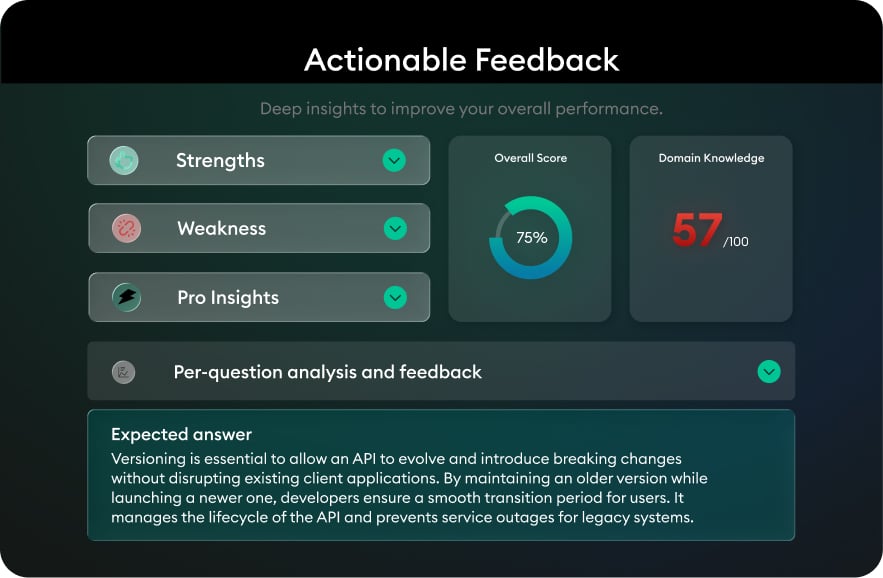
Question-by-Question AI Insights
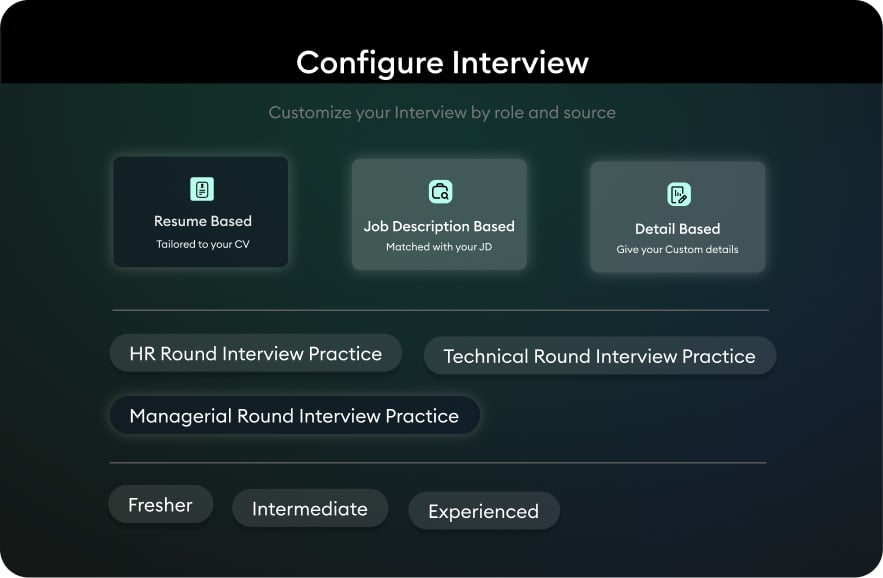
Adaptive Follow-up Questions
Personalized AI Feedback

4.8/5
• Loved by 10K+ Candidates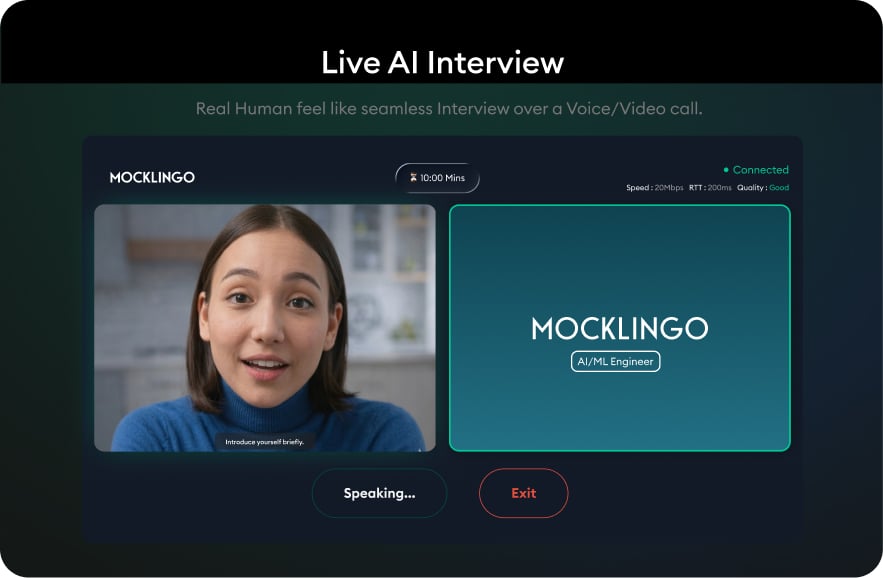
10,000+
Engineers Practicing
50,000+
Mock Interviews Done
85%
Interview Success Rate
4.8/5
Average Rating
Browse by Topic
1 / 4
Browse by Interview Type
1 / 2
Trusted by Students and Professionals
See how users built confidence, improved their interview skills, and cracked interviews with Mocklingo's AI-powered feedback.
I practiced for a week before my interviews. The follow-up questions felt surprisingly real, and I finally cracked my first Software Engineer role.
Aarav Sharma
Software Engineer @ Infosys
Emily Carter
5/5
The AI challenged me just like a real interviewer. After practicing here, I received two job offers within the same month.
"
The personalized feedback showed exactly where I was losing marks. I improved my answers and got shortlisted for three interviews.
Priya Nair
Product Manager
HISTORY-BACKED PERSONALIZED INTERVIEWS
The history-backed interviews remembered my weak areas and kept testing them. I felt much more confident in my final interview.
Rahul Verma
Data Analyst
Daniel Wilson
Backend Engineer
PERSONALIZED PER-QUESTION FEEDBACK WITH EXPECTED ANSWERS
Every session felt different. The AI asked realistic follow-up questions that helped me prepare for unexpected scenarios.
I had never faced a technical interview before. After practicing on Mocklingo, I received my first campus placement offer.
Neha Gupta
Graduate Trainee
Sakshi Jain
UI/UX Designer
PERSONALIZED PER-QUESTION FEEDBACK WITH EXPECTED ANSWERS
I loved that the interviews adapted based on my previous sessions. It actually felt like having a personal interview coach.
Rohan Kulkarni
Full Stack Developer
I struggled with communication more than coding. Practicing aloud every day made a huge difference, and I landed my dream role.
HISTORY-BACKED PERSONALIZED INTERVIEWS
The AI feedback was specific and actionable. My confidence improved with every mock interview.
Sophia Martinez
Business Analyst
Aarav Sharma
Software Engineer @ Infosys
I practiced for a week before my interviews. The follow-up questions felt surprisingly real, and I finally cracked my first Software Engineer role.
Emily Carter
Frontend Developer
The AI challenged me just like a real interviewer. After practicing here, I received two job offers within the same month.
Priya Nair
Product Manager
The personalized feedback showed exactly where I was losing marks. I improved my answers and got shortlisted for three interviews.
Rahul Verma
Data Analyst
The history-backed interviews remembered my weak areas and kept testing them. I felt much more confident in my final interview.
Daniel Wilson
Backend Engineer
Every session felt different. The AI asked realistic follow-up questions that helped me prepare for unexpected scenarios.
Neha Gupta
Graduate Trainee
I had never faced a technical interview before. After practicing on Mocklingo, I received my first campus placement offer.
Michael Brown
Software Developer
The detailed feedback after every question helped me improve faster than watching interview videos online.
Sakshi Jain
UI/UX Designer
I loved that the interviews adapted based on my previous sessions. It actually felt like having a personal interview coach.
Trusted by 10,000+ Job Seekers
Beat the ATS. Get More Interview Calls.
Upload your resume to receive an ATS score, keyword analysis, formatting checks and AI-powered recommendations that help you get shortlisted faster.
🔒 Your data is secure & confidential
92/100
ATS Score
PASSED ATS
Optimized for most
applicant tracking systems.
Alex Johnson
Software Engineer
alex@email.com
+91 9876543210
Bangalore
SUMMARY
Full Stack developer with experience building scalable React, Node.js and cloud-based applications.
EXPERIENCE
Software Engineer • Tech Corp
EDUCATION
B.Tech Computer Science
Frequently Asked Questions
An Embedded Software Engineer primarily develops firmware and low-level software, while an Embedded Systems Engineer often works across both hardware and software. Many interviews assess your understanding of microcontrollers, peripherals, firmware, and hardware integration together.
Interrupts are fundamental to embedded programming because they enable systems to respond to real-time events. Interviewers often evaluate your understanding of Interrupt Service Routines (ISRs), interrupt priorities, latency, and efficient event handling.
Yes. Employers often value practical experience with development boards, sensors, communication modules, or debugging tools. Demonstrating real hardware projects can strengthen your interview performance beyond theoretical knowledge.
Interviewers may ask about JTAG, GDB, oscilloscopes, logic analyzers, serial monitors, and hardware debuggers. Understanding how these tools identify firmware and hardware issues is valuable for embedded engineering roles.
Embedded Systems interviews focus more on hardware interaction, firmware optimization, memory constraints, real-time execution, and communication protocols, whereas Software Engineer interviews typically emphasize algorithms, application development, and system design.
Memory optimization is a common interview topic because embedded devices have limited RAM and storage. Interviewers may ask how you reduce memory usage, manage stack and heap allocation, and write efficient firmware.
Not always. Embedded Linux is common for advanced embedded and IoT roles but may not be required for entry-level microcontroller positions. Review the job description to identify whether Linux kernel, drivers, or user-space development is expected.
AI mock interviews help you practice technical explanations, firmware concepts, debugging scenarios, and behavioral questions in a realistic interview environment. Instant feedback helps improve communication, technical clarity, and confidence before actual interviews.
Interviewers may present firmware bugs or hardware communication issues and ask how you would troubleshoot them. They evaluate your debugging approach, use of tools like JTAG or GDB, log analysis, and ability to isolate hardware and software faults systematically.
Employers often assess your understanding of GPIO, timers, ADC, DAC, PWM, interrupts, watchdog timers, clock configuration, and memory mapping. These fundamentals help demonstrate your ability to work closely with microcontrollers and embedded hardware.
Firmware optimization is essential for devices with limited memory and processing power. Interviewers may ask how you reduce memory usage, improve execution speed, minimize power consumption, or optimize communication between hardware components.
Instead of listing technologies, explain the complete development lifecycle of a project. Describe the hardware platform, firmware architecture, communication protocols, testing process, debugging challenges, and measurable outcomes to showcase your hands-on engineering skills.