Loading...
Contents
Common Reasons Resumes Get Rejected Before Reaching the Interview Stage and How to Fix Them
Nov 5, 202616 min readUpdated Nov 7, 2026
Sending out resumes and waiting for responses can be frustrating, especially when applications receive no replies. Many candidates assume they lack the experience employers want, but the problem may be how their qualifications are presented.
Recruiters often review a large number of applications for a single opening. Some resumes are filtered out by applicant tracking systems (ATS), while others fail to communicate relevant experience clearly enough to attract attention.
A strong resume does not guarantee an interview, but it can make it easier for recruiters to understand a candidate's suitability for a role.
This guide explains the common reasons resumes get rejected before the interview stage and what candidates can do to improve their applications.
FREE TO USE
25K+ INTERVIEWS4.8★ RATING68% IMPROVEMENT
Crack Your Dream Job
Real Interviews. Real Pressure. Practice until it feels easy.
- Seamless Interview Experience
- Resume & JD Questions
- Instant Personalized Feedback
Why Do Resumes Get Rejected Before an Interview?
Resume rejection can happen for several reasons. A candidate may lack a required qualification, submit an application that does not match the role, or fail to communicate relevant experience.
Sometimes, even qualified candidates struggle because their resumes contain avoidable formatting, content, or presentation issues.
Understanding these problems is the first step toward improving a resume.
1. The Resume Does Not Match the Job Description
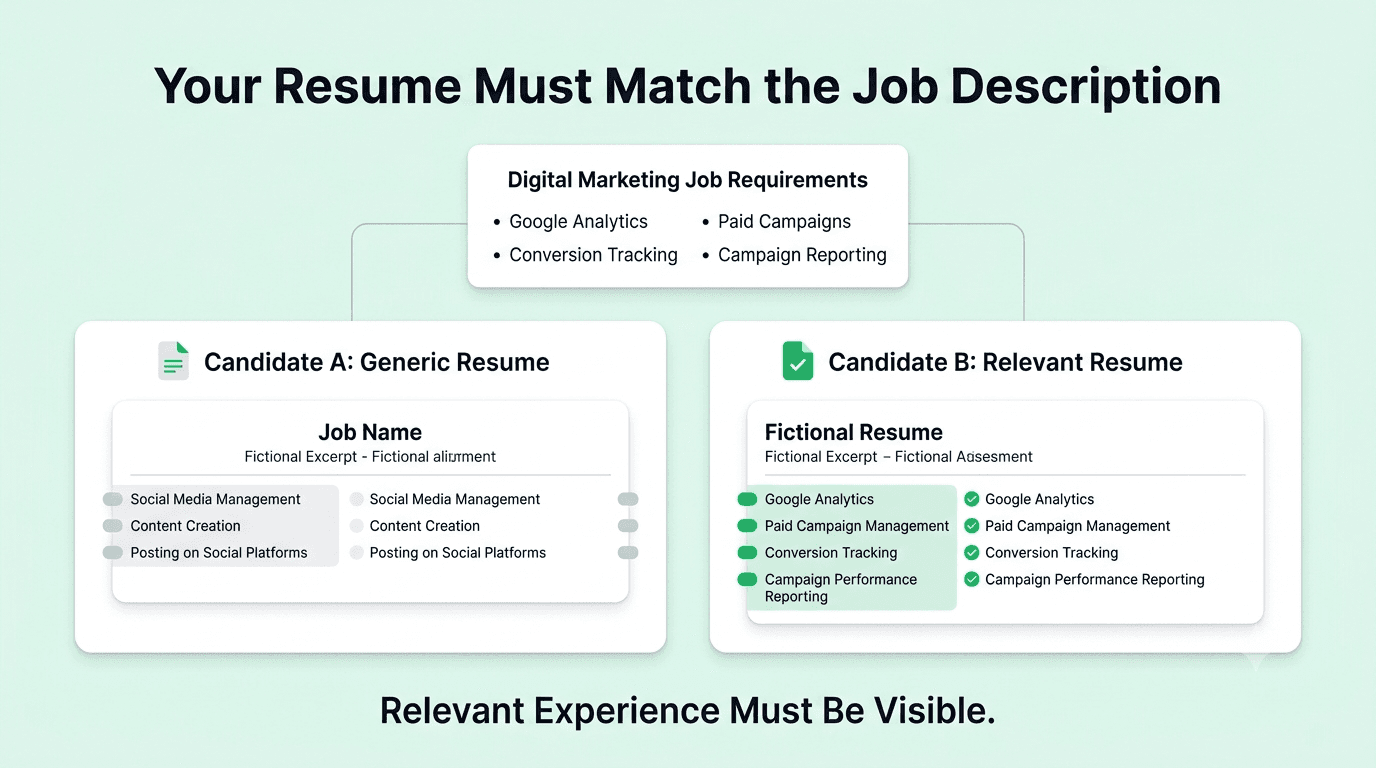
One of the most common mistakes is using the same resume for every application.
A general resume may contain a candidate's entire work history, but it may not highlight the skills and responsibilities most relevant to a particular opening.
For example, a digital marketing role may require experience with Google Analytics, paid campaigns, and conversion tracking. A resume that focuses mainly on social media content creation may not demonstrate the required experience clearly, even if the candidate has worked with all these tools.
How to Fix It
Read the job description before applying and identify the most important requirements.
Look for:
Skills and qualifications explicitly mentioned by the employer.
Responsibilities that appear repeatedly.
Tools, platforms, and technologies required for the role.
Relevant experience that demonstrates the ability to perform the job.
Adjust the resume to highlight matching experience. This does not mean adding skills that a candidate does not possess. It means making relevant qualifications easier to find.
For example, if the job requires campaign reporting, a bullet point describing how a candidate tracked campaign performance and identified opportunities for improvement is more useful than simply stating that they worked in digital marketing.
2. The Resume Is Not Optimized for Applicant Tracking Systems
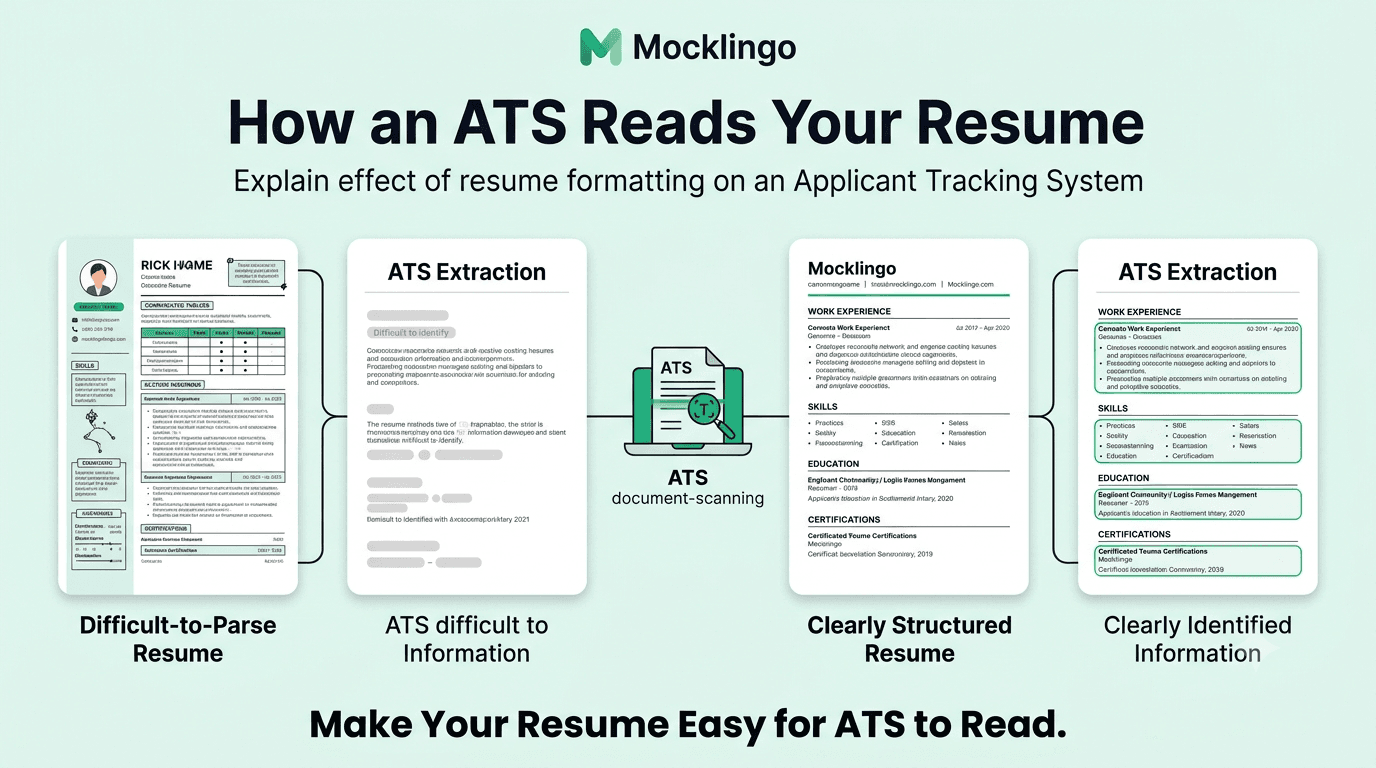
Many employers use applicant tracking systems to organize applications and help recruiters identify candidates who meet specific requirements. These systems can extract information from resumes, although their capabilities and screening rules vary.
A resume with unusual formatting, missing information, or unclear section headings may be harder for some systems to process correctly.
Missing role-related terminology can also make relevant experience less apparent during screening.
How to Fix It
Use a clean, readable format with standard headings such as Work Experience, Skills, Education, and Certifications.
Avoid unnecessary graphics, complicated tables, text boxes, and decorative elements that may interfere with parsing. Keep important information in the main document rather than placing it exclusively in headers or footers.
Candidates can also use an AI CV Checker to review their resume for formatting issues, missing keywords, and areas that need improvement. An ATS score checker can provide another way to assess how well a resume aligns with common ATS-friendly practices.
These tools should be used as a starting point rather than a guarantee of passing an employer's screening process.
3. The Resume Lists Responsibilities Without Showing Results
A resume may describe everything a candidate was responsible for without explaining what they accomplished.
Statements such as "managed social media accounts," "handled customer queries," or "worked on marketing campaigns" provide basic information, but they do not reveal the impact of that work.
Recruiters need to understand not only what a candidate did but also how their contribution supported a team, project, or business objective.
How to Fix It
Rewrite responsibility-based statements to show actions, outcomes, and relevant evidence.
For example:
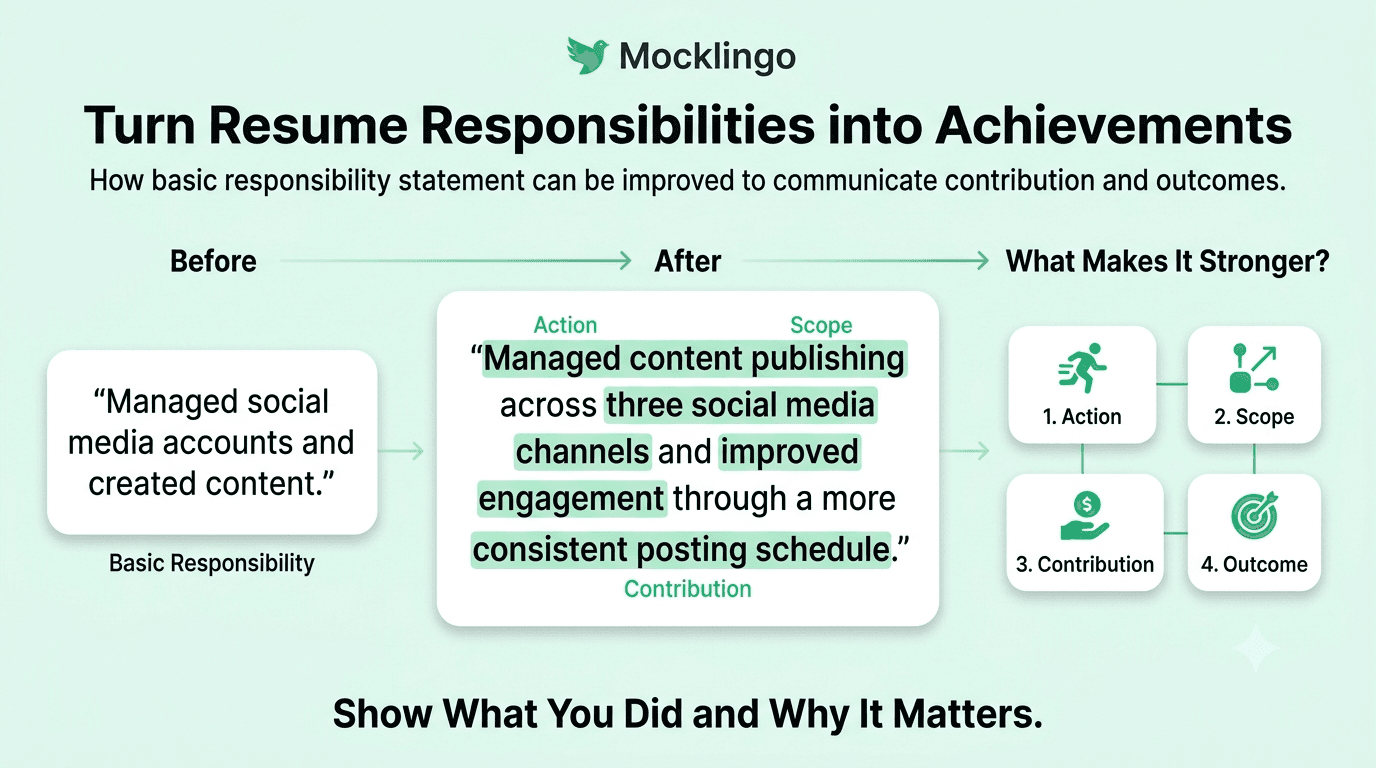
Before: Managed social media accounts and created content.
After: Managed content publishing across three social media channels and improved audience engagement through a more consistent posting schedule.
Where reliable figures are available, include them. These might include revenue influenced, response time reduced, website traffic increased, or projects completed.
Candidates who are new to the workforce can highlight academic projects, internships, volunteering, and personal projects instead of inventing professional achievements.
The objective is to make the value of the experience clear.
FREE TO USE
8k+ SESSIONS92% FLUENCY4.9★ RATING
Speak With Confidence
Real Conversations. Real Scenarios. Speak until it feels natural.
- Real-Time Speaking Practice
- Guided Conversation Flows
- Instant AI Feedback
4. Important Skills and Qualifications Are Difficult to Find
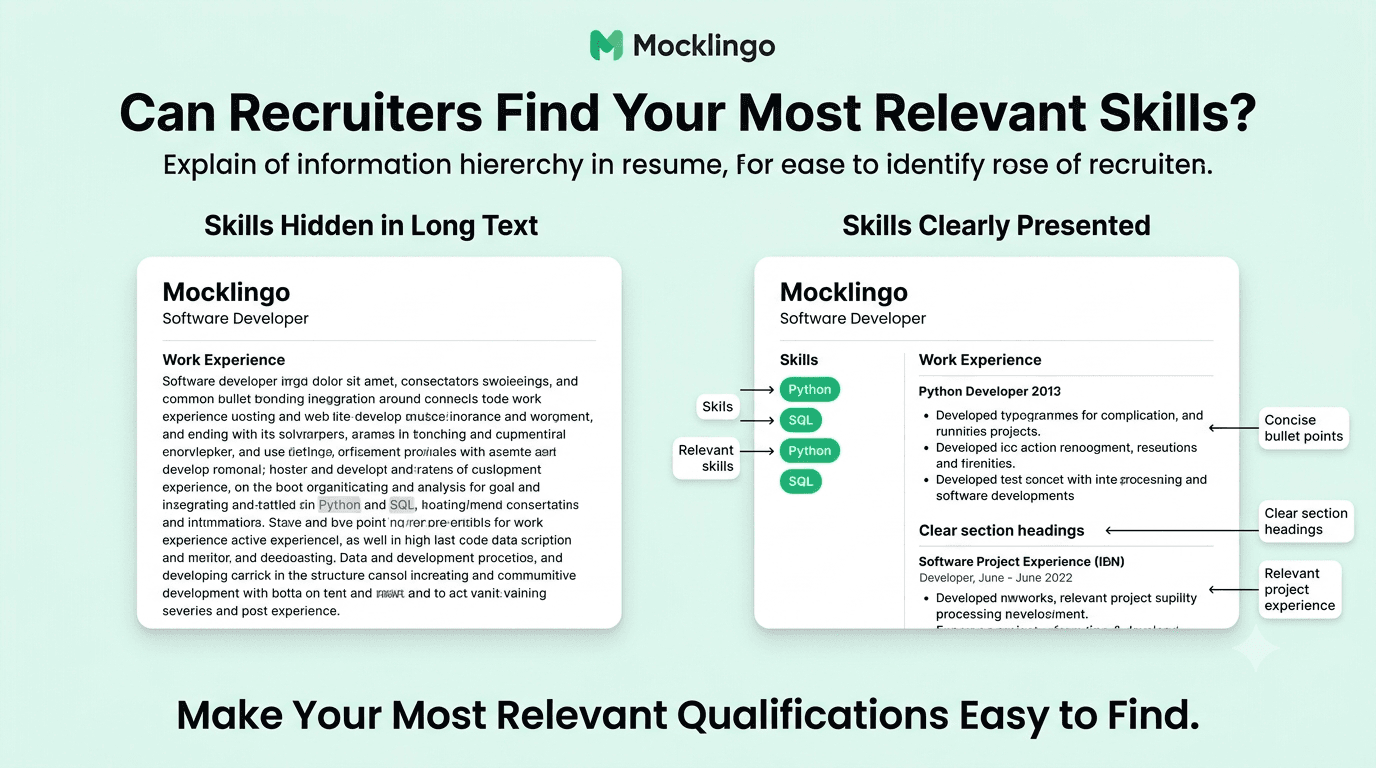
Recruiters may not spend much time searching for information buried in long paragraphs or an unstructured skills section.
A candidate may have the required experience but lose attention because the resume does not communicate it quickly.
For example, a software developer applying for a role requiring Python and SQL should make relevant technical skills and projects easy to locate rather than mentioning them only in a lengthy description of a previous position.
How to Fix It
Organize the resume into clearly defined sections and place the most relevant information where it is easy to find.
Use concise bullet points instead of dense paragraphs. Include a short professional summary when it helps explain the candidate's experience and target role.
Keep the skills section focused on genuine, relevant abilities. Listing every tool ever used can make the resume less focused and distract from the qualifications that matter most.
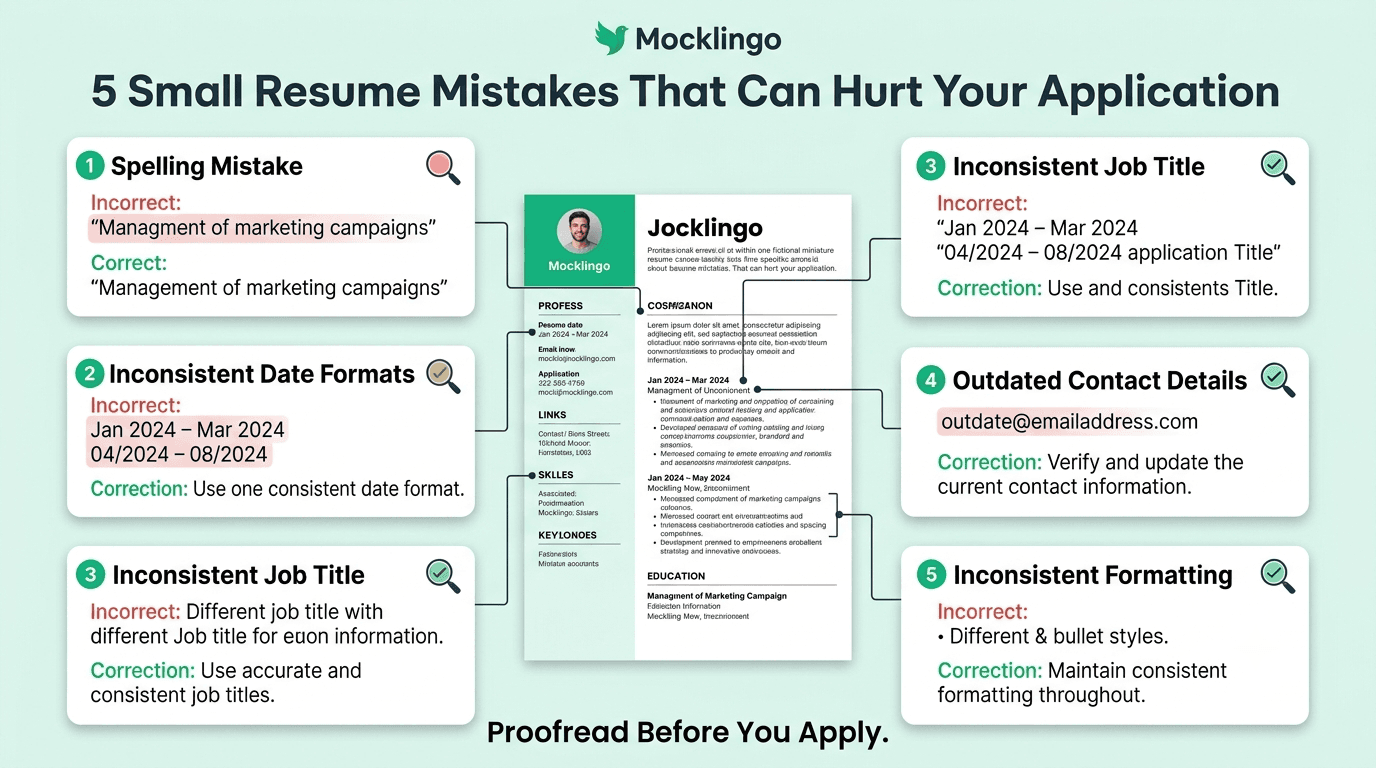
5. The Resume Contains Errors or Inconsistent Information
Spelling mistakes, incorrect dates, inconsistent job titles, and outdated contact details can make an application appear rushed.
Even small errors may create doubts about attention to detail, particularly when the role requires written communication, reporting, or documentation.
Inconsistent information between a resume and an application form can also create confusion.
How to Fix It
Proofread the resume carefully before submitting it. Check spelling, grammar, dates, contact details, job titles, and formatting.
Use consistent date formats and keep tense consistent across work experience descriptions. Past roles should generally use past tense, while current responsibilities can use present tense.
It also helps to review the final document after exporting it to PDF. A file that looks correct in a word processor may display differently when opened elsewhere.
6. The Resume Is Too Long or Difficult to Scan
Adding every responsibility, project, certification, and skill may seem like a good way to demonstrate experience. However, excessive detail can make the most important qualifications harder to identify.
At the same time, making a resume too short can remove valuable evidence of relevant experience.
How to Fix It
Choose content based on relevance rather than trying to include everything.
For many early-career candidates, a one-page resume is sufficient. Experienced professionals may need two pages to explain their relevant work history, depending on the role and the depth of their experience.
Remove repetitive statements, outdated details, and unrelated responsibilities. Give more space to recent achievements and experience that directly supports the target position.
The aim is not to achieve a particular page count at any cost. It is to make the document easy to scan without losing important information.
7. The Resume Overstates Skills or Uses Generic Claims
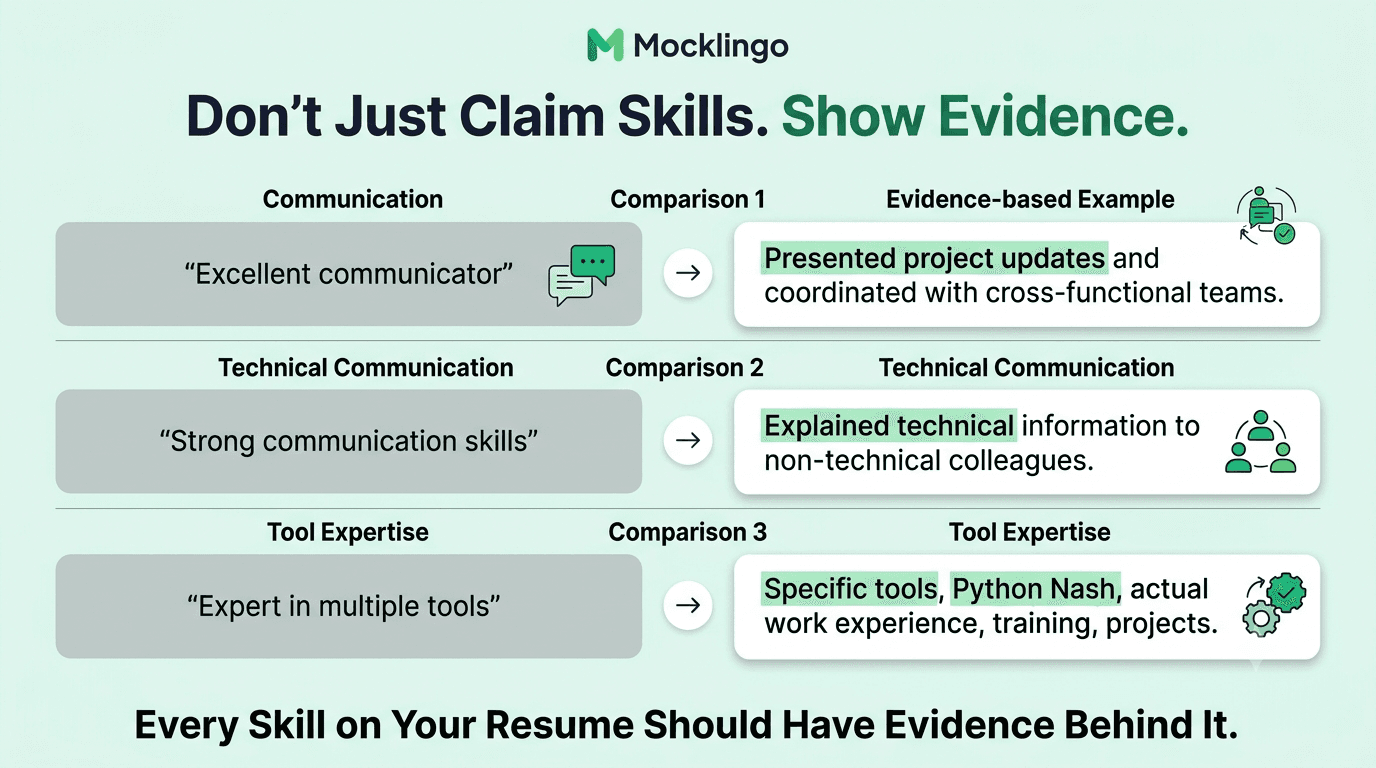
Claims such as "excellent communicator," "highly motivated," and "expert in multiple tools" are difficult to evaluate without supporting evidence.
Similarly, adding keywords simply to match a job description can create problems if the candidate cannot demonstrate those skills during an interview.
How to Fix It
Replace generic claims with specific examples.
Instead of describing communication as a strength, mention experience presenting project updates, coordinating with cross-functional teams, or explaining technical information to non-technical colleagues.
Include only skills that can be supported through actual experience, training, or projects.
A resume should present qualifications confidently without exaggerating them. Anything included in the document may become a discussion point during the interview.
A Resume Review Checklist Before Applying
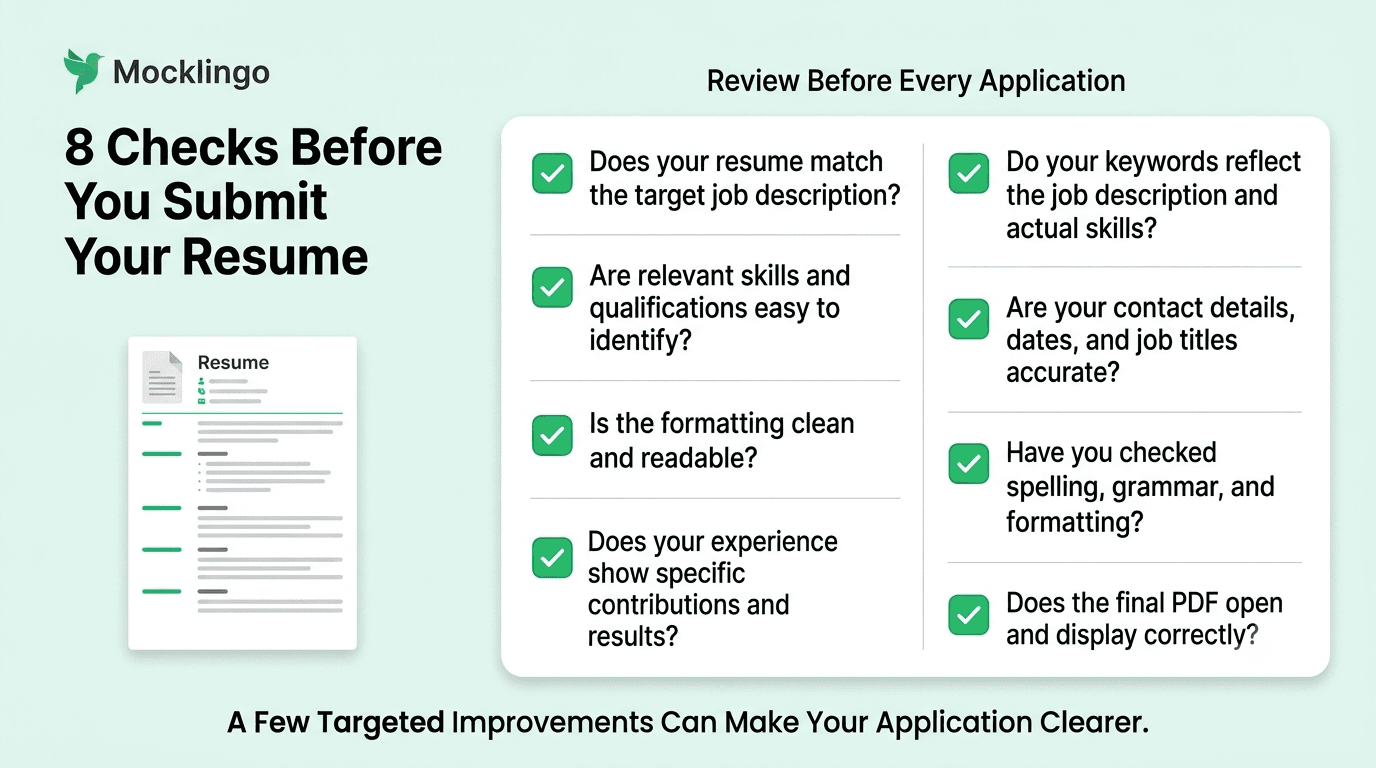
Before submitting an application, check the following:
The resume reflects the requirements of the target role.
Relevant skills and qualifications are easy to identify.
The formatting is clean and readable.
Experience descriptions include specific contributions and results where possible.
Keywords reflect the job description and actual skills.
Contact information, dates, and job titles are accurate.
Spelling, grammar, and formatting have been checked.
The final document opens correctly and is submitted in the requested file format.
This review does not need to take long once the resume has been organized properly. A few targeted improvements can make an application clearer and more relevant.
Conclusion
Resume rejection before the interview stage does not always mean a candidate lacks the necessary qualifications. Sometimes, the document fails to communicate those qualifications effectively.
A resume that matches the job description, uses clear formatting, demonstrates relevant achievements, and avoids unnecessary information gives recruiters a better understanding of the candidate's suitability.
Before sending more applications, review the resume from the employer's perspective. Check whether the most important skills are visible, whether the experience supports the requirements, and whether anything could create confusion.
A more focused resume can make the application process more effective and help qualified candidates present their experience with greater clarity.
More Blogs

Oct 22, 2026
UI/UX Designer Interview Preparation Guide: A Complete Roadmap for 2026
38 min read

