Loading...
Contents
Back to BlogInterview Preparation
Why is Feedback Important for Interviews?
Reasons You Should Never Skip It
Apr 25, 202624 min readUpdated Oct 7, 2026
You prepare for days. You revise answers. You attend the interview with full confidence. But then you receive a rejection email and no one tells you what went wrong. This is where many candidates feel stuck. So, why is feedback important for interviews? Because feedback helps you understand what to improve. It shows you your blind spots. It helps you avoid repeating the same mistakes again. In this guide, you will learn: Why interview feedback matters for you How to ask for feedback politely Real interview feedback examples Interview feedback sample format used by recruiters
FREE TO USE
25K+ INTERVIEWS4.8★ RATING68% IMPROVEMENT
Crack Your Dream Job
Real Interviews. Real Pressure. Practice until it feels easy.
- Seamless Interview Experience
- Resume & JD Questions
- Instant Personalized Feedback
What Is Interview Feedback?
Interview feedback is the information shared by the interviewer about your performance. It can include: What you did well Where you need improvement Why you were selected or rejected Feedback can come from: HR round Technical round Behavioral round Managerial round Sometimes companies do not share feedback because of company policy or time issues. But when you receive it, it becomes very valuable for your growth.
Why Is Feedback Important for Interviews? (For Candidates)
Let’s answer the main question clearly.
1. It Shows You What Went Wrong
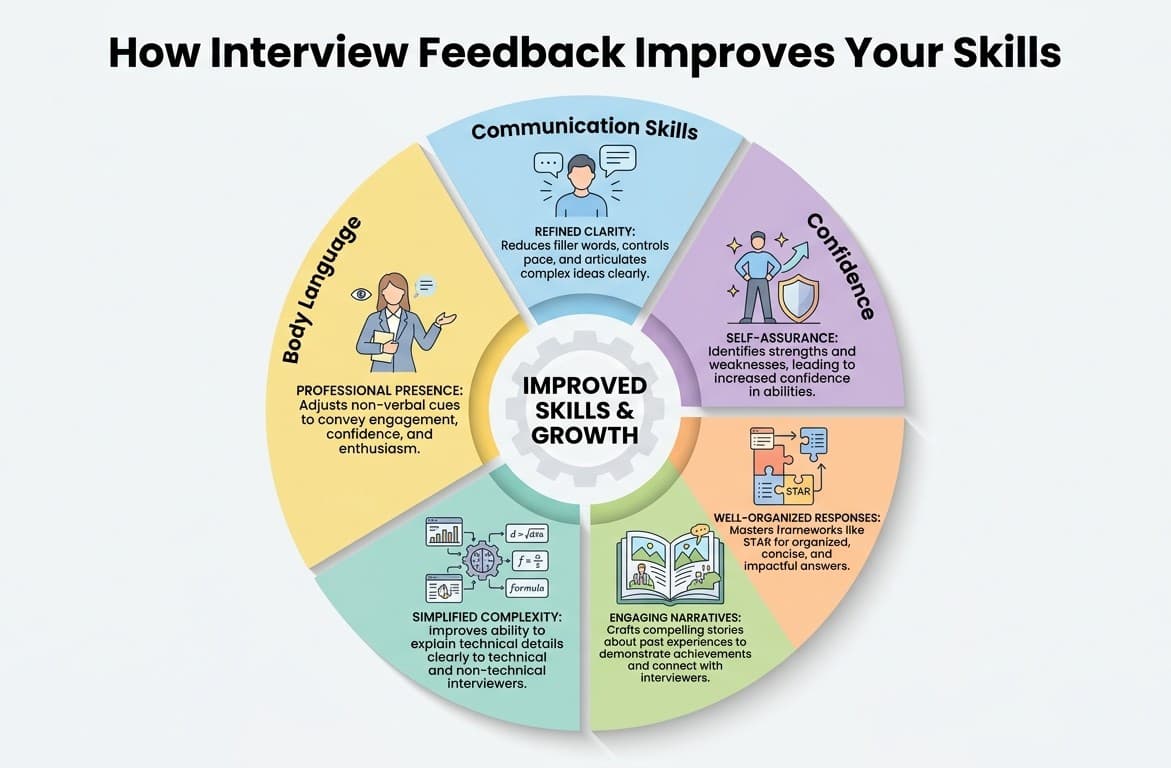
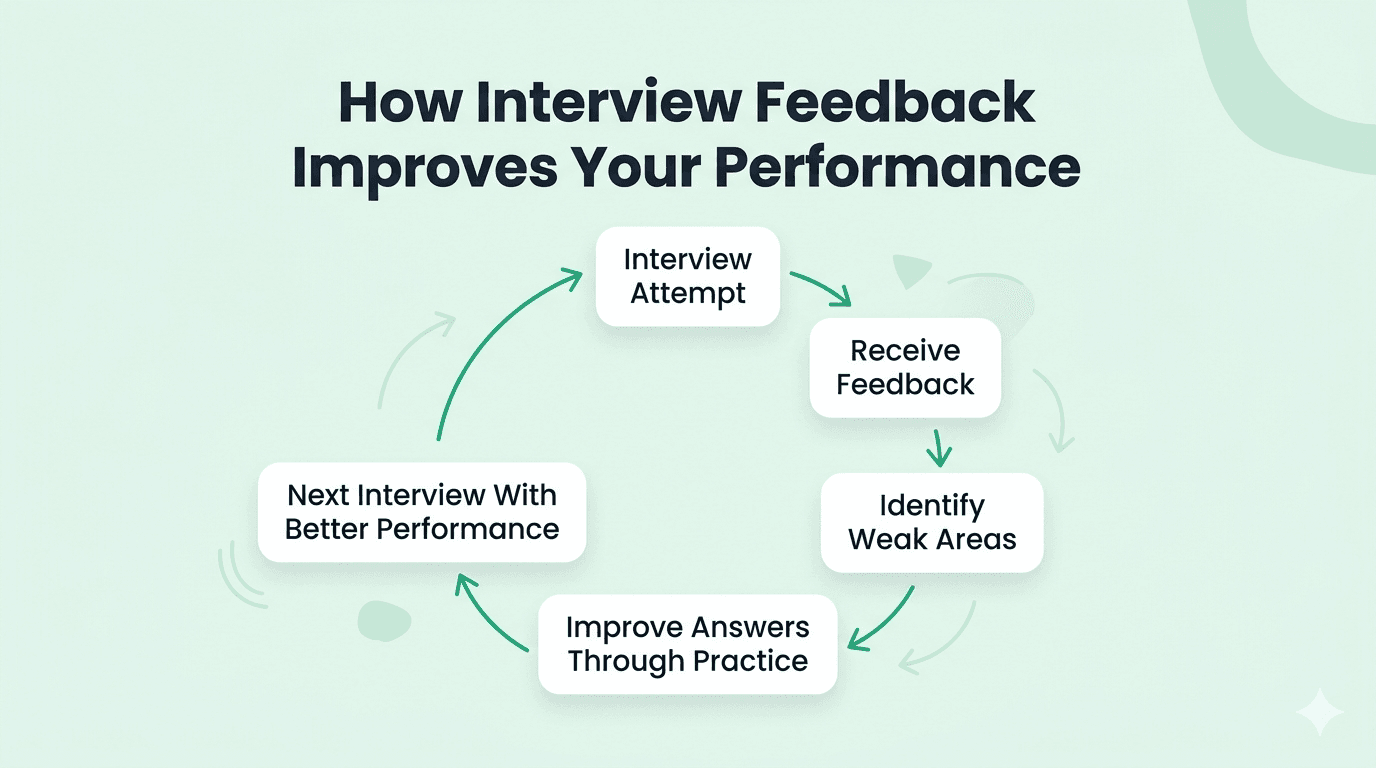
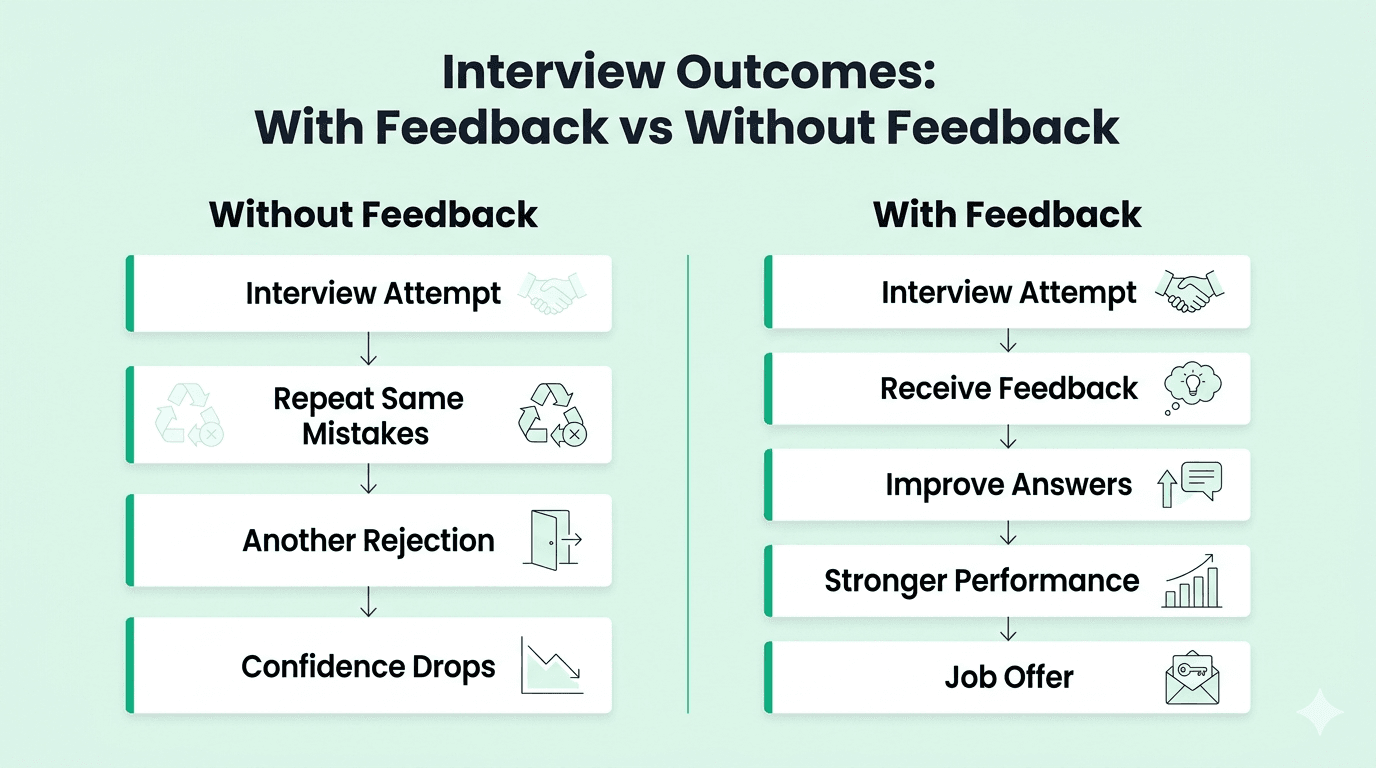
You may think your answers were perfect. But maybe: Your answers were too long You were not clear You lacked structure or You missed technical depth And here feedback helps you see your loopholes. Without feedback, you keep guessing.
2. It Stops You From Repeating the Same Mistake
You attend 4–5 interviews and make the same mistake every time. For example not using real examples, not structuring answers properly, or speaking too fast. When you receive feedback, you know: What to fix What to improve What to practice next This saves your time and energy and helps you fix the issue before your next attempt.
3. It Builds Confidence
Rejection hurts more when you don’t know the reason. But when you understand the reason, you feel more in control. For example: “You need to improve structured answers in behavioral questions.” Now you know what to practice. Clarity builds confidence and reduces fear.
4. It Helps in Career Growth
The importance of feedback is not only for interviews. It helps you throughout your career. Feedback improves: Communication skills Self-awareness Professional behavior Problem-solving ability You grow as a professional. Feedback builds self-awareness. And self-awareness builds success.
5. It Helps Career Switchers and Experienced Candidates
If you are switching careers or changing industries. Feedback becomes even more important. It tells you: Whether your experience matches the new role Whether your resume explanation is clear Whether your story makes sense
What Recruiters Usually Evaluate in You
Understanding this helps you prepare smarter. Here is a simple breakdown:
| EVALUATION AREA | WHAT RECUIRTIER LOOK FOR | COMMON FEEDBACK GIVEN |
|---|---|---|
| Technical skill | Depth and clarity | Need stronger practical examples |
| Communication | Clear and structured answers | Answers were lengthy |
| Confidence | Body language and tone | Appeared nervous |
| Problem solving skill | Logical thinking | Good approach but incomplete |
| Cultural fit | Team alignment | May not align with team style |
How Do You Ask for Feedback From an Interview?
Many candidates hesitate to ask. But asking politely shows maturity. When Should You Ask? After receiving a rejection email within 24–48 hours you can ask for feedback in a professional tone. Subject: Thank You for the Opportunity Dear [Interviewer Name], Thank you for the opportunity to interview for the role. I appreciate your time and guidance. If possible, I would be grateful if you could share any feedback about my interview performance. It will help me improve for future opportunities. Thank you again. Best regards, [Your Name]Simple Email Template You Can Use
FREE TO USE
8k+ SESSIONS92% FLUENCY4.9★ RATING
Speak With Confidence
Real Conversations. Real Scenarios. Speak until it feels natural.
- Real-Time Speaking Practice
- Guided Conversation Flows
- Instant AI Feedback
What You Should NOT Do
Do not argue Do not ask “Why did you reject me?” aggressively Do not send multiple emails Keep it polite and professional.
What If You Don’t Receive Feedback?
Sometimes you may not get a reply. In that case: Record your mock interviews Practice with friends Review common interview questions Improve structured answers (STAR method) You can also use AI mock interviews and then practice with real people. A combination works best. Mocklingo is one such tool you can use for interview practice and after each practice session you get detailed feedback based on different aspects.
Understanding Interview Feedback from Recruiter’s Side
Now let’s understand how recruiters think. This helps you see the full picture. Recruiters usually follow a structured format internally that influences their hiring decisions. They evaluate candidates based on:Feedback on Candidate After Interview- Recruiter Perspective
| EVALUATION CRITERIA | RECURITER'S INTERNAL QUESTIONS |
|---|---|
| Technical Fit | Does the candidate meet skill requirements? |
| Experience Relevance | Is past work aligned with the role? |
| Behavioral Traits | Can this person handle pressure? |
| Communication | Can they explain ideas clearly? |
| Hiring decision | Should hire them: Yes / No |
This structured evaluation becomes official interview feedback.
Interview Feedback Examples
Here are some common interview feedback examples: Strong Candidate Example “The candidate demonstrated strong technical knowledge and explained solutions clearly. Confident and well-prepared.” Needs Improvement Example “Good understanding of core concepts but struggled to structure behavioral answers. Not Selected Example “Limited practical exposure. Need deeper understanding of advanced topics.” Communication Feedback Example “Technically sound but answers were too lengthy and lacked focus.” These examples help you understand how recruiters describe performance.
Interview Feedback Sample
Here is a simple example of what an interview feedback sheet looks like. Most companies use a structured format to record their final decision. It includes key sections where interviewers briefly rate and comment on your performance. See the sample format below:
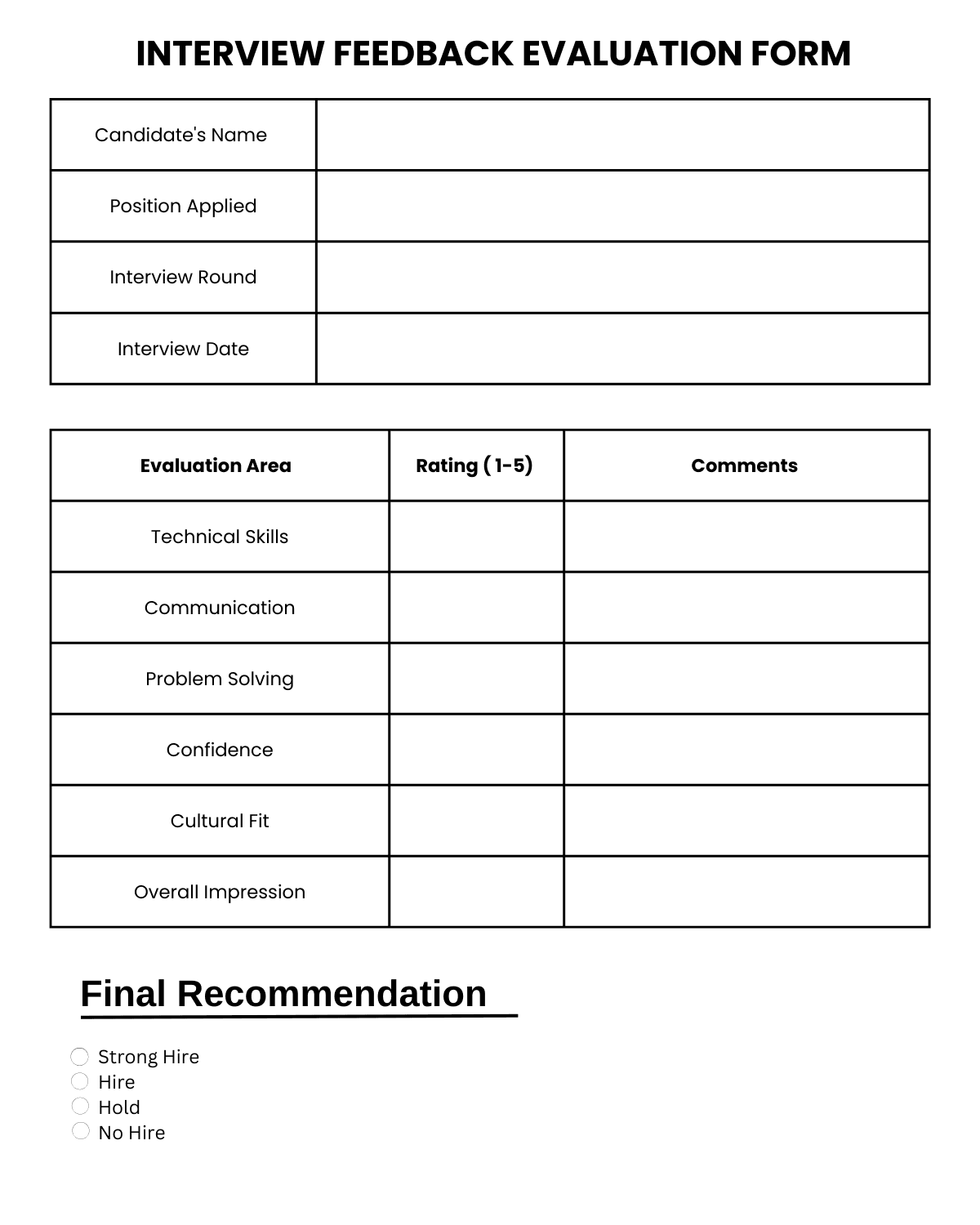
You can use this same format to review yourself after every interview.
Why Many Companies Don’t Share Detailed Feedback
It’s important to understand this reality. Companies may avoid sharing feedback because of: Legal concerns High number of applicants Limited HR time or Company policies So if you don’t receive feedback, do not assume you performed badly. Sometimes it’s policy, not performance.
Conclusion
Now you can clearly understand why feedback is important for interviews. Feedback: Removes confusion Shows your blind spots Improves your performance Builds long-term career strength Rejection without feedback creates doubt. Rejection with feedback creates improvement. Instead of fearing feedback, start using it as your advantage. Every successful professional improves through feedback. Your next interview can be better if you learn from the last one.