Loading...
Contents
Back to BlogInterview Preparation
From Classroom to Interview Room: What Colleges Don’t Teach About Job Interviews
Apr 24, 202616 min readUpdated Oct 6, 2026
For most students, college life follows a simple routine. Attend classes, prepare for exams, score well, and complete assignments. On paper, everything seems aligned. But when the interview results arrive, many students face rejection again and again. This raises an important question, What colleges don’t teach about interviews? It’s not that colleges fail completely. They provide academic knowledge, subject fundamentals, and sometimes even placement guidance. But interviews are a different environment altogether. It checks how you think and handle pressure that is not usually taught in school or college. This article explores the real gap between classrooms and interview rooms. How the lack of interview training in colleges affects freshers. And what skills actually matter while facing recruiters.
FREE TO USE
25K+ INTERVIEWS4.8★ RATING68% IMPROVEMENT
Crack Your Dream Job
Real Interviews. Real Pressure. Practice until it feels easy.
- Seamless Interview Experience
- Resume & JD Questions
- Instant Personalized Feedback
What Colleges Focus On vs What Interviews Actually Test
Colleges designed to deliver structured education. Their success is measured through exam scores, attendance, assignment completion, and syllabus coverage. This system works well for assessing academic understanding. But in interviews, recruiters are more interested in: How clearly you explain your thoughts How you react to unfamiliar questions Whether you can communicate ideas confidently How you behave in professional conversations Many students assume that strong academic preparation automatically leads to interview success. But in reality, interviews demand a separate set of skills that are rarely taught in colleges.
FREE TO USE
25K+ INTERVIEWS4.8★ RATING68% IMPROVEMENT
Crack Your Dream Job
Real Interviews. Real Pressure. Practice until it feels easy.
- Seamless Interview Experience
- Resume & JD Questions
- Instant Personalized Feedback
1. Effective Communication in Professional Settings
In academic settings, students focus on providing correct answers. In interviews, the focus shifts to how answers are delivered. Recruiters assess clarity, structure, and relevance rather than technical accuracy alone. Many students are not trained to: Organize responses logically Explain concepts in simple terms Use examples to support their answers Adjust their communication based on the interviewer’s cues Because of this, their answers may sound unclear or unfinished, even if they know the topic well. Communication skills are a crucial part for interviews, but didn't receive much attention.
FREE TO USE
25K+ INTERVIEWS4.8★ RATING68% IMPROVEMENT
Crack Your Dream Job
Real Interviews. Real Pressure. Practice until it feels easy.
- Seamless Interview Experience
- Resume & JD Questions
- Instant Personalized Feedback
2. Managing Pressure and Real-Time Interaction
Interviews are dynamic and unpredictable. Candidates may face follow-up questions, scenario-based discussions, and pressure of judgment. Colleges rarely simulate such environments. Without exposure to real-time interaction, students experience difficulty in managing interview anxiety. They also face problems in organizing their thoughts.
FREE TO USE
25K+ INTERVIEWS4.8★ RATING68% IMPROVEMENT
Crack Your Dream Job
Real Interviews. Real Pressure. Practice until it feels easy.
- Seamless Interview Experience
- Resume & JD Questions
- Instant Personalized Feedback
3. Handling Behavioral and HR Questions
Behavioral and HR questions form a significant part of modern interviews. Questions such as, tell me about yourself or describe the challenge you faced asked. Behavioral questions need self-reflection and structured responses. Many students provide generic answers. Because they are not taught how to connect real experiences with professional expectations. This is a key area where interview preparation lacks. Particularly when colleges primarily focus on technical or academic preparation.
FREE TO USE
25K+ INTERVIEWS4.8★ RATING68% IMPROVEMENT
Crack Your Dream Job
Real Interviews. Real Pressure. Practice until it feels easy.
- Seamless Interview Experience
- Resume & JD Questions
- Instant Personalized Feedback
4. Professional Presence and Non-Verbal Communication
Interviews also assess non-verbal aspects of communication, including: Body language Eye contact Voice modulation Complete demeanor These elements influence how confident and credible a candidate appears. But, they are rarely discussed in school/ college education. Without proper guidance or feedback, students may appear unsure or uninterested during interviews.
Why Freshers Face Challenges After Preparation
Like many freshers you approach interviews with genuine effort. You review subject concepts, prepare answers, and research companies. Still, face rejection due to factors unrelated to your academic capability. Common challenges include: Reliance on memorized responses Limited exposure to mock interviews Absence of structured feedback Lack of confidence in spoken communication These issues show the lack of interview training, not the inability of students.
Consequences of Limited Interview Training
If interview skills are weak, the problem doesn’t end with one interview. After facing many rejections, candidates start losing confidence and discouraged about their career. Students may experience: Increased anxiety around interviews Difficulty articulating their strengths Reduced confidence despite strong qualifications If you prepare for interviews early, you can avoid problems later and get a job more easily. Read More : Tips to manage interview anxiety effectively
Interview Skills That Influence Hiring Decisions
Several interview skills required to influence recruiter decisions. But they are not taught in college education: Answer structuring: Presenting responses in a clear and logical sequence Active listening: Understanding questions before responding Adaptability: Modifying answers based on interviewer feedback Professional questioning: Asking relevant questions about the role or organization Handling uncertainty: Responding thoughtfully when unsure, rather than guessing Developing these skills requires practice and guidance.
FREE TO USE
8k+ SESSIONS92% FLUENCY4.9★ RATING
Speak With Confidence
Real Conversations. Real Scenarios. Speak until it feels natural.
- Real-Time Speaking Practice
- Guided Conversation Flows
- Instant AI Feedback
Practical Interview Tips for Freshers
Rather than relying on shortcuts, you can use practical approaches: Practice speaking responses aloud to improve clarity Review recordings of mock answers to identify improvement areas Focus on explaining thought processes, not conclusions Use examples from academic projects, internships, or extracurricular activities Approach interviews as professional discussions not as evaluations These interview tips help you communicate in a more effective and confident manner. Read More: What Freshers Should Do to Get Hired in 2026: Skills, Strategy & Smart Preparation
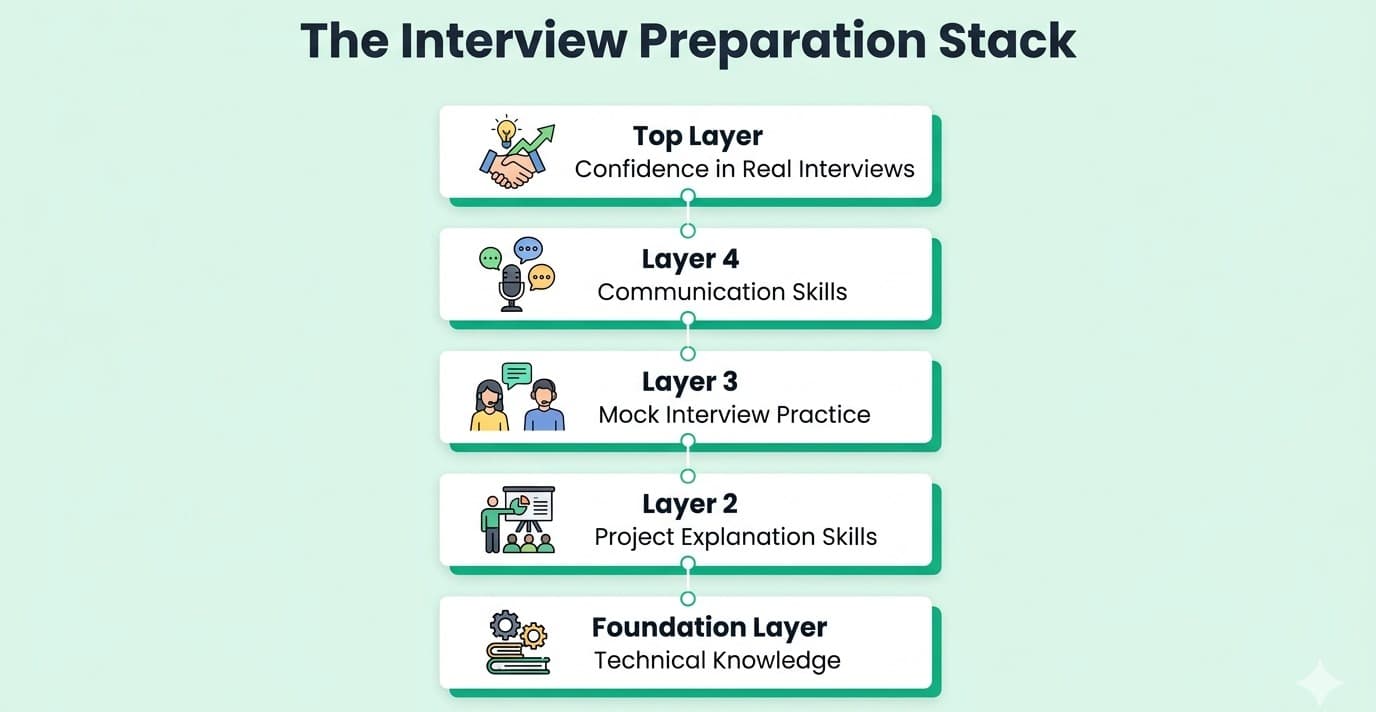
Preparing for Interviews Beyond the Classroom
If your college fails to teach interview skills, you can start preparing by yourself. Effective preparation methods include: Participating in mock interviews Practicing English communication with tools Reviewing common interview scenarios Seeking structured feedback on performance Digital platforms that simulate interview environments and offer feedback are helpful. This supports freshers in building confidence and improving communication skills.
Bridging the Gap Between Classroom and Interview Room
Colleges are not failing students; they are focused on a different aim. Academic learning builds the foundation. Interview readiness builds the bridge to employment. Interviews are not about perfection, they are about clarity, confidence, and communication. With the right practice and feedback, you can bridge this gap.
Conclusion
Interview skills are learned over time through practice and experience. When you prepare interviews within the right approach. It shifts from being challenging situations to meaningful opportunities.