Loading...
Contents
Back to BlogInterview Preparation
Interview Anxiety: Tips to Manage Interview Anxiety Effectively
Apr 24, 202614 min readUpdated Oct 6, 2026
Many candidates walk into interviews well prepared. They know the subject, they have revised common questions, even they have practiced a lot. But still, when the interview begins, confidence starts to disappear. Thoughts feel scattered, words do not come out and confidence drops. This experience is often labelled as fear, but in reality, it's the interview anxiety. Interview anxiety is one of the most common reasons capable candidates underperform. It does not mean a lack of knowledge or effort. It reflects how pressure, uncertainty, and self-expectation affect performance in pressure. Managing anxiety is more useful than simply trying to drop fear.
FREE TO USE
25K+ INTERVIEWS4.8★ RATING68% IMPROVEMENT
Crack Your Dream Job
Real Interviews. Real Pressure. Practice until it feels easy.
- Seamless Interview Experience
- Resume & JD Questions
- Instant Personalized Feedback
What Is Interview Anxiety?
Interview anxiety is a mental and physical response to the pressure of being judged. It usually appears during the interview, even when a candidate feels calm beforehand. Unlike general nervousness, interview anxiety can interfere with thinking, speaking, and recalling information.
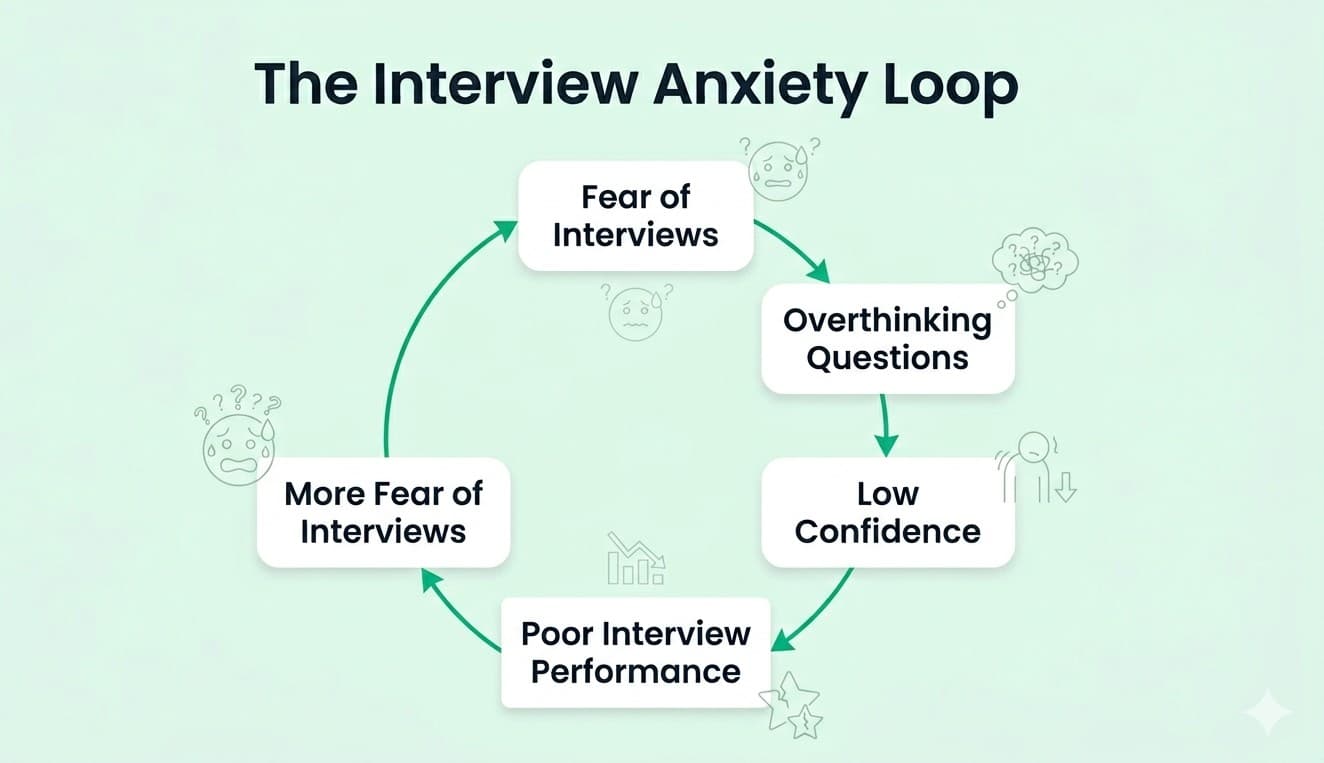
Many candidates confuse interview anxiety with interview fear. Fear usually comes from thinking too much about rejection or what others will think. But interview anxiety happens at that moment. That’s why an easy question can suddenly feel hard, and your prepared answer sounds confusing. This anxiety does not discriminate. Freshers, experienced professionals, and even strong communicators can experience it. It’s not about skill, but about handling pressure
Why Interview Anxiety Affects Capable Candidates
One of the biggest misconceptions about interviews is that preparation alone guarantees confidence. In reality, interviews test more than knowledge. They test how well a person performs under observation and uncertainty. Interview anxiety often affects good candidates because: The interview setting feels formal and judgment-driven There is pressure to give “perfect” answers Candidates overthink how they are being evaluated Small mistakes feel amplified in the moment When anxiety increases, the brain prioritizes self-protection rather than recall and reasoning. Candidates may forget well known points and struggle to structure their thoughts. This is why performance during an interview may not reflect actual ability.
Difference between Interview Anxiety and Lack of Preparation
It is important to separate interview anxiety from lack of preparation. Many candidates blame themselves after interviews, assuming they were not ready enough. In reality, they prepared, but anxiety disrupted execution. A lack of preparation usually shows as: Incomplete or incorrect answers Limited understanding of the role Difficulty explaining basic concepts But Interview anxiety includes: Knowing the answer but struggling to express it Feeling confident only after the interview ends Speaking better in practice than in real interviews Understanding this difference helps candidates focus on real problems instead of self-doubting.
Common Symptoms of Interview Anxiety
Interview anxiety can appear in different ways, and not all symptoms are physical. Some are subtle but impactful. Common signs include: A blank mind during familiar questions Rushed or disorganized responses A shaky or low voice Difficulty maintaining eye contact Overthinking every answer immediately after speaking This does not show incompetence. It shows a nervous system reacting to pressure. Recognizing them is the first step toward managing them effectively.
FREE TO USE
8k+ SESSIONS92% FLUENCY4.9★ RATING
Speak With Confidence
Real Conversations. Real Scenarios. Speak until it feels natural.
- Real-Time Speaking Practice
- Guided Conversation Flows
- Instant AI Feedback
Tips to Manage Interview Anxiety Effectively
Managing interview anxiety does not mean removing nervousness completely. The goal is to reduce its impact so candidates can think and communicate in a more clear way.
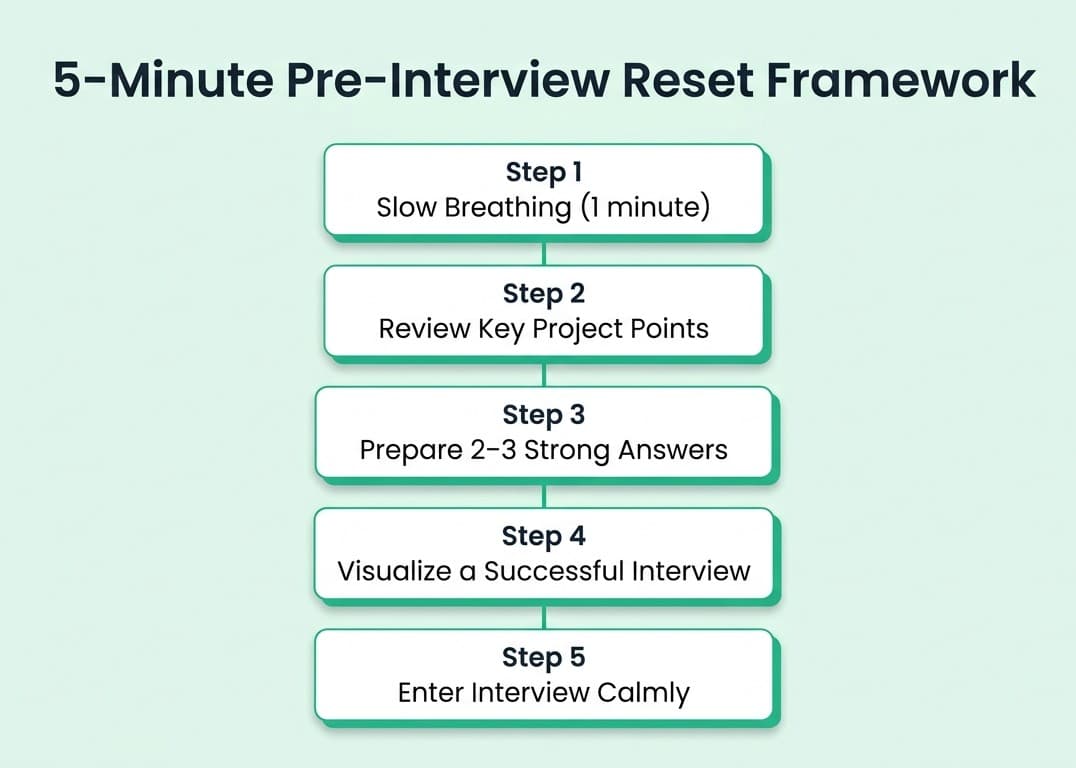
Shift from Performance Mode to Conversation Mode
Anxiety increases when candidates see interviews as performances that must be flawless. This mindset creates unnecessary pressure. Interviews are structured conversations, not examinations. When candidates focus on sharing information rather than impressing, mental load reduces naturally.Read More: How to Prepare for HR Interview
Reduce Uncertainty, Not Nervousness
Anxiety grows when things feel uncertain. Candidates usually try to control nervousness directly, which rarely works. A better way is to reduce confusion by understanding how interviews work. Learn how questions are asked and how answers should be given. Familiarity lowers anxiety more effectively than forced calmness.
Control the First Few Minutes
Interview anxiety usually peaks at the beginning. Once candidates start speaking and settle into the interaction, anxiety tends to reduce. Getting ready for the first few minutes helps you feel confident.
Learn to Function Despite Anxiety
Waiting to feel confident before speaking often backfires. Many successful interviews happen while candidates still feel nervous internally. The key is learning to respond clearly even when anxiety is present. Confidence follows action, not the other way around.
Why Managing Interview Anxiety Matters More Than Removing It
Candidates who learn to manage interview anxiety: Think more clearly under pressure Communicate more naturally Recover better from minor mistakes Present a more stable professional impression Interview success is not about feeling fearless. It is about remaining functional and focused despite discomfort and fear.Trying to completely drop nervousness can create more pressure. Anxiety is normal during interviews and doesn’t completely go away, even with experience. What matters is whether it controls the interview or stays in the background.
Read More: How to Overcome Interview Fear
How Interview Practice Help Manage Anxiety
One of the most effective ways to manage interview anxiety is exposure. When candidates repeatedly experience interview-like situations, the brain becomes familiar with the pressure. This familiarity reduces overreaction. Practice environments help by: Normalizing interview questions Reducing fear of judgment Making speaking under evaluation feel routine Structured feedback help improve loopholes Over time, anxiety loses its intensity because the situation no longer feels unfamiliar.
How Mocklingo Supports Interview Anxiety Management
Tools like Mocklingo are designed to help candidates manage anxiety through consistent practice. These platforms give a safe and structured space to practice interviews without fear. Instead of trying to end nervousness, you should focus on managing it.
Conclusion
Many capable candidates struggle because anxiety interferes with how that knowledge is expressed. The goal is not to remove fear, but to develop awareness and management skills. When you understand and control interview anxiety, you speak more clearly. You think more calmly and perform closer to your real ability.