Loading...
Contents
Back to BlogInterview Preparation
Why Experienced Professionals fail in Interviews
(And How to Fix It in 2026)
Apr 25, 202626 min readUpdated Oct 5, 2026
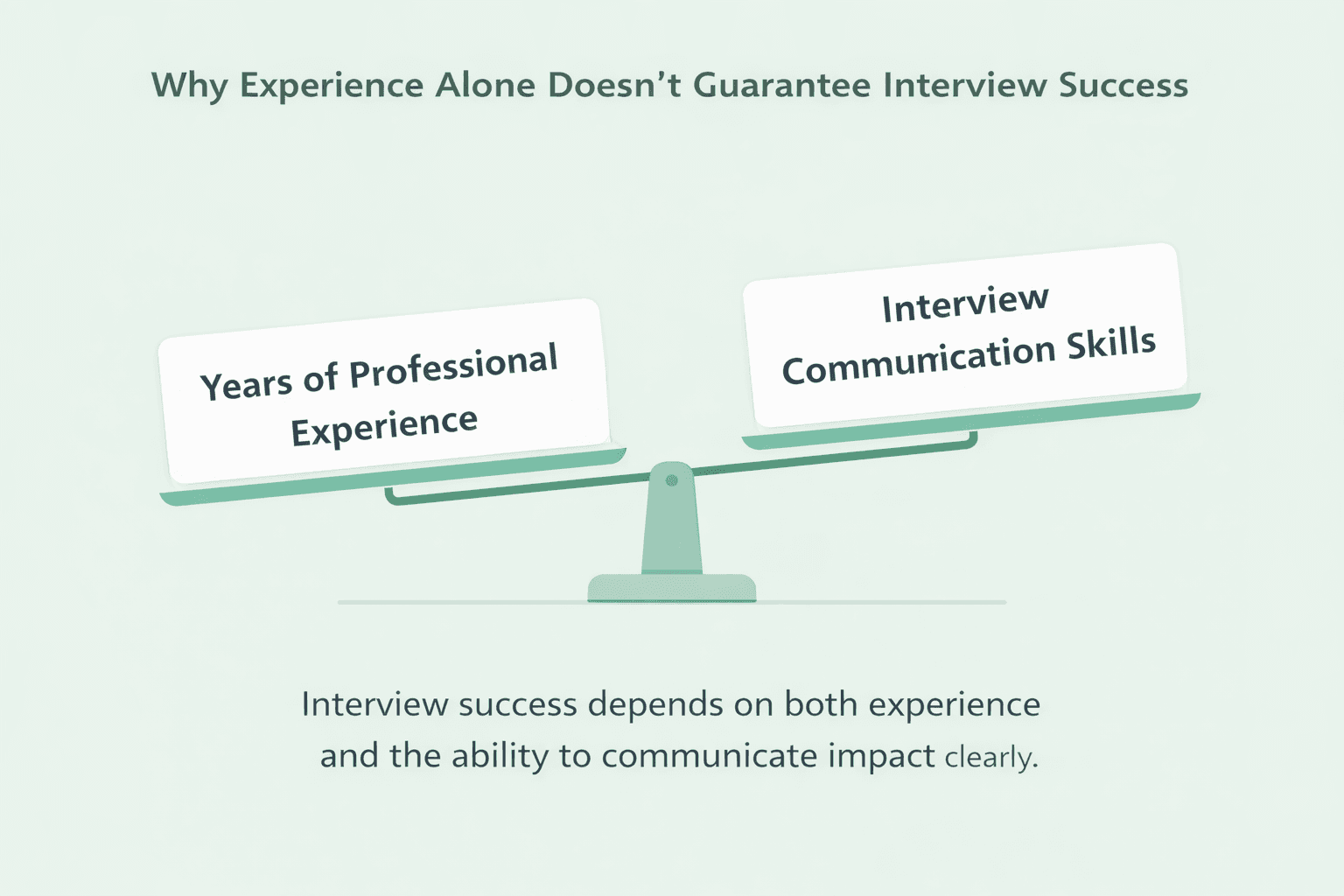
After 5, 8, or even 15 years in the same company, interviews can suddenly feel uncomfortable. You’ve handled major responsibilities. You begin to wonder: “Am I not good enough anymore?” “Have interviews changed?” “Why do experienced professionals fail in interviews?” Here’s the truth: Interviews test a different skill set than your daily job. Let’s break this down clearly.
You’ve led teams.
You’ve delivered results. Yet when you switch jobs, rejection emails start coming.
And the 2026 job market has raised the bar.
FREE TO USE
25K+ INTERVIEWS4.8★ RATING68% IMPROVEMENT
Crack Your Dream Job
Real Interviews. Real Pressure. Practice until it feels easy.
- Seamless Interview Experience
- Resume & JD Questions
- Instant Personalized Feedback
Why Switching Jobs After Years Feels So Difficult
When you stay in one organization for a long time, you become comfortable in that environment. You know: Internal systems Team members Company processes Decision-making style But interviews are not about comfort. After years of stability, professionals often: Lose interview practice Forget structured answering techniques Become outdated with new industry trends Struggle to explain achievements clearly Give long, unstructured answers This leads to a confidence drop. It’s not that your experience is weak. Sometimes the same question is asked in interview and you feel lost, read here how to answer "Reason for a Job Change in an Interview”
They are about presentation, clarity, and strategic thinking.
It’s that your interview skill is rusty.
What Has Changed in the 2026 Job Market?
The job market in 2026 is more competitive, data-driven, and technology-aware than ever before. Here’s what interviewers expect now:
1. Scenario-Based Thinking
Instead of basic questions, recruiters now ask: “What would you do if your team missed targets for two quarters?” “How would you scale operations with limited resources?” “How do you handle underperforming team members?” They want to test: Decision-making ability Leadership maturity Real-world problem solving If you answer theoretically, you lose impact.
2. AI & Digital Awareness
Even non-technical roles now require: Basic AI awareness Automation exposure Digital tools understanding Data-driven thinking If you cannot explain how technology affects your role, interviewers see a gap. In 2026, adaptability is more important than tenure.
3. Measurable Achievements Over Generic Claims
Earlier, saying: It was acceptable. Now interviewers expect: “Increased revenue by 18% in 9 months.” “Reduced operational cost by 22%.” “Improved retention by 30%.” Numbers build trust, prove ownership and differentiate you.
“I improved my performance.”
4. Leadership Depth at Senior Levels
For senior professionals, interviews go beyond skills. Companies assess: Strategic thinking Conflict management Pressure handling Culture fit Influence ability At higher levels, companies are not just hiring an employee. That is why rejection feels more frequent at senior roles.
They are hiring someone who impacts business direction.
Why Experienced Professionals Fail in Interviews
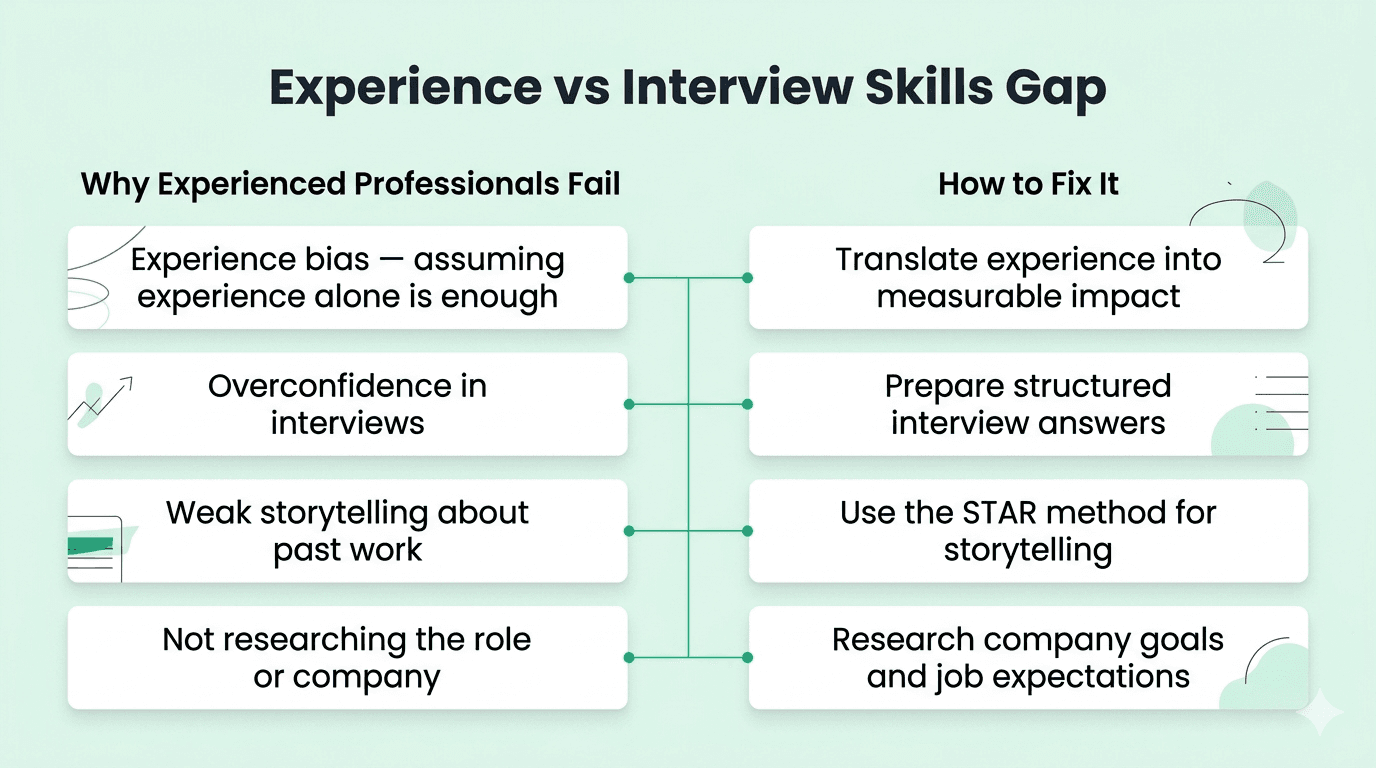
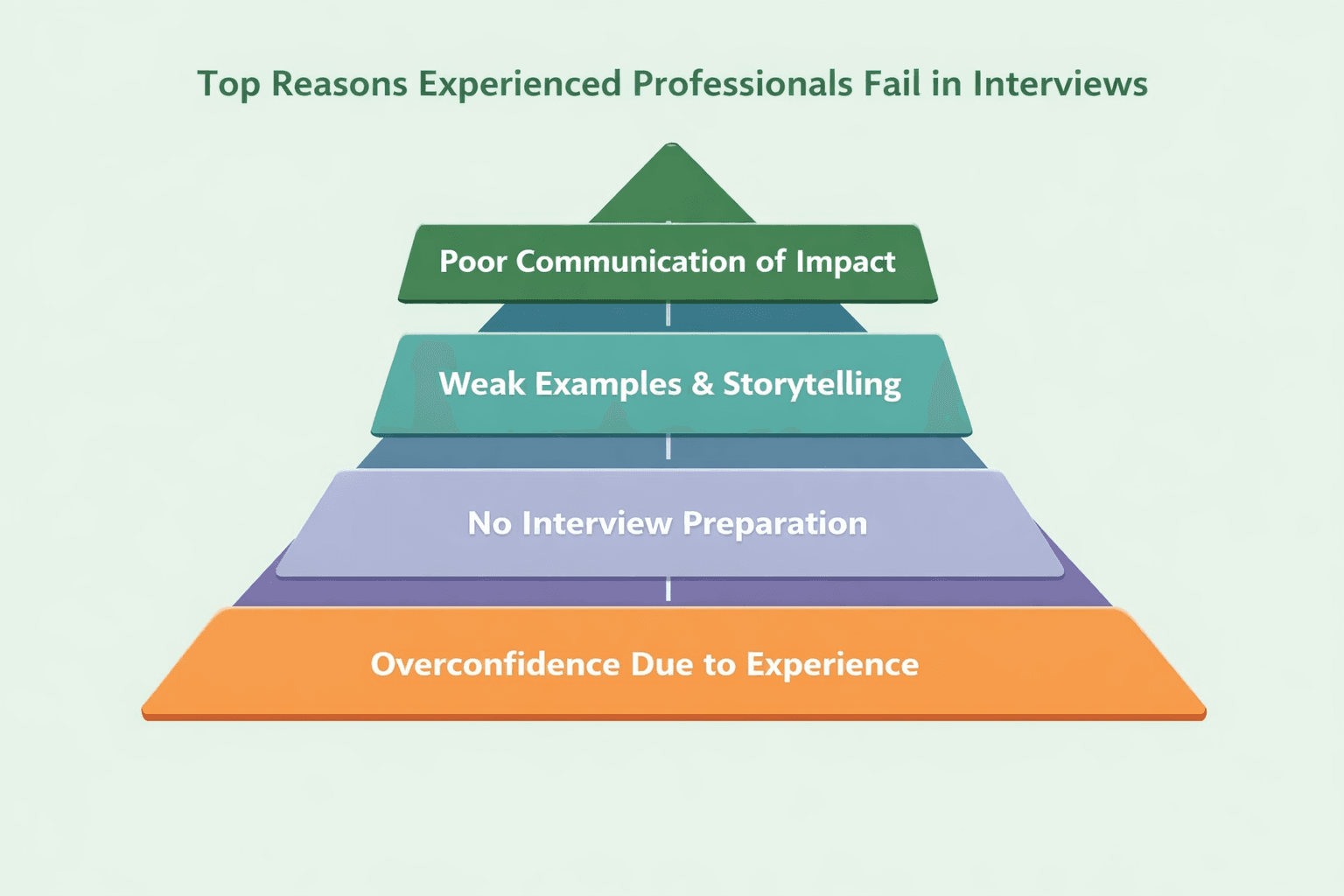
Here are the most common reasons: Over-explaining without structure Not using the STAR method (Situation, Task, Action, Result) Lack of measurable data Not updating knowledge about current trends Underestimating interview preparation Speaking from experience but not aligning with company needs Experience alone is not enough. Communication + structure + preparation = selection.
How to Rebuild Confidence After Interview Rejection
If you are switching jobs after years, follow this structured approach: Ask yourself: Did I answer directly? Did I use numbers? Did I structure answers clearly? Did I connect my experience to the company’s problems? Self-awareness is the first correction step. Instead of long explanations, follow: Situation – What was happening? This keeps answers sharp and powerful Study: Industry-specific challenges AI impact in your field Leadership case studies Scenario-based interview patterns Preparation must reflect the current market, not your past comfort zone. Most experienced professionals struggle not because they lack knowledge - Regular mock practice helps you: Reduce hesitation Improve clarity Control answer length Build calm confidence One effective method is practicing AI-based mock interviews that simulate real senior-level scenarios. Structured platforms like Mocklingo allow experienced professionals to practice leadership, scenario-based, and strategic questions in a realistic format. Practice converts knowledge into performance. Read More: How to Prepare for HR Interview”Step 1: Audit Your Previous Interviews
Step 2: Use the STAR Method for Every Major Question
Task – What was your responsibility?
Action – What exactly did you do?
Result – What measurable outcome did you achieve?Step 3: Update Yourself with 2026 Trends
Step 4: Practice Structured Speaking
but because they lack interview fluency.
FREE TO USE
8k+ SESSIONS92% FLUENCY4.9★ RATING
Speak With Confidence
Real Conversations. Real Scenarios. Speak until it feels natural.
- Real-Time Speaking Practice
- Guided Conversation Flows
- Instant AI Feedback
Smart Interview Strategy for Experienced Professionals
Follow this checklist before your next interview: Understand: Company goals Business challenges Industry direction Don’t give generic replies. Quantify achievements wherever possible. Show initiative, ownership, and impact even if not applying for a managerial role. Short, clear and Impact-focused. Always remember, In interviews clarity beats complexity.Research Deeply
Customize Every Answer
Align your experience with their current needs.Speak in Numbers
Prepare Leadership Examples
Keep Answers Structured
Conclusion
This is common in today’s competitive market. The 2026 job environment demands: Structured communication Measurable achievements Leadership clarity AI & digital awareness Strategic thinking Experience built your career. But smart preparation will take you to the next level. Interviews are not a test of your past. And that is a skill you can rebuild.If you are an experienced professional facing interview rejection, do not panic.
They are a test of how well you can present it.