Loading...
Contents
Back to BlogInterview Preparation
Why Practice Is as Important as Theory in Job Interviews
Apr 23, 20266 min readUpdated Oct 11, 2026
Is studying theory enough for a job interview?
Many of you go into interviews feeling confident because you have studied well. You understand the concepts, remember the definitions, and can explain technical terms clearly. But when the interview starts, your answers feel messy, your confidence drops, and things don’t go as planned.
This happens because knowing something and applying it under pressure are two very different skills. Interviews don’t test how much you remember; they test how well you can apply what you know in real situations. This is why candidates who know everything still fail interviews because they lack practice.
In this article we will discuss why theory is as important as practice and how to practice studied theory.
FREE TO USE
25K+ INTERVIEWS4.8★ RATING68% IMPROVEMENT
Crack Your Dream Job
Real Interviews. Real Pressure. Practice until it feels easy.
- Seamless Interview Experience
- Resume & JD Questions
- Instant Personalized Feedback
Understanding the Difference Between Theory and Practice
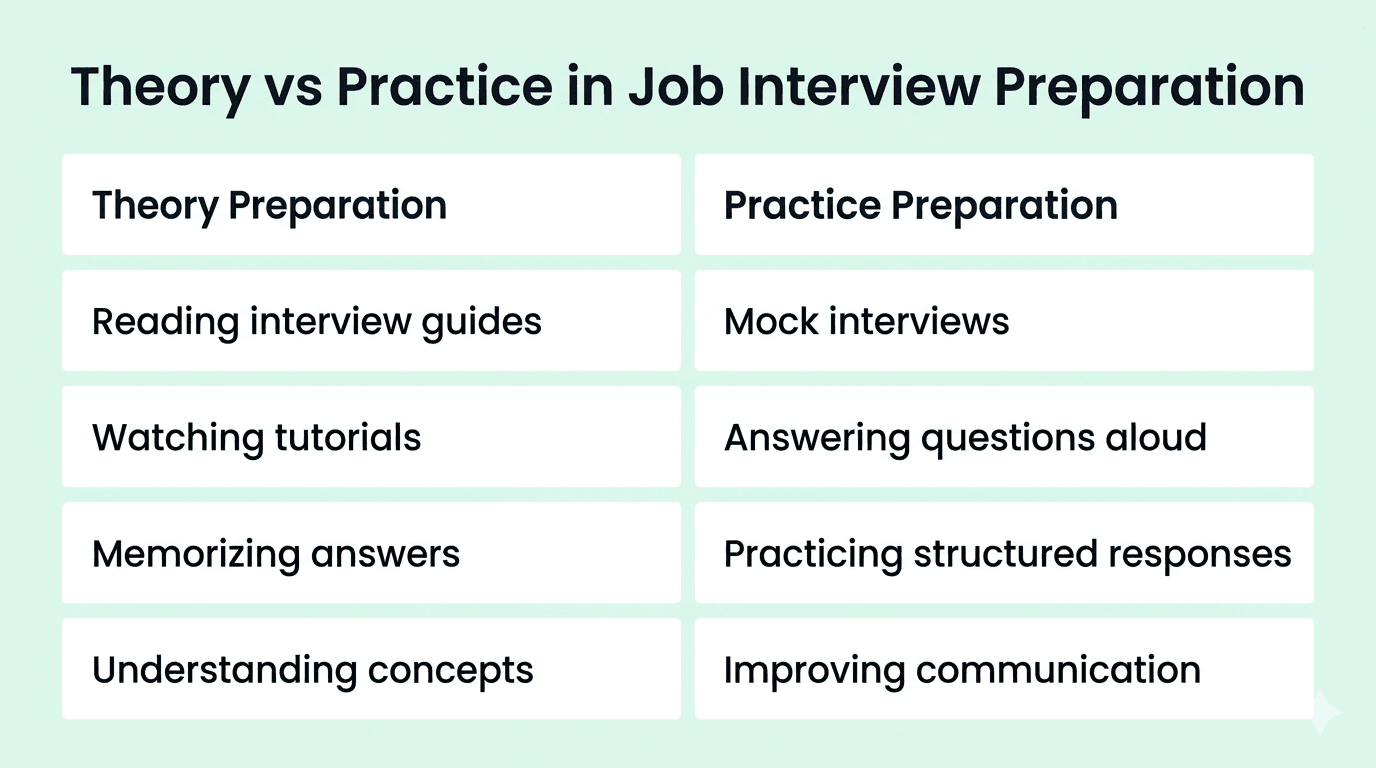
To prepare effectively, it’s important to understand the difference between theory and practice.
Theory includes:
• Learning concepts and definitions
• Studying frameworks and processes
• Reading interview questions and sample answers
Practice includes:
• Speaking answers out loud
• Structuring responses clearly
• Handling follow-up questions
• Managing nervousness and time
Recruiters are not looking for textbook answers. They want to see how you think, explain, and apply knowledge to real problems.
Why Practice Is Equally Important as Theory
Understanding why practice is important in job interviews becomes clear, when you know its impact.
Practice Builds Confidence
Confidence doesn’t come from reading answers. It comes from repeating them until they feel natural. When you practice:
• Your voice becomes steady
• Your thoughts become clearer
• You stop second-guessing yourself
Practice Improves Communication Flow
Many candidates know the answer but struggle to express it. Practice helps:
• Organize thoughts
• Avoid unnecessary details
• Deliver answers in a logical flow
Practice Helps Structure Interview Answers
Interviewers prefer structured responses. Practice allows you to:
• Use frameworks like STAR
• Connect theory with examples
• Stay relevant to the question
Practice Reduces Nervousness
Nervousness often comes from uncertainty. Practicing interview questions reduces fear because:
• You know what to expect
• You’ve handled similar questions before
• You feel prepared rather than anxious
How to Apply Theory to Practice in Interview
Most common questions candidates ask how to apply theory to practice during interviews? The answer lies in bridging concepts with real situations.
Turning Concepts into Structured Answers
Instead of explaining theory in isolation, apply it to experiences.
For example:
Don’t just define a concept. Explain how you used it in a project, internship, or case.
Use structured formats like STAR (Situation, Task, Action, Result). It helps translate theory into practical answers that interviewers understand.
Practicing Real Interview Scenarios
Reading interview questions is helpful, but simulating real interviews is far more effective. Realistic practice includes:
• Answering questions without looking at notes
• Handling follow-up questions
• Managing time while explaining answers
This prepares you for the unpredictable nature of real interviews.
How to Answer Interview Questions and Answers Effectively
Knowing how to answer interview questions properly can significantly improve interview outcomes.
Understand the Question First
Many candidates rush to answer without fully understanding what is being asked. Take a moment to identify the intent behind the question and decide what the interviewer wants to test.
Structure Your Answer Clearly
A clear structure helps interviewers follow your thoughts. Good answers usually:
• Start with a brief context
• Explain the main point
• End with a result or takeaway
Avoid Over-Explaining
Long answers often confuse interviewers. Practice helps you:
• Stay on point
• Avoid unnecessary details
• Answer confidently within time limits
FREE TO USE
8k+ SESSIONS92% FLUENCY4.9★ RATING
Speak With Confidence
Real Conversations. Real Scenarios. Speak until it feels natural.
- Real-Time Speaking Practice
- Guided Conversation Flows
- Instant AI Feedback
Common Problems Candidates Face Without Practice
When candidates skip practice, the same mistakes appear repeatedly.
Freezing During Interviews
Even when candidates know the answer, they may go blank due to nervousness. Practice trains your mind to respond naturally under pressure.
Read More : How to Overcome Interview Fear
Poor Explanation of Skills
Without practice, candidates often mention skills without examples. It fails to show how skills were used, and sounds unsure or vague.
Inconsistent Answers
Unpracticed candidates may give different answers to similar questions. This leaves the wrong impression on the interviewer.
Practical Ways to Improve Interview Performance
Improving interview performance doesn’t need extreme effort, just consistent practice is enough.
- Use Self-Practice Techniques
- Practice answers aloud
- Record yourself and review clarity
- Time your responses
- Peer or Mentor Interviews
- Using Structured Mock Interviews
Many candidates now use AI powered mock interview tools for practice and feedback. These methods help bridge the gap between theory and performance without real interview pressure.
Mock interviews with friends or mentors help you:
• Receive honest feedback
• Improve communication style
• Identify weak areas
Balancing Theory and Practice for Interview Success
To succeed in interviews, candidates must balance learning and practicing.
Here’s a simple action plan:
• Learn key concepts related to the role
• Understand common interview questions
• Practice answers regularly
• Get feedback and refine responses
• Repeat until answers feel natural
Consistency matters more than last-minute preparation. Apply studied theory in the practice sessions.
Conclusion
Job interviews are not exams where memorized answers guarantee success. They are conversations that test clarity, confidence, and application of knowledge.
Learn the concepts, but don’t stop there. Practice until your answers feel natural, structured, and confident. When theory and practice work together, interview success becomes far more achievable.