Loading...
Contents
SEO Is Not Dead
But Your SEO Strategy Might Be Outdated
May 3, 202630 min readUpdated Oct 5, 2026
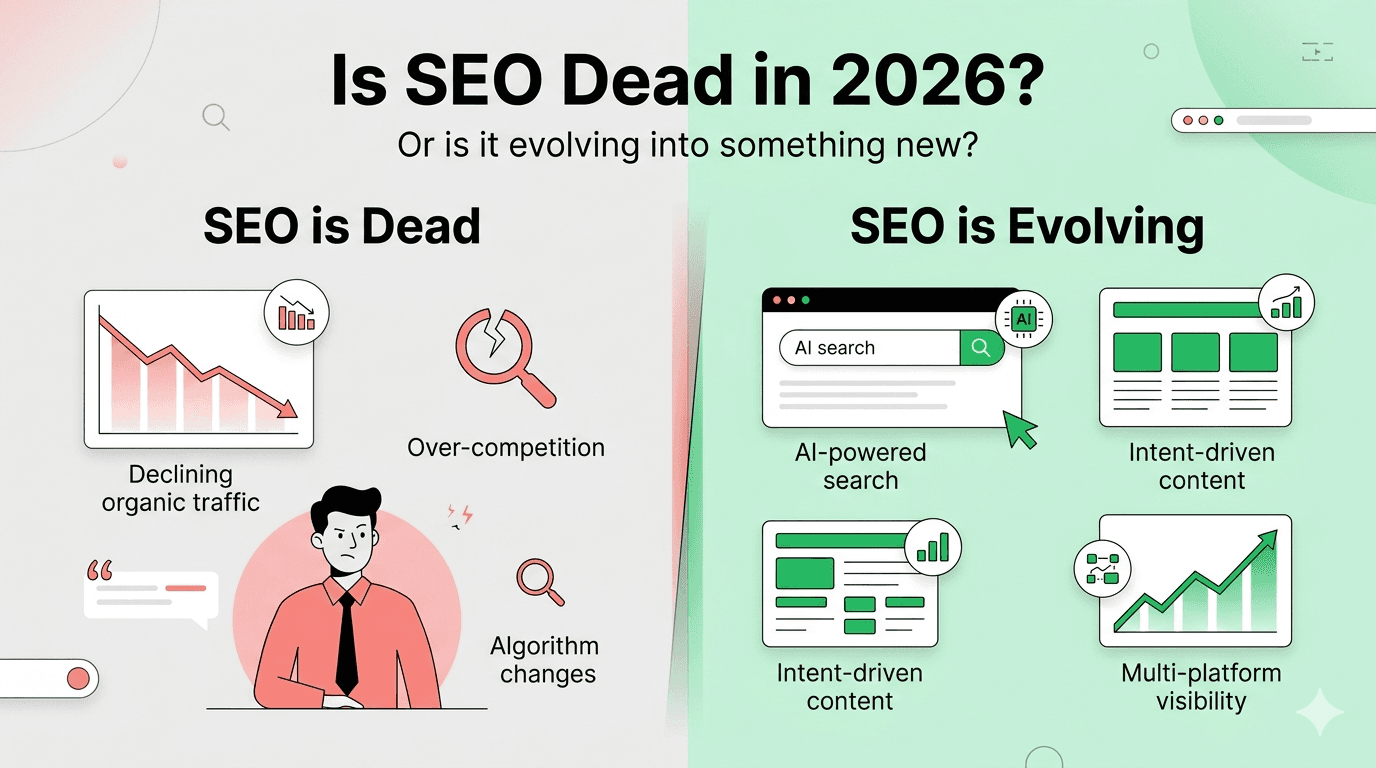
Is SEO dead, a question you hear the most when you talk about traffic growth. But here is the reality. SEO is not dying, it is evolving faster than ever before. Search engines are still the starting point for most online experiences. Whether someone wants to learn a skill, compare products, prepare for an interview, or find a solution to a problem, they still go to search. However, the way search works today is very different from how it worked even three years ago. The strategies that worked earlier like keyword stuffing, publishing lots of low-quality content, or buying backlinks no longer give consistent results. In this article, we will answer an important question many marketers are asking: Is SEO still relevant in 2026? We will also explore how AI is changing SEO, what recent Google updates mean for content creators, and what strategies actually work today.
FREE TO USE
25K+ INTERVIEWS4.8★ RATING68% IMPROVEMENT
Crack Your Dream Job
Real Interviews. Real Pressure. Practice until it feels easy.
- Seamless Interview Experience
- Resume & JD Questions
- Instant Personalized Feedback
Is SEO Still Relevant in 2026?
The short answer is yes more than ever. Even though social media, AI tools, and other platforms are growing, search engines still bring a large amount of traffic on the internet. Studies across digital marketing platforms consistently show that: Organic search generates around 50–55% of total website traffic. More than 8.5 billion searches happen on Google every day. Around 68% of online experiences begin with a search engine. This means people are still actively searching for answers, products, and information. For example, users still search queries like: “how to prepare for data science interview” “best digital marketing strategies” “python interview questions for beginners” These searches represent real problems people want to solve. Businesses that appear in these search results gain something extremely valuable, consistent and long-term traffic without paying for every click. That is the power of SEO. However, the way websites earn those rankings has changed significantly.
Why People Think SEO Is Dead
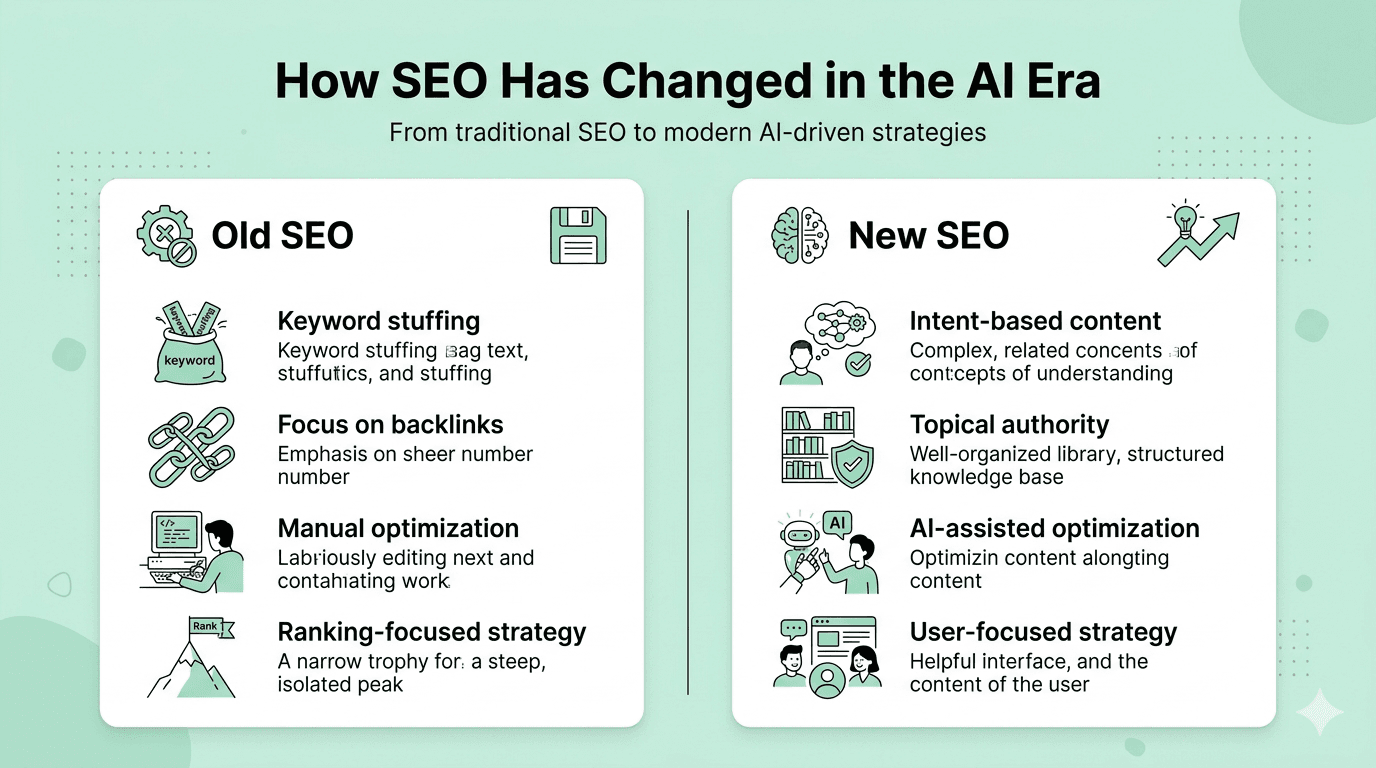
The belief that SEO is dying did not appear randomly. Several major changes in search engines have created this perception. Understanding these changes helps explain what is really happening. Search engines are increasingly showing AI-generated summaries directly on the results page. Instead of clicking multiple websites, users can sometimes read a quick AI explanation. This has led to a rise in zero-click searches, where users get answers without visiting a website. But this does not eliminate SEO. AI summaries are created using information from existing websites. This means high-quality websites are still the main source of those answers. AI writing tools have made it extremely easy to produce large volumes of content. As a result, search engines have seen a massive increase in low-quality, repetitive articles. To maintain search quality, Google has become much stricter about evaluating content value. This change has affected websites that relied on many low-quality articles instead of useful content. Search engines continuously update their algorithms to improve results. Many websites that relied on outdated SEO tactics lost rankings after these updates. When website traffic suddenly drops, many people think SEO has stopped working. But actually, the search algorithm has just stopped rewarding weak or outdated strategies.AI Answers and AI Overviews
Explosion of AI-Generated Content
Frequent Algorithm Updates
How SEO Is Changing in 2026
The biggest shift in SEO today is a move from keyword optimization to user value. Earlier SEO strategies focused mainly on ranking for specific keywords. If a page contained the right phrases and enough backlinks, it could rank even if the content itself was not particularly useful. Today, search engines evaluate content much more deeply. Modern SEO focuses on several key elements. Search Intent Search engines now prioritize intent over keywords. For example, someone searching: “data science interview preparation” may actually want: interview questions mock interview practice preparation strategies Search engines try to understand the real goal behind the search and show pages that solve the entire problem. Content that only targets a keyword without addressing the user’s need rarely performs well anymore.
Topic Authority
Another major shift is from single articles to topic authority.
Instead of ranking a website for just one keyword, search engines now check if the website covers the topic comprehensively.
For instance, a website focusing on interview preparation may publish articles about:
interview mistakes
mock interview practice
behavioral interview questions
technical interview preparation
When a website consistently publishes useful content around a specific theme, search engines begin to treat it as a trusted resource for that topic.
Content Depth and Clarity
Short, surface-level articles rarely rank anymore.
Search engines now analyze factors such as:
completeness of information
clarity of explanations
examples and practical insights
Content that helps readers understand a topic performs better.
Content written only to target keywords does not work as well.
How AI Is Changing SEO in 2026
Artificial intelligence is influencing search in several ways. Rather than replacing SEO, AI is actually making quality content more important than ever. AI systems help search engines analyze content structure, context, and usefulness. They can detect patterns that indicate low-quality pages, such as: repetitive wording shallow explanations content created purely to rank for keywords This allows search engines to filter out pages that do not genuinely help users. Search engines now understand relationships between topics. For example, when someone searches for: “how to prepare for a technical interview” search engines recognize related concepts such as: coding practice mock interviews behavioral questions problem-solving skills Because of this, content that covers different parts of a topic usually ranks better than pages focused on just one keyword. Many searches are becoming more conversational because users interact with voice assistants and AI tools. Instead of typing short phrases, users increasingly search questions like: “What are the best ways to prepare for a software engineering interview in two weeks?” Content that answers these questions clearly has a higher chance of appearing in search results and AI summaries.Smarter Content Evaluation
Semantic Search
Conversational Search
FREE TO USE
8k+ SESSIONS92% FLUENCY4.9★ RATING
Speak With Confidence
Real Conversations. Real Scenarios. Speak until it feels natural.
- Real-Time Speaking Practice
- Guided Conversation Flows
- Instant AI Feedback
Important Google Updates That Changed SEO
Several recent Google updates have significantly influenced SEO practices. Understanding these updates helps explain why certain strategies no longer work. Google introduced the helpful content update to focus on content written for people rather than search engines. This update targets websites that publish a lot of content just to rank in search results, without actually helping readers. Key signals Google looks for include: originality expertise usefulness depth of explanation Websites that produce genuinely helpful resources are more likely to benefit from this update. Google has also released multiple spam-focused updates to detect manipulative practices such as: link spam automatically generated content large-scale low-quality pages These updates reduced the effectiveness of tactics that once artificially boosted rankings. Google now places strong emphasis on Experience, Expertise, Authority, and Trust (EEAT). This means search engines evaluate: whether the content creator has relevant knowledge whether the website demonstrates authority on a topic whether the information is reliable and trustworthy Content written with real insights and expertise has a much stronger chance of ranking well.Helpful Content Update
Spam Updates
EEAT Signals
What Actually Works for SEO in 2026
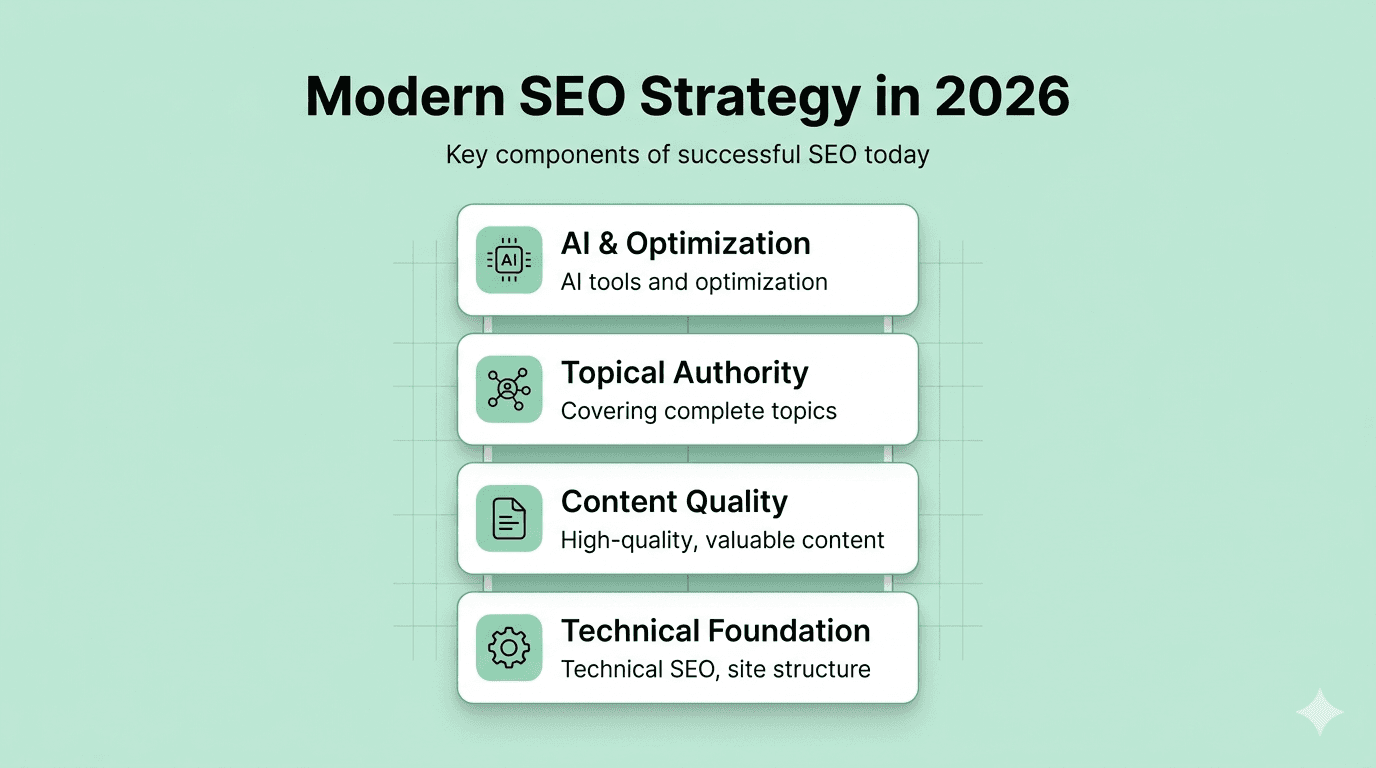
If outdated SEO strategies no longer work, what should websites focus on instead? Several approaches consistently produce results. Instead of publishing random articles across unrelated topics, successful websites focus on specific topics. For example, a platform helping people prepare for interviews could publish content about: interview preparation strategies common interview mistakes technical interview questions mock interview benefits Over time, this builds a knowledge ecosystem around the topic. Search engines begin to recognize the website as a valuable resource within that domain. Content that performs well usually answers real questions users are asking. Instead of writing articles simply to include keywords, focus on problems people want to solve. Examples include: “how to overcome interview anxiety” “how to prepare for technical interviews in 30 days” “common mistakes candidates make in interviews” Articles that solve specific problems naturally attract both readers and search traffic. AI tools can be useful for: research outlining content analyzing trends However, successful content still requires human perspective. Personal insights, real examples, and practical explanations make content more valuable. Search engines increasingly reward content that demonstrates real understanding of a topic.Building Topic Authority
Creating Problem-Solving Content
Combining AI With Human Insight
Does SEO Still Work for Businesses?
For businesses, SEO remains one of the most sustainable marketing channels. Unlike paid advertising, organic traffic does not stop the moment you stop spending money. A well-optimized article can continue generating visitors for years. Many SaaS companies, educational platforms, and online services rely heavily on SEO to acquire users. For example: Educational platforms attract students through informational content. SaaS tools publish guides that solve industry problems. Blogs generate authority by answering frequently searched questions. Over time, this content builds trust with both users and search engines. The result is compounding traffic growth. Each new article strengthens the overall authority of the website.
The Future of SEO
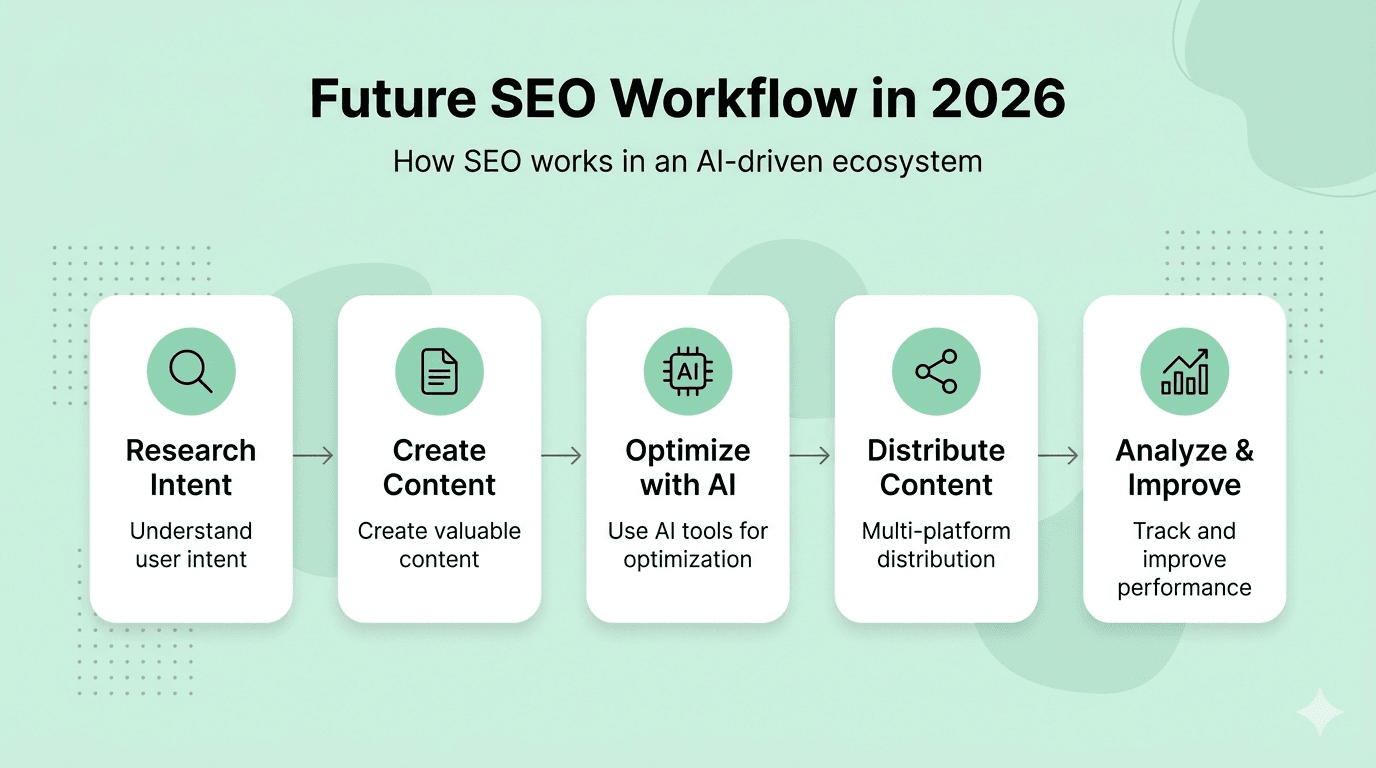
Looking ahead, SEO will likely continue evolving alongside AI and new search technologies. However, the core principle will remain the same. Search engines exist to help users find the best possible answers. Websites that provide those answers clearly, accurately, and helpfully will continue to perform well. The future of SEO will revolve around three main elements: deep expertise in specific topics high-quality problem-solving content trust and authority built over time In other words, SEO is moving away from technical tricks and closer to genuine knowledge sharing. Read More: Can AI Replace Human Writers?
Conclusion
SEO is not dead in 2026. What has changed are the shortcuts that once allowed websites to rank without providing real value. Search engines are becoming smarter, AI is improving content evaluation, and users expect higher quality information than ever before. This means the future of SEO belongs to websites that focus on helping people rather than manipulating algorithms. Businesses and creators who adapt to this shift will continue to benefit from one of the most powerful sources of online traffic. Because at the end of the day, as long as people search for answers, SEO will remain relevant.