Loading...
Contents
How Keyword Research Is Changing in 2026
Keyword Research in the Age of AI
May 4, 202630 min readUpdated Oct 7, 2026
For many years, keyword research has been the foundation of SEO. If you wanted your blog or website to rank on search engines, the first step was always the same: find the right keywords. But today the search landscape is changing quickly. Artificial intelligence is transforming how search engines understand content, how people search for information, and how results are displayed. Because of this shift, many marketers are asking an important question: How keyword research is changing in 2026? Some people believe keyword research is becoming less important because AI can understand context and generate answers instantly. However, the truth is different. Keyword research is still essential for SEO, but the way you do it must evolve. If you continue using old tactics such as chasing only high-volume keywords or stuffing keywords in your content, you may struggle to rank. In this guide, you will learn: how keyword research is changing in 2026 how AI is changing keyword research the best way to do keyword research today steps for keyword research that actually work outdated strategies that are failing Let’s start by understanding why keyword research still matters.
FREE TO USE
25K+ INTERVIEWS4.8★ RATING68% IMPROVEMENT
Crack Your Dream Job
Real Interviews. Real Pressure. Practice until it feels easy.
- Seamless Interview Experience
- Resume & JD Questions
- Instant Personalized Feedback
Why Keyword Research Still Matters
Even with the rise of AI search tools, keyword research has not disappeared. In fact, it is still one of the most important parts of SEO. Every day, billions of searches happen on search engines. People search for answers, products, tutorials, and solutions to their problems. For example, people still search queries like: how to prepare for a job interview best SEO tools for beginners how to learn Python quickly These searches represent real user intent. When you understand these queries, you can create content that answers those needs. Keyword research helps you understand three important things: What people are searching for Why they are searching for it How you can help them with your content However, keyword research today is not just about finding words with high search volume. Search engines have become much smarter. They now understand context, meaning, and relationships between topics. Because of this, modern keyword research focuses more on user intent and topic relevance rather than individual keywords.
How Keyword Research Is Changing in 2026
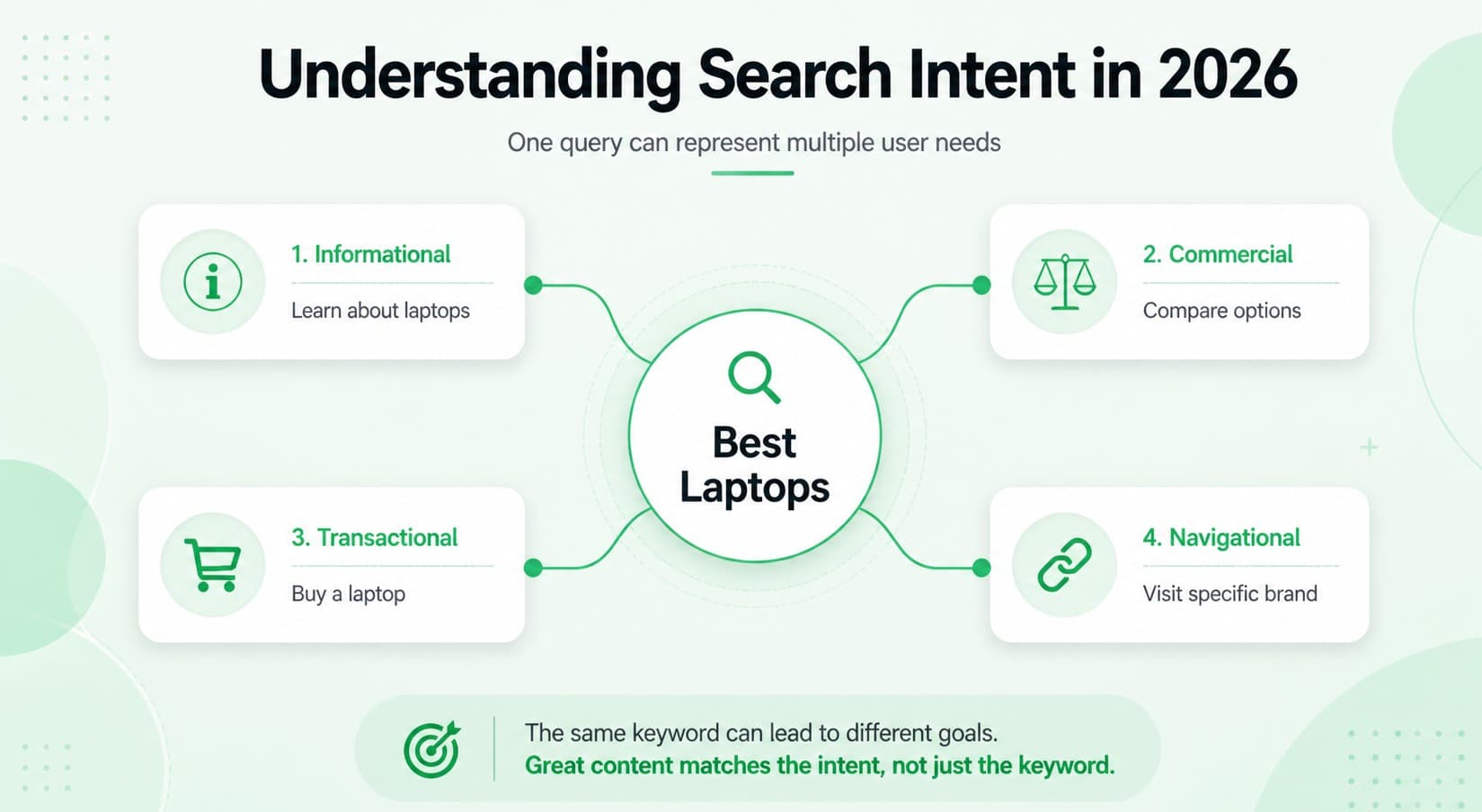
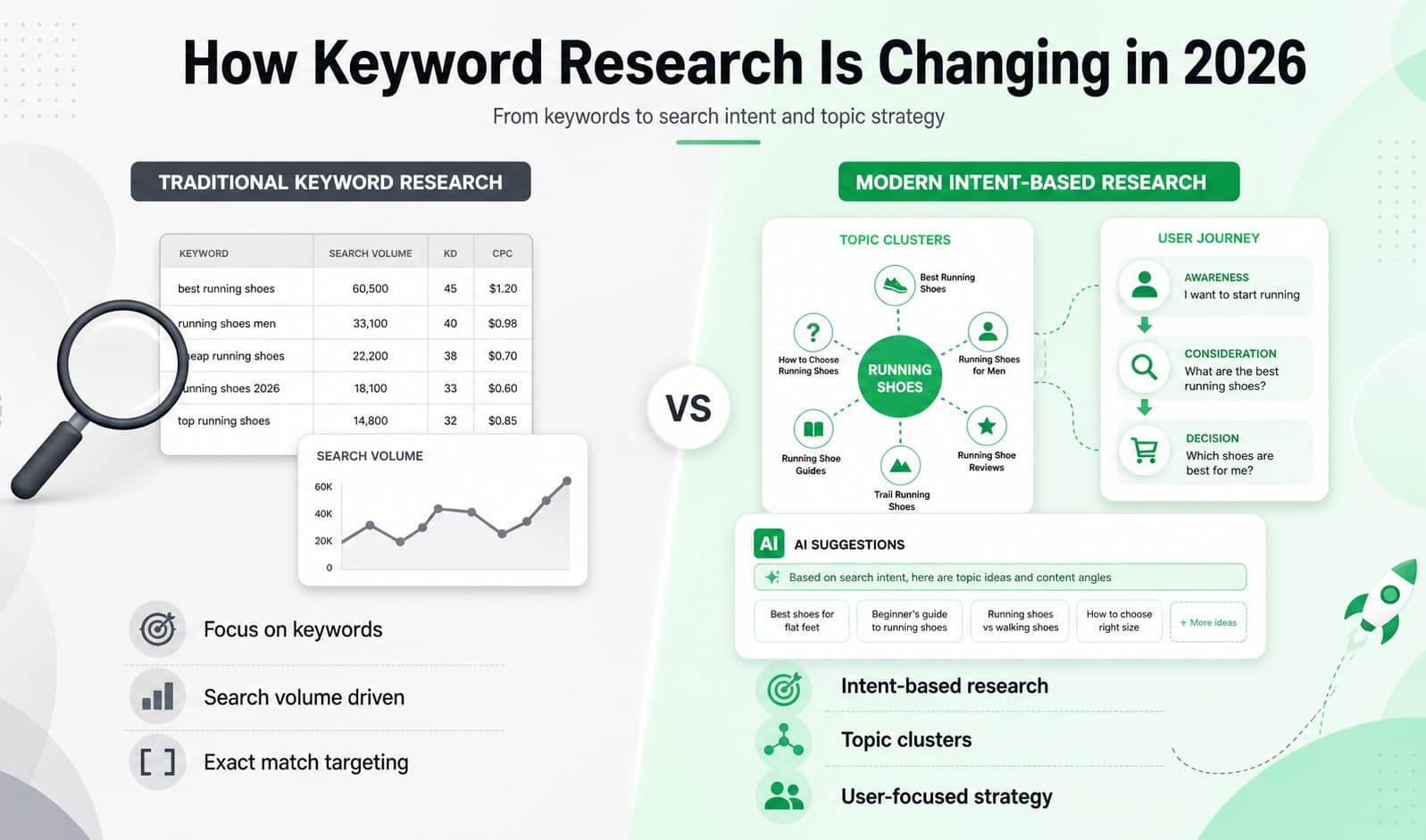
To succeed in SEO today, you need to understand how keyword research is evolving. The strategies that worked years ago are no longer enough. Here are some major changes you should know. In the past, SEO focused heavily on exact keywords. For example, if you wanted to rank for “SEO tips,” you simply repeated that keyword multiple times in your article. Today, search engines try to understand what the user actually wants to learn. When someone searches “SEO tips,” they may want: beginner SEO advice technical SEO improvements tools for SEO Search engines analyze the intent behind the search and show pages that answer the user's needs. This means when you do keyword research, you must ask yourself: What problem is the user trying to solve? If your content answers that problem clearly, you have a better chance of ranking. Another major change is the shift from single keyword targeting to topic clusters. In the past, many websites created one article for one keyword. Today, search engines prefer websites that cover a topic deeply. For example, instead of writing only one article about keyword research, a website might publish several related articles such as: keyword research strategies keyword research mistakes keyword research tools keyword research for beginners This group of articles creates a topic cluster. It signals to search engines that your website has strong knowledge about that topic. As a result, your content becomes more authoritative. Traditional keyword research focused mainly on search volume. Marketers tried to find keywords that thousands of people searched each month. However, high-volume keywords are often extremely competitive. Today, many successful websites focus on problem-based keywords instead. These are queries where users are searching for specific help. For example: how to write SEO friendly blog posts how to find low competition keywords how to improve website ranking These queries may have lower search volume, but they attract users who are actively looking for solutions. If your content solves their problem clearly, you can gain both traffic and trust.1. Search Intent Is More Important Than Keywords
2. From Single Keywords to Topic Clusters
3. Problem-Based Keywords Are Becoming More Valuable
How AI Is Changing Keyword Research
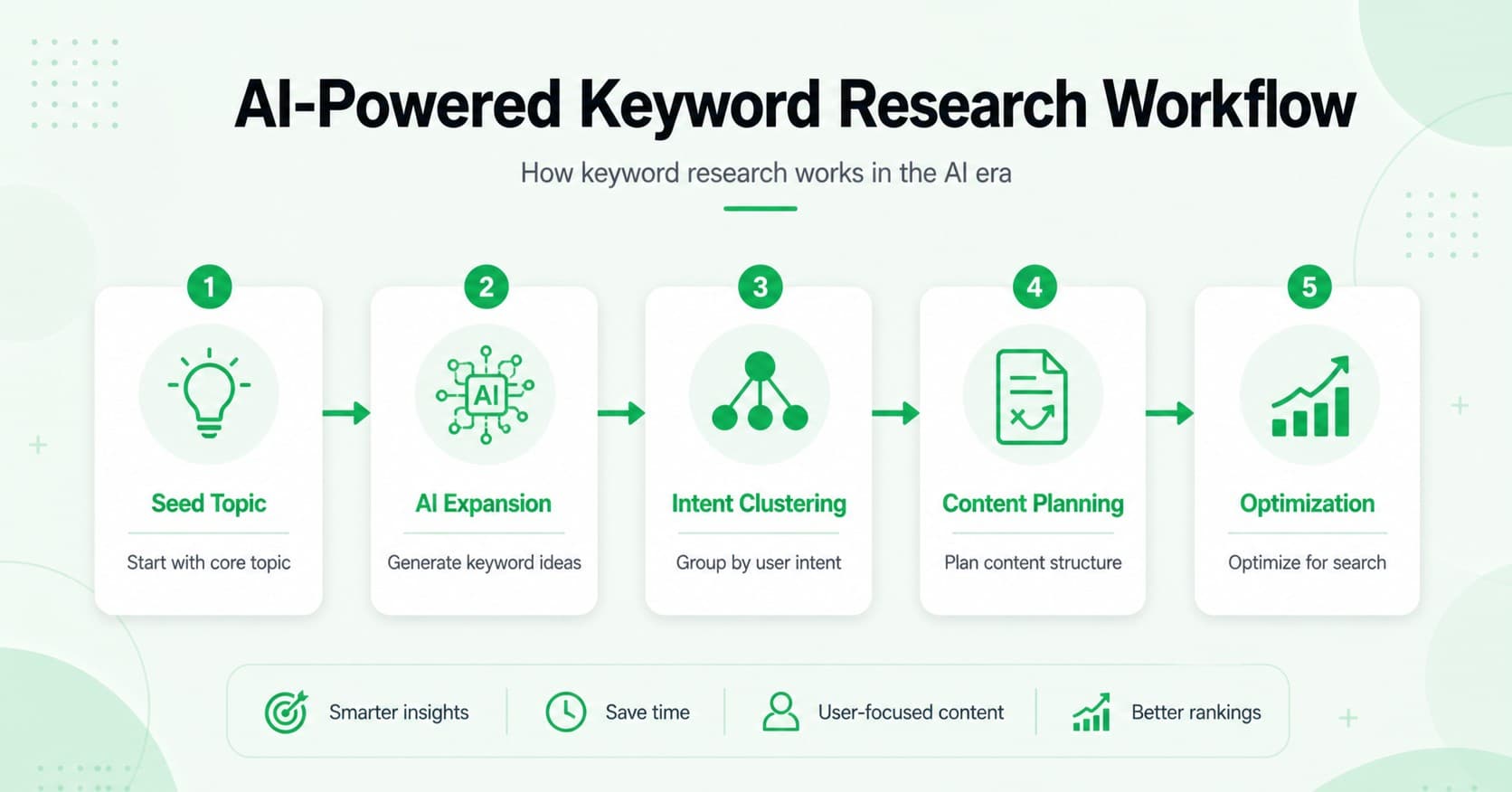
Artificial intelligence is also influencing how keyword research works today. Instead of replacing keyword research, AI is making it more intelligent and data-driven. Let’s look at a few important ways AI is changing keyword research. Search engines now use AI to understand semantic meaning. This means they can recognize that different phrases may have the same intent. For example, these searches may lead to similar results: how to prepare for an interview interview preparation tips best ways to prepare for job interviews Even though the wording is different, the search engines understand the same topic. Because of this, you do not need to repeat the exact keyword many times. Instead, your content should naturally cover the topic. AI-powered SEO tools can analyze large amounts of search data and suggest related queries. These tools help you find: long-tail keywords related questions semantic keywords content gaps This allows you to create more comprehensive content that answers multiple user questions. One challenge of AI is that content creation has become easier. Many websites now publish large volumes of AI-generated articles. This increases competition in search results. Because of this, search engines focus more on content quality and usefulness. If your content provides clear explanations, useful insights, and practical examples, it will stand out from generic articles.AI Helps Search Engines Understand Context
AI Helps Discover Related Keywords
AI Is Increasing Content Competition
The Best Way to Do Keyword Research Today
If keyword research has changed, what should you focus on now? The best way to do keyword research today is to focus on user intent, long-tail queries, and topic relevance. Here are some strategies that still work well. Long-tail keywords are longer and more specific search queries. For example: Instead of targeting “SEO tools” you could target “best SEO tools for beginners” These keywords usually have: lower competition clearer search intent better conversion potential For new blogs or smaller websites, long-tail keywords are often easier to rank for. Before choosing a keyword, you should look at the pages that already rank for it. Ask yourself: What type of content is ranking? Are they guides, lists, or tutorials? What questions do they answer? This helps you understand what users expect from that search query. Instead of targeting random keywords, focus on building authority around a specific topic. For example, if your website focuses on digital marketing, you might publish content about: SEO basics keyword research strategies content marketing link building Over time, this builds a strong content ecosystem that search engines trust.Focus on Long-Tail Keywords
Analyze Search Results
Build Topic Authority
FREE TO USE
8k+ SESSIONS92% FLUENCY4.9★ RATING
Speak With Confidence
Real Conversations. Real Scenarios. Speak until it feels natural.
- Real-Time Speaking Practice
- Guided Conversation Flows
- Instant AI Feedback
Outdated Keyword Research Tactics That Fail Today
Some keyword strategies that worked years ago are no longer effective. If you rely on these tactics, your content may struggle to rank. Here are some common mistakes. Repeating the same keyword many times in your content reduces readability and looks unnatural. Search engines now prefer content written naturally for readers. High search volume does not always mean better rankings. Many high-volume keywords are extremely competitive. Often, smaller niche keywords provide better opportunities for traffic. Content created only to include keywords often lacks real value. Search engines prioritize content that helps readers understand a topic clearly. Even if you target the right keyword, your content will not rank well if it does not answer the user's question. Always think about the user's problem first.Keyword Stuffing
Focusing Only on Search Volume
Writing Content Only for Search Engines
Ignoring Search Intent
Steps for Keyword Research in 2026
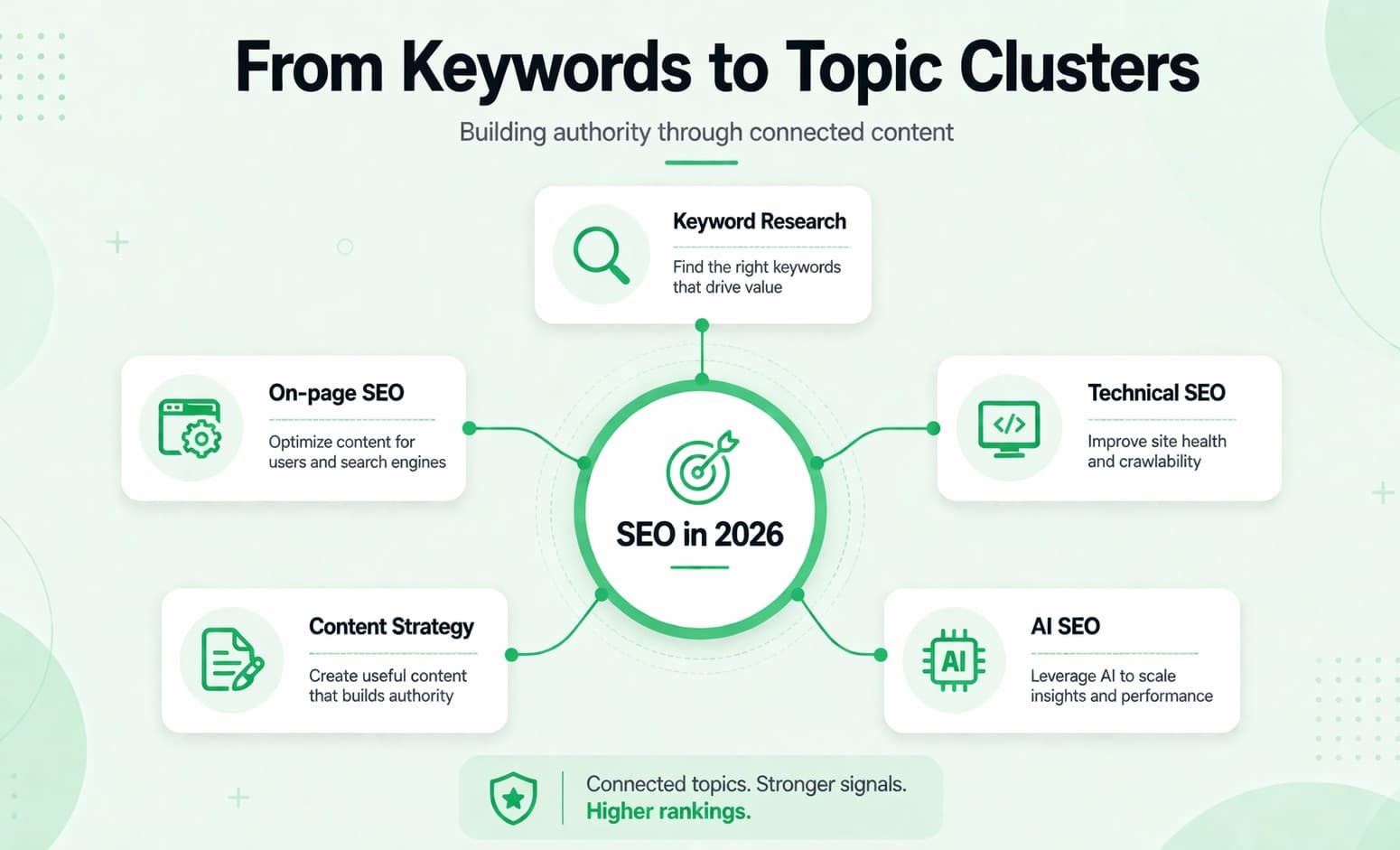
If you want a simple process for keyword research, you can follow these steps. Start by thinking about your audience. What problems are they trying to solve? What questions do they ask? Understanding your audience helps you discover meaningful keywords. Choose main topics related to your website or niche. For example: SEO, digital marketing, blogging or interview preparation. These topics will guide your keyword research. Use tools and search suggestions to find real queries people search. Sources include: search engine autocomplete related searches SEO tools This helps you identify potential keywords. Look at the top ranking pages and understand what users expect from that search. Are they looking for tutorials, guides, or comparisons? Select keywords that match your content and have reasonable competition. Long-tail queries often provide the best opportunities for new content. Finally, create content that clearly answers the user's question. Focus on providing useful explanations rather than simply targeting keywords.Step 1: Understand Your Audience
Step 2: Identify Core Topics
Step 3: Discover Search Queries
Step 4: Analyze Search Intent
Step 5: Choose Long-Tail Keywords
Step 6: Create Helpful Content
The Future of Keyword Research
Keyword research will continue evolving as AI and search technology improve. In the future, SEO will focus more on: conversational search queries topic-based optimization user intent understanding high-quality helpful content Instead of optimizing for isolated keywords, successful websites will focus on topics, expertise, and value for readersRead Here: Can AI Replace Human Writers?
Conclusion
Keyword research is not disappearing in the age of AI. Instead, it is becoming more sophisticated. Search engines now understand context, intent, and topic relationships better than ever before. This means your goal should not be to simply find keywords with high search volume. Instead, you should focus on understanding your audience and solving their problems. When you create content that answers real questions and provides genuine value, search engines are more likely to reward your efforts.