Loading...
Contents
10 Best AI Mock Interview Platforms in 2026
Oct 4, 202623 min read
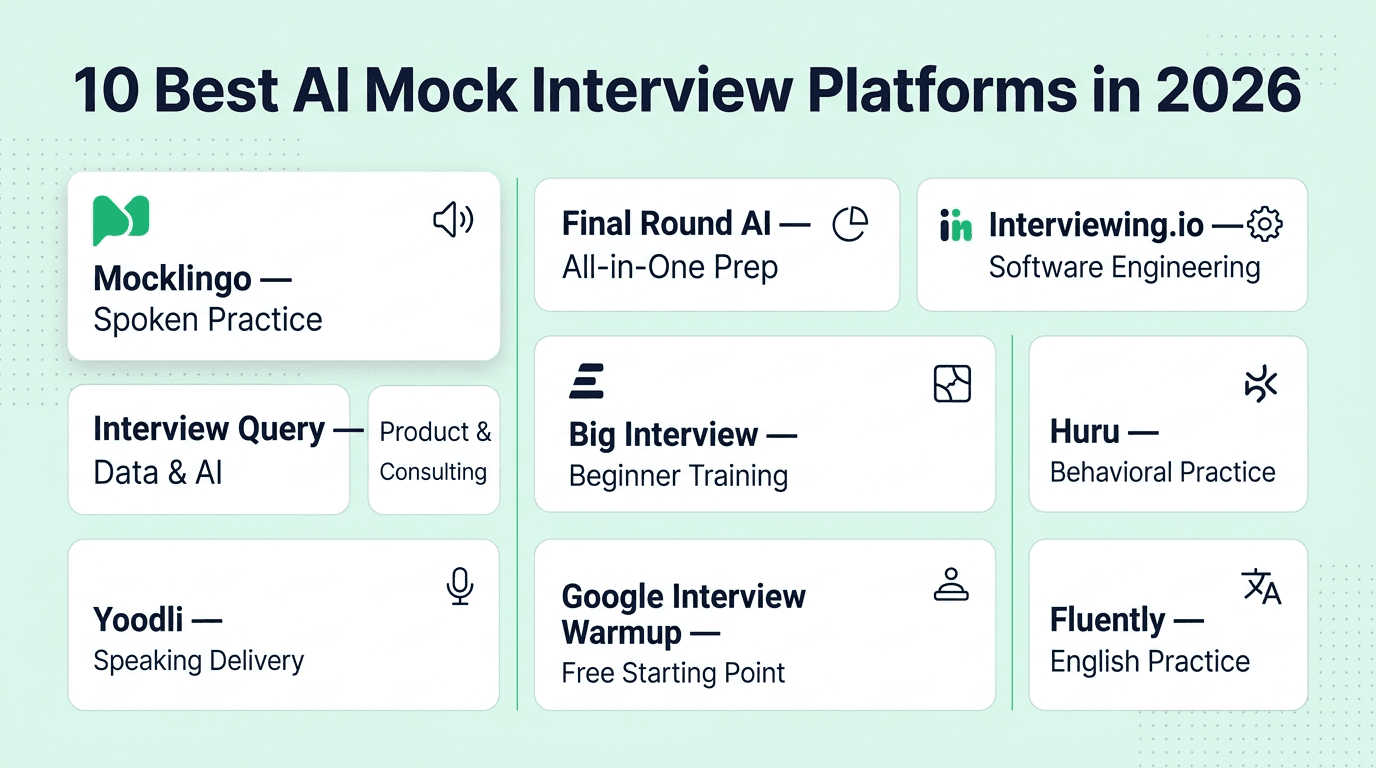
The best AI mock interview platforms in 2026 are Mocklingo, Final Round AI, Interviewing.io, Interview Query, Exponent, Big Interview, Huru, Yoodli, Google Interview Warmup and Fluently. Mocklingo suits freshers and non native English speakers who want spoken practice with follow up questions. Interviewing.io, Interview Query and Exponent suit technical, data and product roles. The right choice depends on your role, your interview format and whether your weak spot is content or delivery.
Interview preparation used to mean practising in front of a mirror or asking a friend to throw a few questions at you. Now you can sit down at any hour, speak your answers out loud and get feedback within minutes. That is the real appeal of an AI mock interview. The catch is that the market is crowded, and not every AI mock interview site does the same job. Some tools simulate a full conversation. Some only generate questions. Some are built for coding rounds, and a few are really live assistants that whisper answers during a real interview. This guide sorts through all of that so you can pick a mock interview platform that fits your situation.
FREE TO USE
25K+ INTERVIEWS4.8★ RATING68% IMPROVEMENT
Crack Your Dream Job
Real Interviews. Real Pressure. Practice until it feels easy.
- Seamless Interview Experience
- Resume & JD Questions
- Instant Personalized Feedback
What is an AI mock interview?
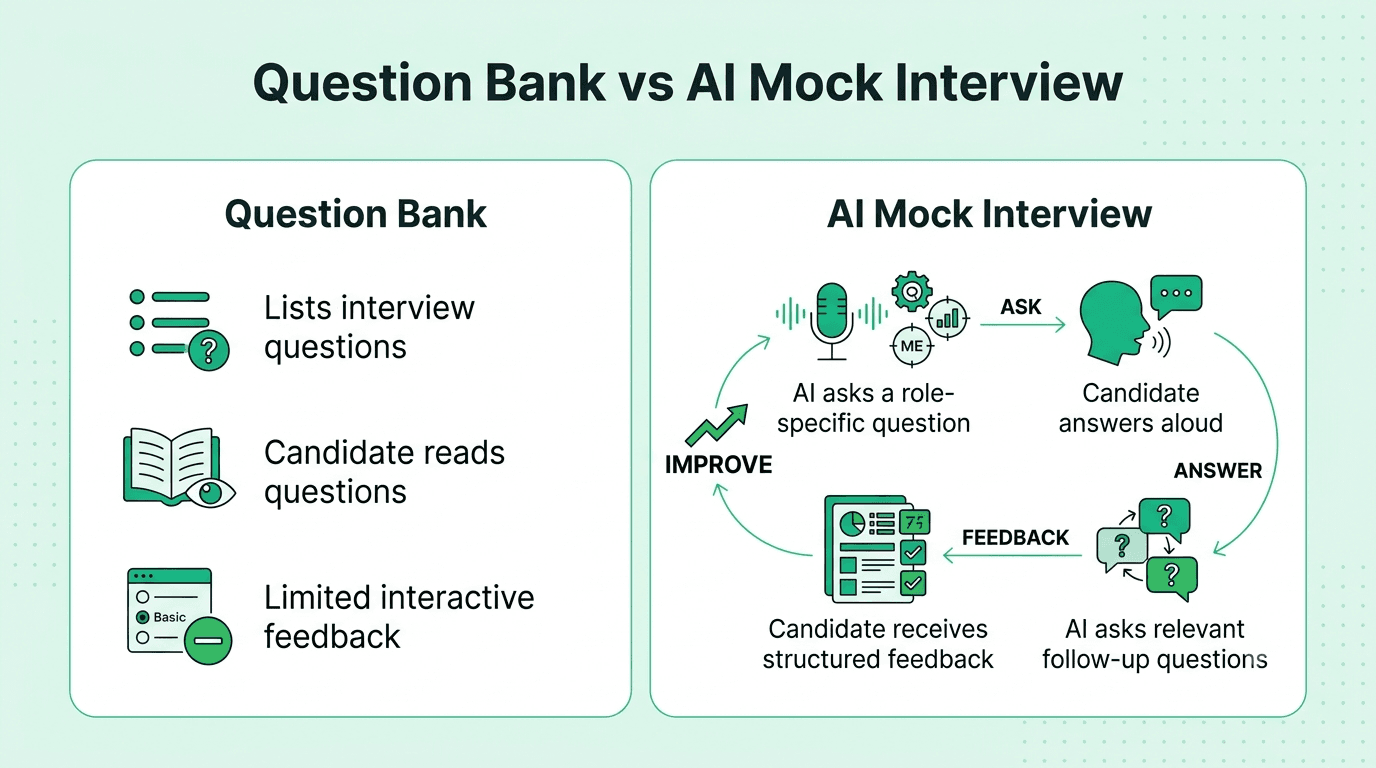
An AI mock interview is a practice session where an AI interviewer asks you questions, listens to or reads your answers and then gives feedback on what worked and what did not. The better platforms ask follow up questions, the way a real interviewer would, and comment on both what you said and how you said it. A tool that only hands you a list of questions is a question bank. A tool that lets you answer, probes your answer and scores it is a mock interview platform. That difference matters when you compare options.
How did we choose the best AI mock interview platforms?
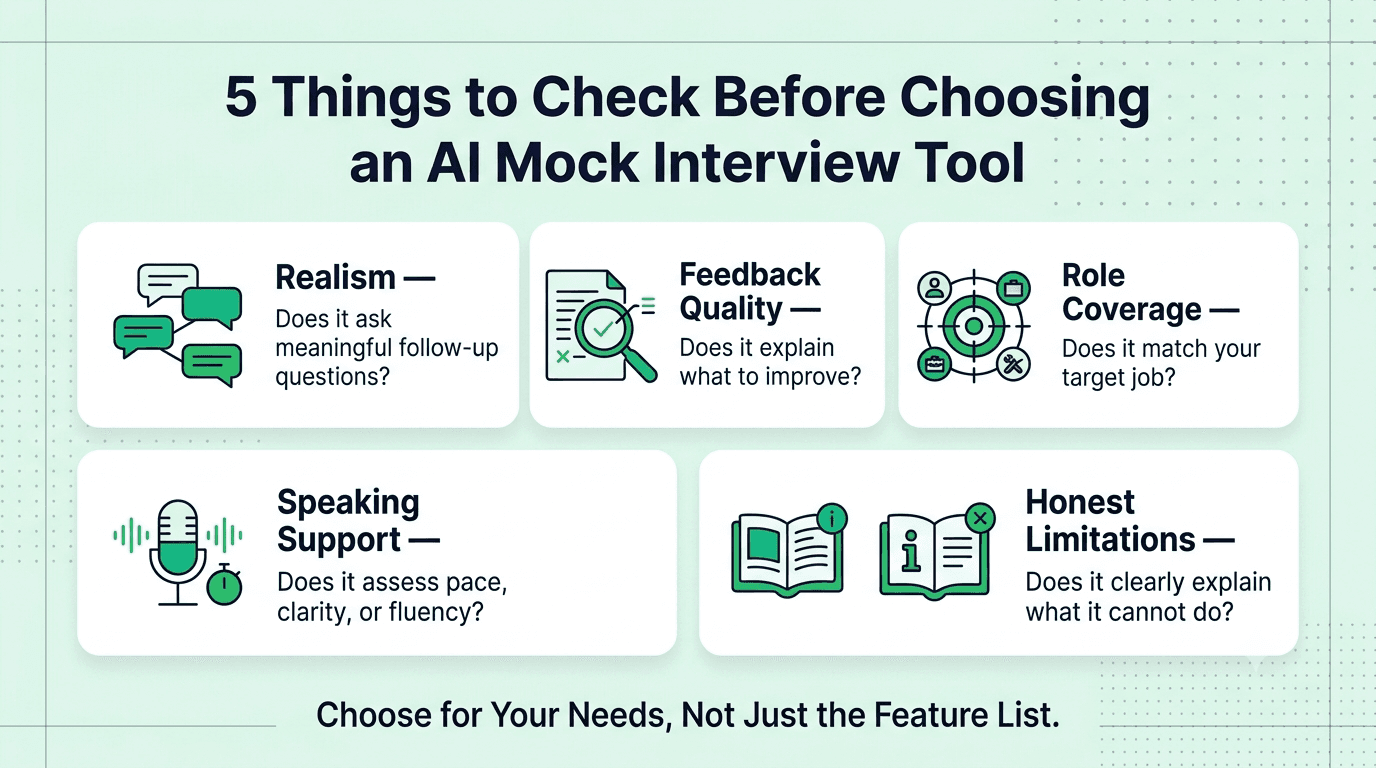
We reviewed what leading comparison guides say about each platform, checked how each product describes itself, and judged every tool on five things: Realism. Does it feel like a conversation, with follow up questions, or just prompts on a screen? Feedback quality. Does it explain what to fix, or only give a score? Role coverage. Can it handle your actual job, not just generic questions? Speaking support. Does it help with pace, clarity and fluency, not only content? Honest limits. Every tool is better at some things than others, so we say where each one falls short. Features and pricing in this category change often. Check each official site for current plans before you pay for anything.
What are the 10 best AI mock interview platforms in 2026?
1. Mocklingo: best for freshers and spoken English practice
Mocklingo is an AI mock interview platform built around speaking. You answer out loud, the AI interviewer asks follow up questions based on what you actually said, and you get feedback on clarity, confidence and structure. It covers both technical and HR style questions, and it has dedicated practice for roles such as full stack, frontend, backend, Python, Java, DevOps and software engineer. What makes it different is the pairing of interview practice with English communication practice. Many candidates in India and other non native English markets know the answer but struggle to say it fluently under pressure. Mocklingo treats that as part of the problem instead of an afterthought. It also includes an ATS resume checker, so you can fix your resume and rehearse your interview in the same place. Who should skip it: Candidates who need a live coding editor with test cases will want a specialist technical platform alongside it. You can try it at Mocklingo AI Mock Interview and build your spoken fluency with English Communication Practice.
FREE TO USE
8k+ SESSIONS92% FLUENCY4.9★ RATING
Speak With Confidence
Real Conversations. Real Scenarios. Speak until it feels natural.
- Real-Time Speaking Practice
- Guided Conversation Flows
- Instant AI Feedback
2. Final Round AI: best for an all in one prep workspace
Final Round AI brings resume context, target roles and mock interviews together in one product, and it offers one of the larger question libraries covering behavioral, technical and consulting formats. That makes it handy if you are preparing for several rounds at once. The thing to be careful about is that Final Round AI also sells a live interview copilot. Many employers prohibit undisclosed outside help during interviews, so the safe way to use it is for rehearsal and review only. Who should skip it: Anyone who wants a simple practice tool without extra features and ethical grey areas.
Interviewing.io
Interviewing.io is known for technical interview practice, including anonymous mock interviews with experienced engineers, and it adds AI feedback in some modes. The value is the setting. You solve problems and explain your thinking under real pressure.
Who should skip it: Non technical candidates. It is not the place for general HR or behavioral preparation.
4. Interview Query: best for data science and AI roles
Interview Query offers an AI interviewer designed for data science, analytics, machine learning and technical product interviews. If your target job asks about SQL, statistics, modelling or case style analytics questions, this is closer to your real loop than a generic tool.
Who should skip it: Anyone outside data and AI roles.
5. Exponent: best for product, data and consulting interviews
Exponent organizes practice into tracks such as product management, engineering, data and consulting cases. Structured roles benefit from structured prep, and its mock sessions push you toward clarifying questions, assumptions and trade offs instead of memorised answers.
Who should skip it: Candidates whose target role does not match one of its tracks.
6. Big Interview: best for beginners who need a method
Big Interview teaches the interview process through a curriculum, then lets you record answers and review them with AI scoring. It is widely used by universities and career centers, which is why many students already have free access through their college.
Who should skip it: Experienced candidates who find a structured course slower than a flexible tool.
7. Huru: best for repeat behavioral practice
Huru works well for the classic problem of rambling answers. It is built around role and job description based practice, so you can drill common behavioral questions until your stories become clear and short.
Who should skip it: Candidates who will face deep technical questioning and need more than first round practice.
8. Yoodli: best for fixing how you sound
Yoodli focuses on delivery. It analyses your pace, filler words and clarity, which makes it useful when your answers are fine but sound scattered. Record a two minute answer to "Tell me about yourself" and the patterns show up fast.
Who should skip it: Anyone who needs role specific questions. It will not challenge your technical reasoning.
9. Google Interview Warmup: best free starting point
Interview Warmup is a light, free way to practise answering common questions and reflect on your responses. It is a gentle first step for people who feel nervous about practising at all. Because availability can change, confirm that it is still accessible in your region before relying on it.
Who should skip it: Anyone preparing for a specialised role or a multi round process.
10. Fluently: best for improving your English during interview practice
Fluently is an English learning app with interview role plays. Its browser based mock interview runs five questions with follow ups in roughly ten to fifteen minutes, and feedback on pronunciation, fluency, vocabulary and grammar comes through the app.
Who should skip it: Candidates who only want interview content feedback and no language coaching.
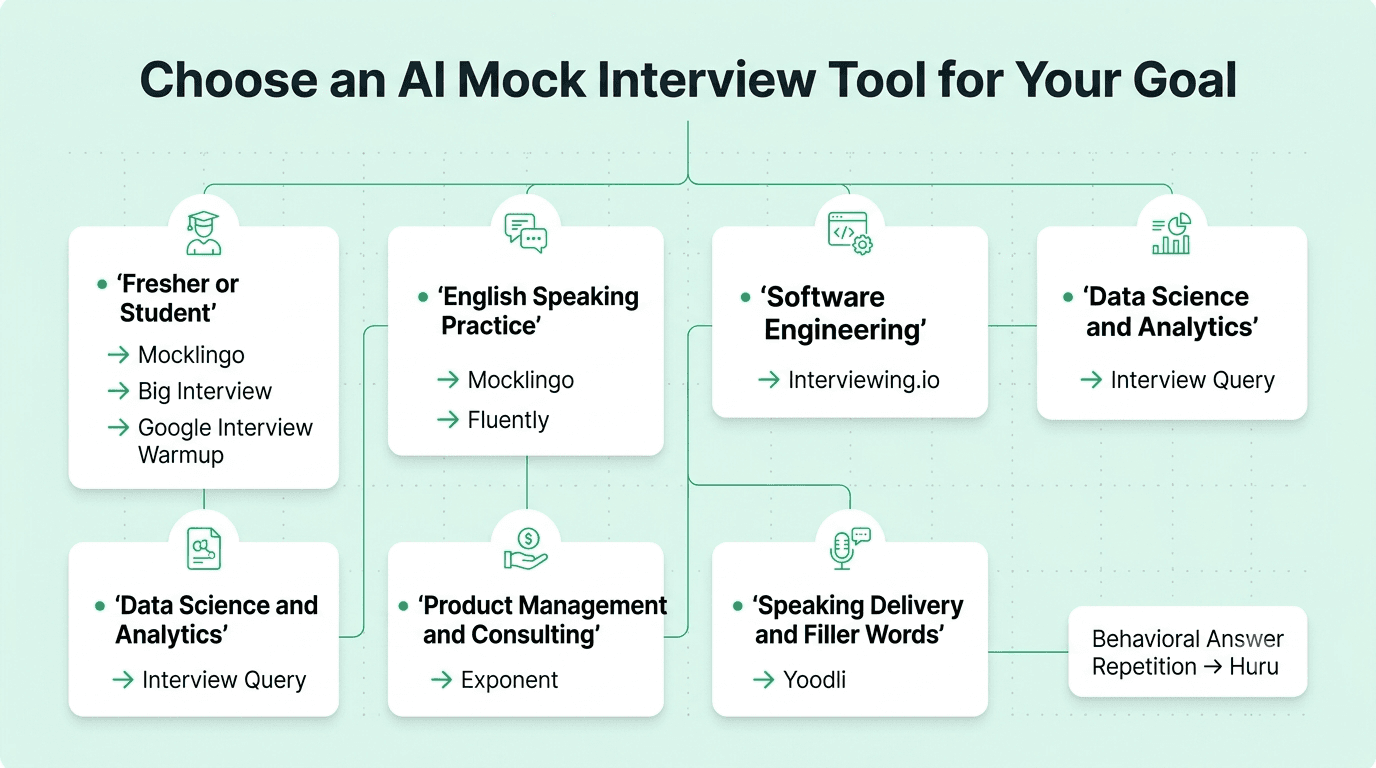
Which AI mock interview site is right for you?
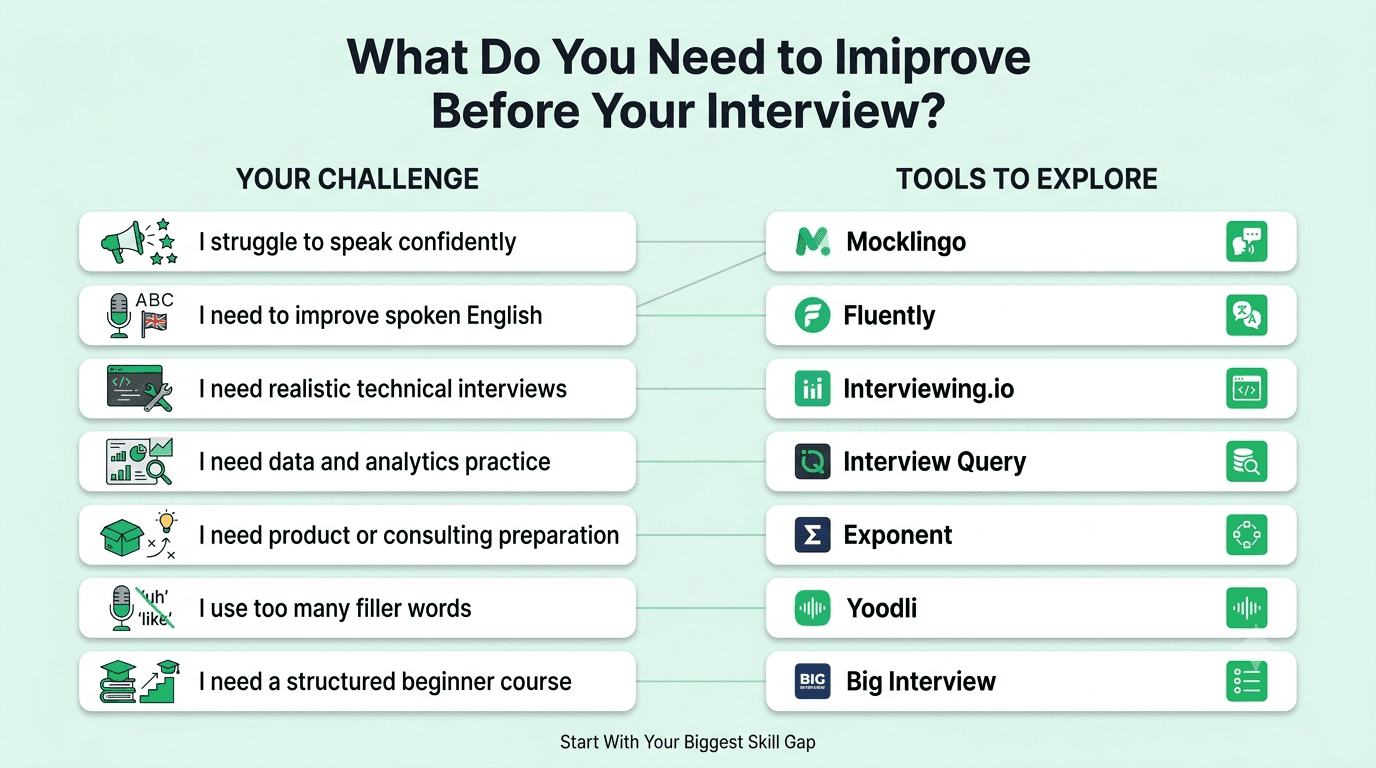
Fresher or student with limited practice: Mocklingo, Big Interview or Google Interview Warmup.
Non native English speaker: Mocklingo or Fluently, since both treat spoken English as part of the job.
Software engineer: Interviewing.io, paired with a spoken practice tool.
Data scientist or analyst: Interview Query.
Product manager or consultant: Exponent.
Answers are good but sound messy: Yoodli.
Need volume on behavioral questions: Huru.
Want one workspace for everything: Final Round AI, used for rehearsal only.
How do you get the most out of an AI mock interview?
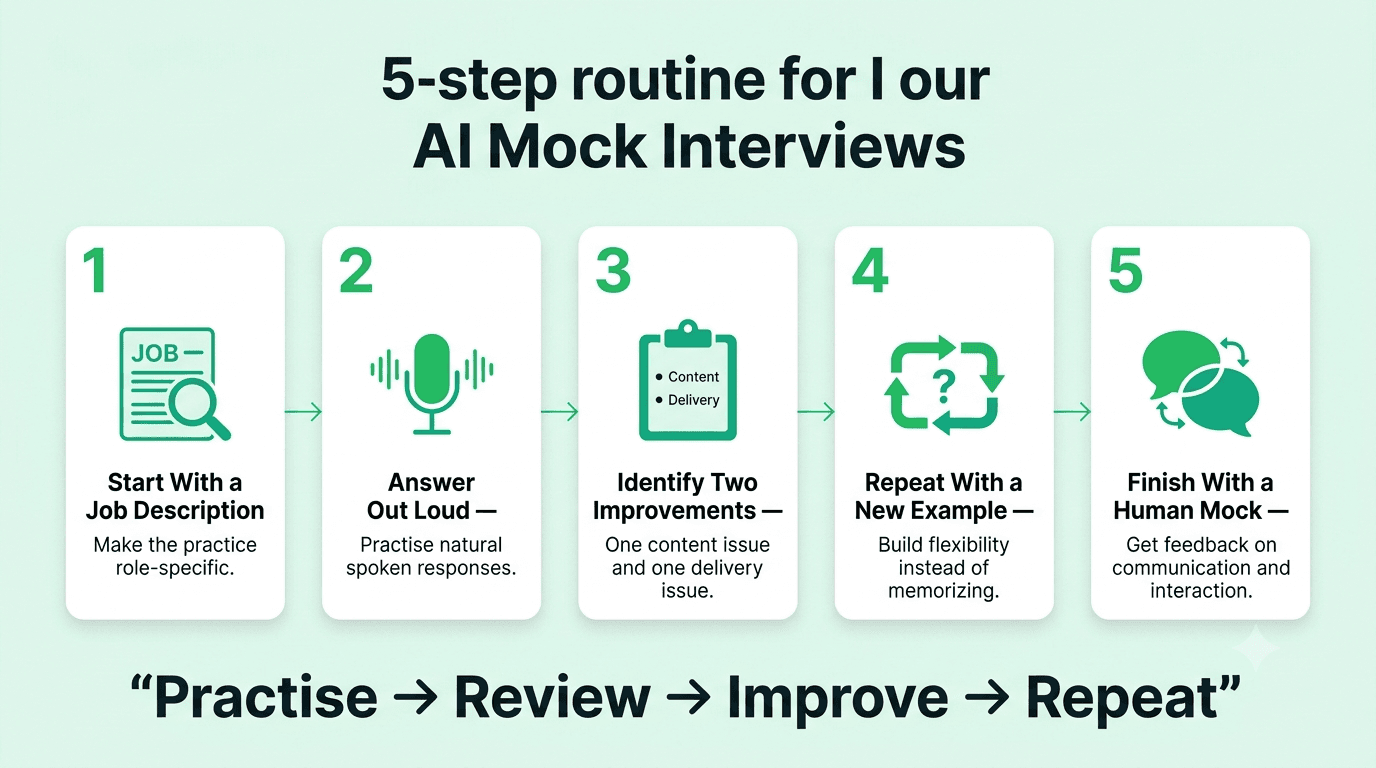
Good tools still need good habits. A simple routine works better than doing dozens of random sessions.
Start with a real job description. Paste the role you are applying for, so the questions match what you will face.
Answer out loud. Typing hides the pauses, filler words and nerves that show up in a real conversation.
Fix one thing at a time. Pick one content issue and one delivery issue per session, then repeat.
Repeat the same question with a different example. This stops your answers sounding memorised.
Finish with a human. Do one mock with a friend, mentor or former manager before the real interview. AI is excellent for repetition, but people read tone and chemistry better.
Are AI mock interviews worth it?
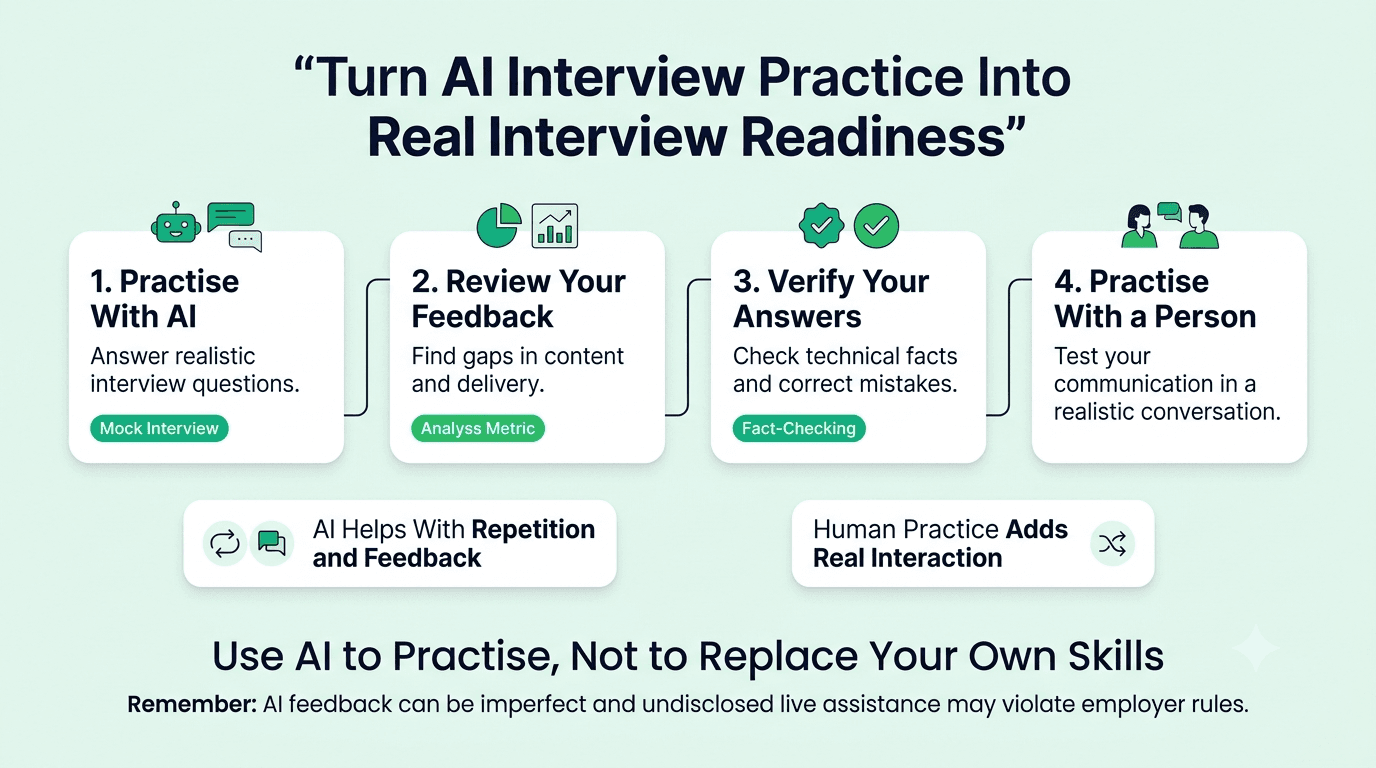
Yes, for most candidates, as long as you treat them as practice and not proof. They remove the awkwardness of rehearsing in front of people, they are available at any hour and they make repetition cheap. They can still miss factual mistakes or reward polished but shallow answers, so check your technical claims and test your best answers with a real person.
One firm rule: never use AI to feed you answers during a real interview unless the employer clearly allows it. Practice is what builds the skill. Live help only puts the offer at risk.
Conclusion
The best AI mock interview platform is the one that matches your interview, not the one with the longest feature list. Choose a tool for your role, practise out loud, review your weak answers and repeat until your answers feel natural. If you want to start with spoken practice and follow up questions, try Mocklingo's AI mock interview and pair it with English communication practice.
FAQs
More Blogs
Sep 30, 2026
React Developer Interview Preparation Guide: A Complete Roadmap for 2026
31 min read
