Loading...
Contents
Can AI Replace Human Writers?
Why Human Storytelling Still Wins
May 4, 202619 min readUpdated Oct 5, 2026
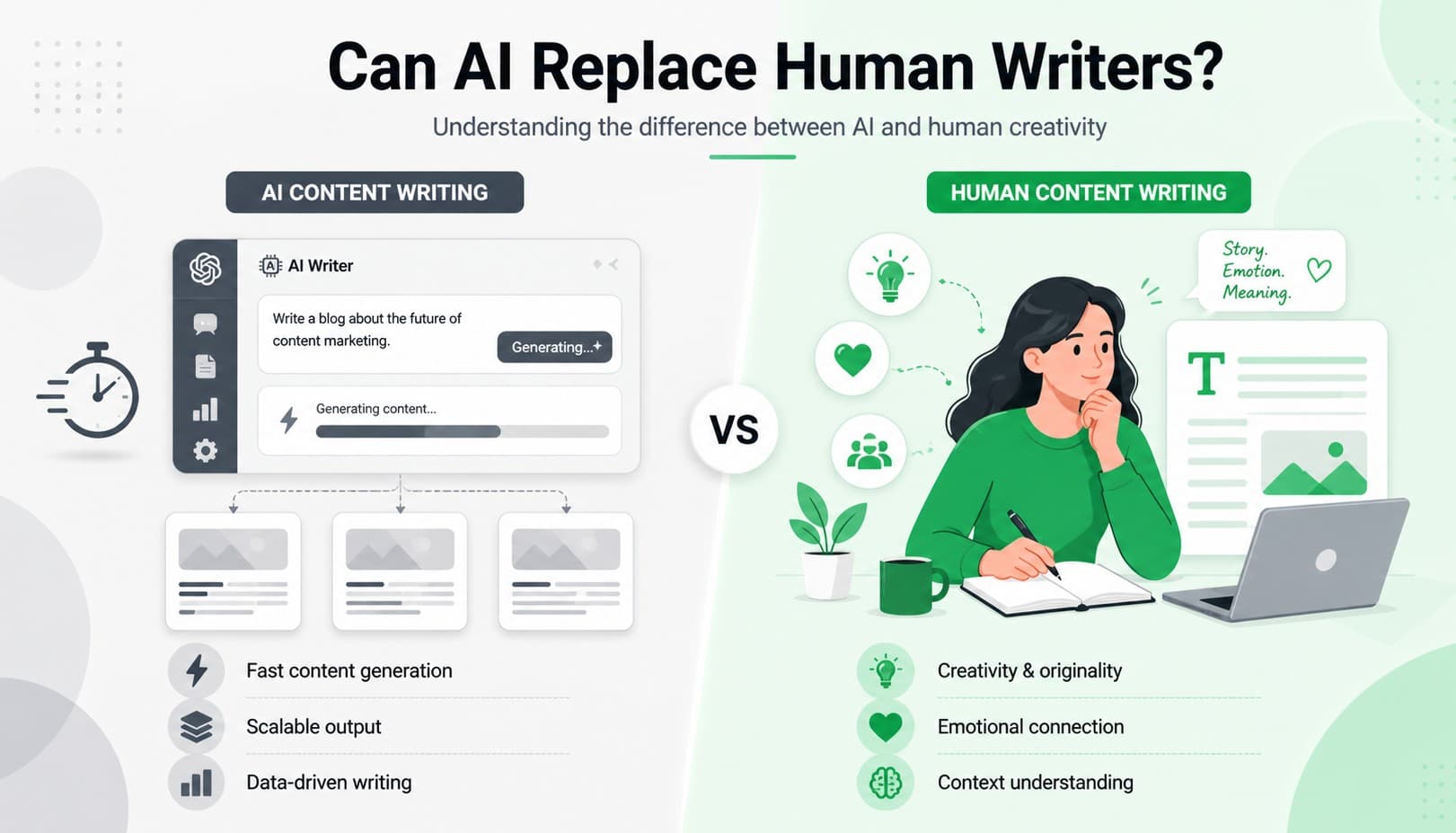
Artificial intelligence has changed how online content is created in recent years. Tools like ChatGPT and other AI writing assistants can generate blog posts, product descriptions, and social media captions within seconds. Because of this speed and convenience, many businesses now use AI written content to produce content faster and at scale. In this article, we will explore AI vs human content, their strengths and limitations, and why human storytelling still plays a powerful role in content creation.The common question raised in the content industry today: Do we still need content writers? Has AI started taking over content writing roles? Studies suggest more than 60% of marketers are already using AI tools for content creation, it is natural for writers and businesses to wonder what the future looks like.
FREE TO USE
25K+ INTERVIEWS4.8★ RATING68% IMPROVEMENT
Crack Your Dream Job
Real Interviews. Real Pressure. Practice until it feels easy.
- Seamless Interview Experience
- Resume & JD Questions
- Instant Personalized Feedback
What Is AI Written Content?
If you have worked with content recently, you have probably seen how quickly AI can generate text. You simply enter a prompt, and within seconds you get a full paragraph or even an entire blog draft. This is what we call AI written content. It is generated by AI tools that are trained on massive amounts of online data and language patterns. For businesses, this is incredibly useful. Imagine needing ten blog posts in a week. Normally that would take a lot of time and effort from writers. With AI, the first draft can be created in minutes. That is why many companies use AI tools for tasks like: Generating blog outlines Writing first drafts Creating product descriptions Summarizing articles Producing social media captions In fact, many marketers now use AI as a content assistant. It helps speed up the writing process and reduce the time spent on repetitive tasks. But after using AI-generated content for a while, something becomes noticeable. The content may be clear and structured, but sometimes it feels a bit predictable. It explains the topic, but it may lack personality or a unique perspective. This is where the difference between AI vs human content starts to appear.
How Do Human Written Content Differs?
Now think about the last blog or article that really made an impact on you. It probably was not just a collection of facts. Most likely, the writer shared a story, a personal observation, or an experience that made the topic feel real. That is the strength of human written content. Human writers bring their own experiences, opinions, and emotions into their work. Even when explaining a technical topic, they include examples from real situations or lessons they have learned along the way. This is something readers naturally connect with. For example, when a writer explains how they struggled with a problem and finally solved it, the reader feels more engaged. It feels less like reading instructions and more like learning from someone’s journey. This type of storytelling builds trust and keeps readers interested. And that is something AI still finds difficult to fully replicate.Read More: Keyword Research in the Age of AI
AI vs Human Content: Which Is Best?
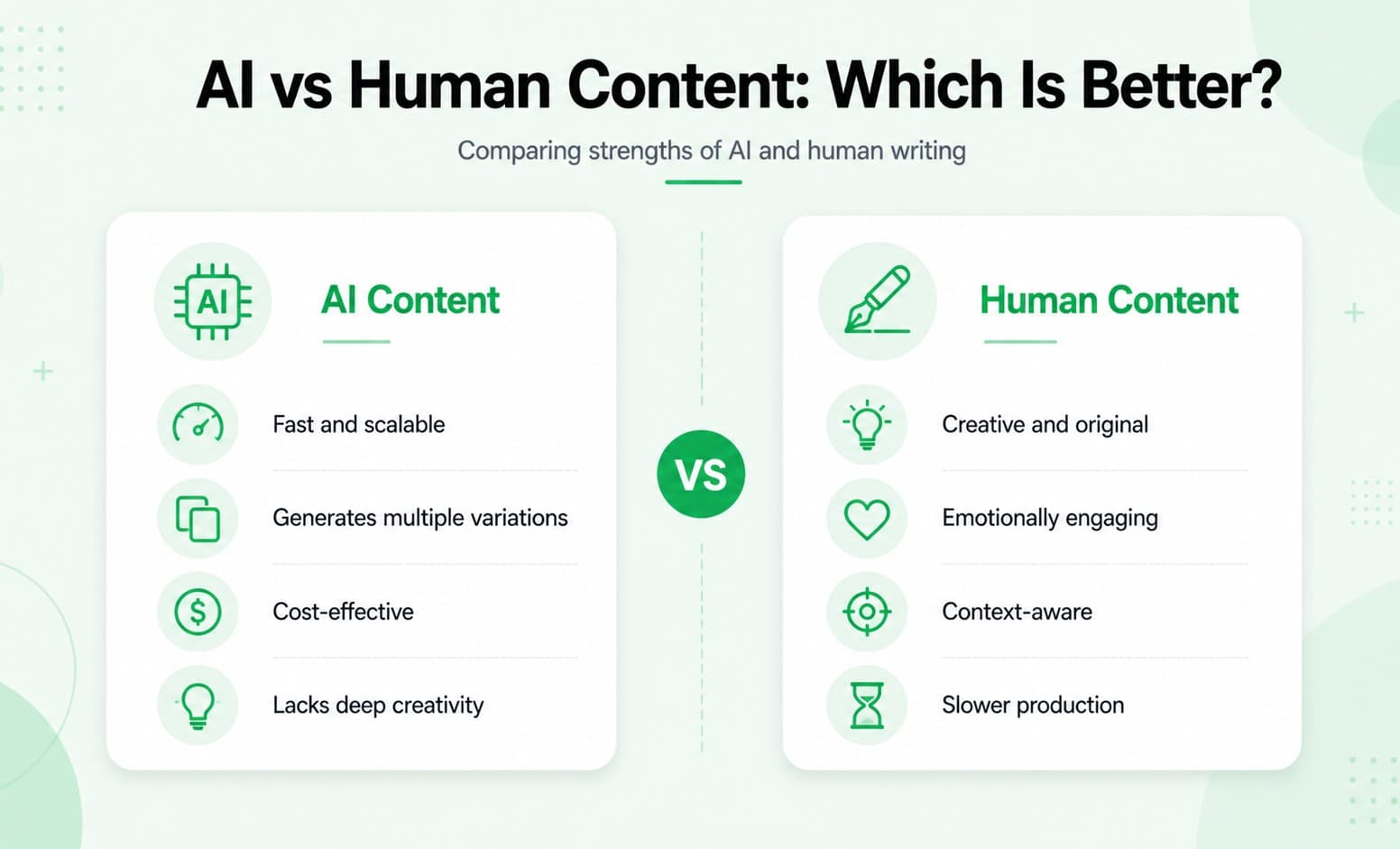
The conversation about AI vs human content sounds like a competition. But in reality, both have their own strengths. Let’s look at a few key differences. Speed and Efficiency There is no doubt that AI wins when it comes to speed. A blog draft that might take a writer an hour to create can sometimes be generated by AI in less than a minute. For businesses that need to publish content regularly, this can be extremely helpful. But speed is only one part of the story. Creativity and Storytelling This is where human writers have a clear advantage. AI can organize information well, but it cannot truly draw from personal experiences or emotions. Human writers can talk about real situations, share opinions, and explain ideas through stories. And storytelling matters more than we realize. Research in marketing shows that story-based content can improve reader engagement by more than 20%. When people read a story, they remember the message better. That is why many of the most successful blogs feel conversational and personal. Depth and Perspective Another difference is depth of thinking. Human writers can question ideas, analyze trends, and connect different experiences to create deeper insights. AI usually relies on patterns from existing information rather than original thought. Because of this, human written content feels more thoughtful and nuanced
Will AI Replace Content Writers?
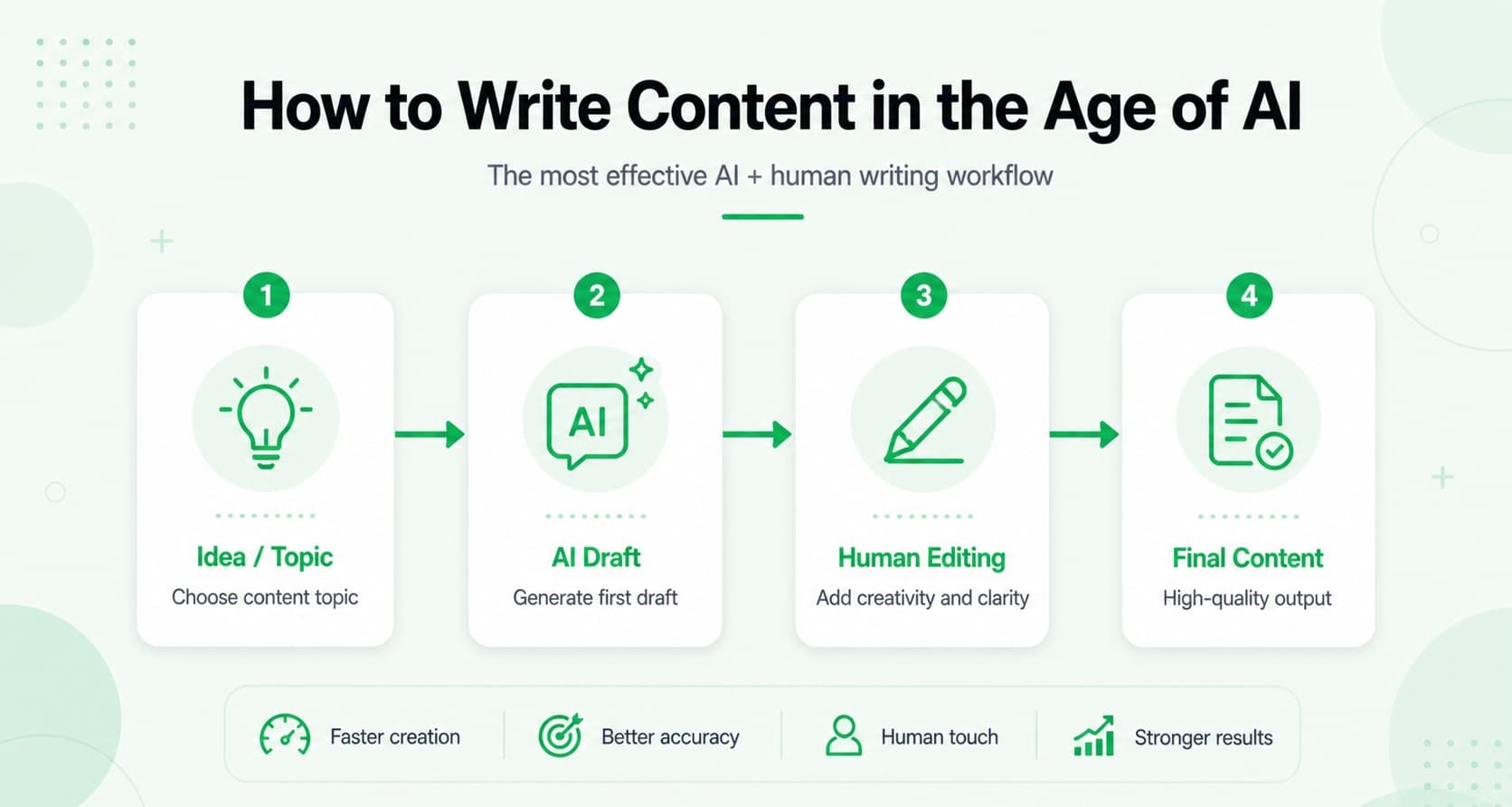
This is the question many writers worry about. When AI tools became popular, some people predicted that content writers might disappear. But what we are seeing in reality is quite different. Instead of replacing writers, AI is becoming a tool that writers use. Many writers now rely on AI for things like brainstorming topics, generating outlines, or creating rough drafts. This helps them save time and focus more on improving the final content. In fact, surveys show that around 70% of writers now use AI tools in some part of their workflow. But very few publish content directly from AI without editing it. The reason is simple: AI can generate text, but it still needs human judgment. Writers refine the structure, add examples, adjust the tone, and make sure the content truly connects with readers. So rather than replacing writers, AI is actually changing the way they work.
FREE TO USE
8k+ SESSIONS92% FLUENCY4.9★ RATING
Speak With Confidence
Real Conversations. Real Scenarios. Speak until it feels natural.
- Real-Time Speaking Practice
- Guided Conversation Flows
- Instant AI Feedback
What Is the Most Effective Way to Write Content in the Age of AI?
In the age of AI, the most effective way to write content is not to rely completely on AI or ignore it entirely. The best approach is to combine AI tools with human creativity. AI can help generate ideas, create outlines, and produce quick drafts, which saves time and helps writers start faster. However, the real value comes when human writers refine that content. Writers can add examples, insights, and personal experiences that make the article feel more authentic and engaging. This is something AI written content struggles to do on its own. Another important focus should be creating helpful and informative content. Instead of only targeting keywords, writers should aim to answer real questions and provide useful information for readers. In simple terms, the most effective strategy today is to use AI as a support tool while letting human storytelling and creativity lead the writing process.
Useful AI Prompts for Drafting and Editing Content
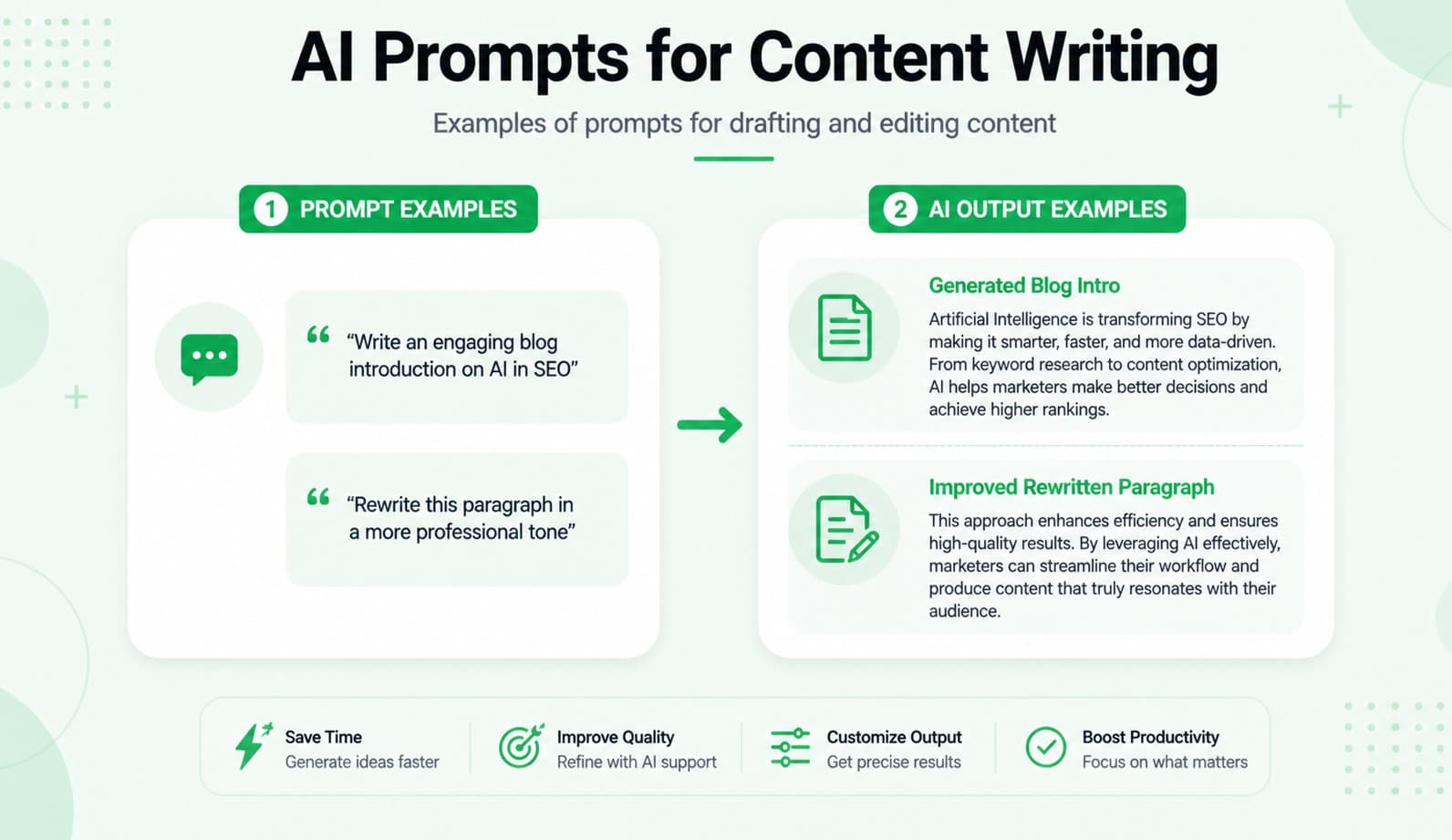
When using AI tools for writing, the quality of the prompt makes a big difference. Instead of giving very short instructions, it is better to write prompts that clearly explain the goal, tone, and structure of the content. Well-written prompts help AI generate drafts that are more useful and easier to refine later. For example, when creating the first draft of a blog post, you can use prompts like: “Write a detailed first draft for a blog post on the following topic. Keep the tone conversational and easy to understand for general readers. Structure the content with clear headings and explain each section in simple language.” “Create a structured blog outline for the given topic, including an introduction, key sections, and a conclusion. Each section should include short explanations of what should be covered.” “Write a blog section that explains the topic clearly for beginners. Use simple language, practical examples, and maintain an informative yet conversational tone.” Chatgpt or other Ai tools can help you when editing and improving existing content. You can use prompts that focus on clarity, readability, and tone, such as: “Rewrite this paragraph in a more conversational and human-friendly tone while keeping the meaning and information the same.” “Edit this blog section to improve readability and flow. Simplify complex sentences and make the content easier for general readers to understand.” “Review this content and suggest improvements to make it more engaging, informative, and natural-sounding.” Using descriptive and well-structured prompts like these allows AI to work more effectively as a writing assistant. It helps you speed up drafting and editing, while you as a writer still shape the final message and storytelling.
The Future of AI and Human Writers
The future of content writing is not about AI replacing humans. Instead, research shows that AI is becoming a standard tool in the writing workflow, while human writers continue to shape the final content. Recent marketing studies show that around 87% of marketers now use AI to help create content, and companies using AI are able to publish about 42% more content each month compared to those that don’t use it. However, this does not mean content is fully automated. In fact, 97% of companies still edit and review AI-generated content before publishing, which highlights how important human involvement remains in the process. Research also shows that AI is mainly used in the early stages of writing. Around 37% of marketers use AI for drafting, while others use it for research, brainstorming, or editing support. This indicates that AI helps improve productivity, but the final structure, storytelling, and strategic thinking still come from human writers. Another important trend is audience behavior. Studies show that readers often trust authentic, human-created content more than generic AI content, and brands that focus on genuine storytelling are seeing increased audience trust. All of this points to the same conclusion: the future of writing will likely be human-AI collaboration.
Conclusion
So, can AI replace human writers? The answer is not completely. AI written content is incredibly helpful for generating ideas, drafting articles, and speeding up the writing process. It has already changed how many businesses create content. However, human written content still brings creativity, authenticity, and storytelling that AI cannot fully replicate. The best approach is not choosing between AI and humans. It is using AI as a tool while allowing human writers to shape the message, add meaning, and connect with readers. In the end, technology will continue to evolve. But human storytelling will always remain one of the most powerful parts of great content. The next step is to apply these ideas to your own content strategy. Try experimenting with AI tools for drafting while focusing on adding your own insights and storytelling.
FAQs
More Blogs

Sep 30, 2026
React Developer Interview Preparation Guide: A Complete Roadmap for 2026
31 min read