Loading...
Contents
How to Become an SEO Specialist as a Beginner in 2026
Complete Roadmap
May 3, 202622 min readUpdated Oct 6, 2026
If you are thinking about starting a career in SEO but don’t know where to begin, you are not alone. Many beginners feel confused because there is overwhelming information available online. But the truth is you don’t need to learn everything at once. To become an SEO specialist in 2026, you need to learn basic SEO concepts, practice keyword research, work on real projects, understand tools, and build experience step by step. And most importantly, combining traditional seo with AI is one of the most crucial steps to become a seo expert in 2026. In this guide, you’ll learn everything in a simple and practical way.
FREE TO USE
25K+ INTERVIEWS4.8★ RATING68% IMPROVEMENT
Crack Your Dream Job
Real Interviews. Real Pressure. Practice until it feels easy.
- Seamless Interview Experience
- Resume & JD Questions
- Instant Personalized Feedback
What Does an SEO Specialist Do?
An SEO specialist helps websites rank higher on search engines like Google. In simple words: They make sure a website appears on the first page when people search for something organically. Their main goal is to bring organic traffic by ranking content higher. 1. On-Page SEO This is the foundation of SEO and focuses on optimizing content inside your website. It includes improving titles, headings, keywords, and content quality. Good on-page SEO helps search engines understand your content clearly and rank it better. 2. Off-Page SEO Off-page SEO is about building trust and authority for your website. This mainly includes getting backlinks from other websites. The more high-quality links you have, the more search engines trust your site. 3. Technical SEO Technical SEO ensures your website works properly for both users and search engines. It includes improving site speed, fixing errors, and making your site mobile-friendly. Without technical SEO, even good content may not rank
Why SEO is a High-Demand Career in 2026
SEO continues to grow because businesses rely heavily on online visibility to attract customers. SEO is in demand because companies want consistent traffic without spending heavily on ads. With the rise of AI and digital content, competition in search engines is increasing. Businesses now need skilled professionals who can help them stand out. In India, the demand for SEO professionals is growing across startups, agencies, and even small businesses. Salaries also increase with experience, making it a strong long-term career option.
Skills Required to Become an SEO Specialist
For a long term SEO career, you need a mix of creative and analytical skills. The good part is that you can learn all of them gradually.
| SKILLS | WHY IT MATTERS |
|---|---|
| Keyword research | Helps you understand what users are searching for and target the right audience |
| On-page SEO | Improves your content so it ranks higher in search results |
| Technical SEO | Ensures your website works smoothly and is easily crawlable |
| Content writing | High-quality content is the backbone of SEO success |
| Analytics | Helps you measure results and improve your strategy |
Instead of trying to learn everything at once, focus on one skill at a time and practice regularly.
Step-by-Step SEO Learning Roadmap (Beginner to Advanced)
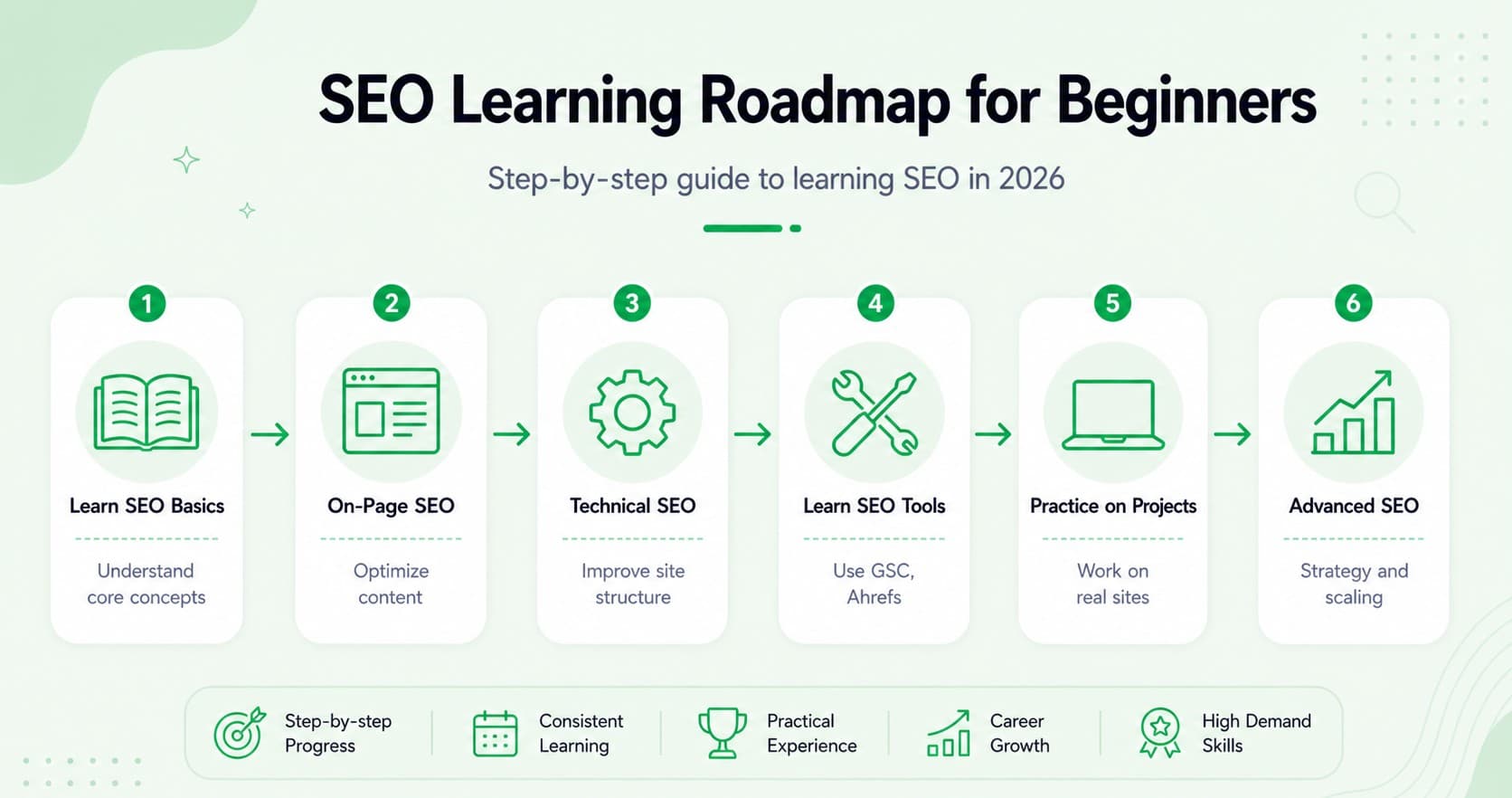
Having a clear roadmap makes your learning journey much easier. Without it, beginners often feel lost. Start by understanding how search engines work and what SEO actually means. Learn about Keywords Google rankings Search intent and How Google works This builds a strong foundation for everything else. Keyword research helps you find what people are searching for online. It allows you to create content that matches user intent. Focus on long-tail keywords as they are easier to rank for beginners. Read More: How Keyword Research is changing in 2026 This step involves optimizing your content properly. Learn how to write titles, use headings, and place keywords naturally. Good on-page SEO improves both rankings and user experience. You don’t need deep technical knowledge in the beginning. Just learn how websites are indexed, how to improve speed, and how to fix basic issues. These small improvements can make a big difference. Theory alone is not enough in SEO. Start applying what you learn by creating your own blog or working on small projects. You can use a blogger site for creating projects. This helps you gain real experience. Once your content is ready, you need to promote it. Learn how backlinks work and how to build them ethically. This increases your website’s authority. SEO is not just about doing work, it's about measuring results. Use tools to track traffic, rankings, and performance. Then improve based on data. Suggested Timeline 0–3 months → Learn basics and practice 3–6 months → Work on real projects 6+ months → Start freelancing or jobStep 1: Learn SEO Basics
Step 2: Learn Keyword Research
Step 3: Learn On-Page SEO
Step 4: Understand Technical SEO Basics
Step 5: Work on Real Projects
Step 6: Learn Off-Page SEO
Step 7: Learn Analytics & Optimization
FREE TO USE
8k+ SESSIONS92% FLUENCY4.9★ RATING
Speak With Confidence
Real Conversations. Real Scenarios. Speak until it feels natural.
- Real-Time Speaking Practice
- Guided Conversation Flows
- Instant AI Feedback
Best Tools for SEO Beginners
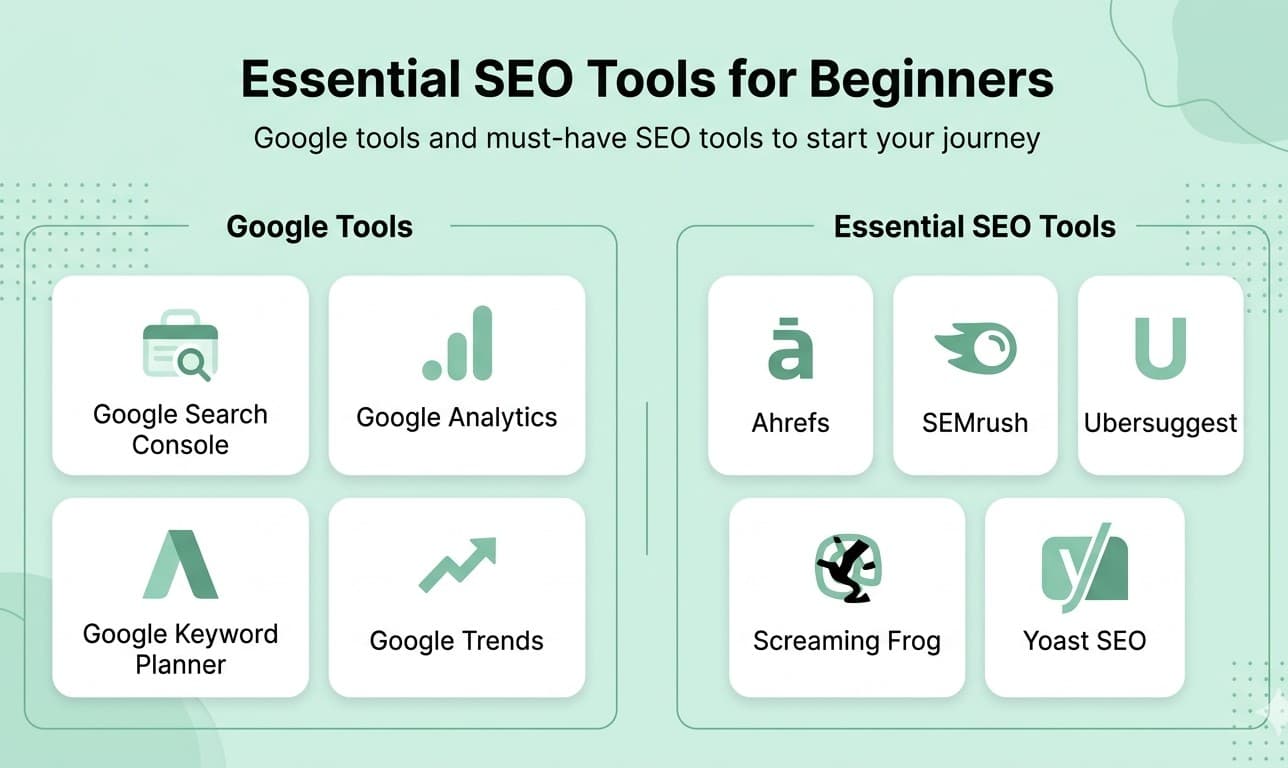
SEO tools make your work easier and help you understand data better. You can use free tools like: Google Search Console Google Analytics Google keyword planner They help you track your website’s performance and identify problems. Paid tools like Ahrefs and SEMrush provide deeper insights such as competitor analysis and backlink data. However, you can start learning SEO effectively even with free tools.
How to Practice SEO as a Beginner
Learning SEO without practice is not effective. The more you apply your knowledge, the faster you improve. Starting your own blog is one of the best ways to practice. It allows you to experiment with keywords, content, and optimization techniques. You can also analyze other websites and identify their SEO mistakes. Updating old content is another great method to see how small improvements can impact rankings.
How to Become an SEO Expert (Advanced Level Tips)
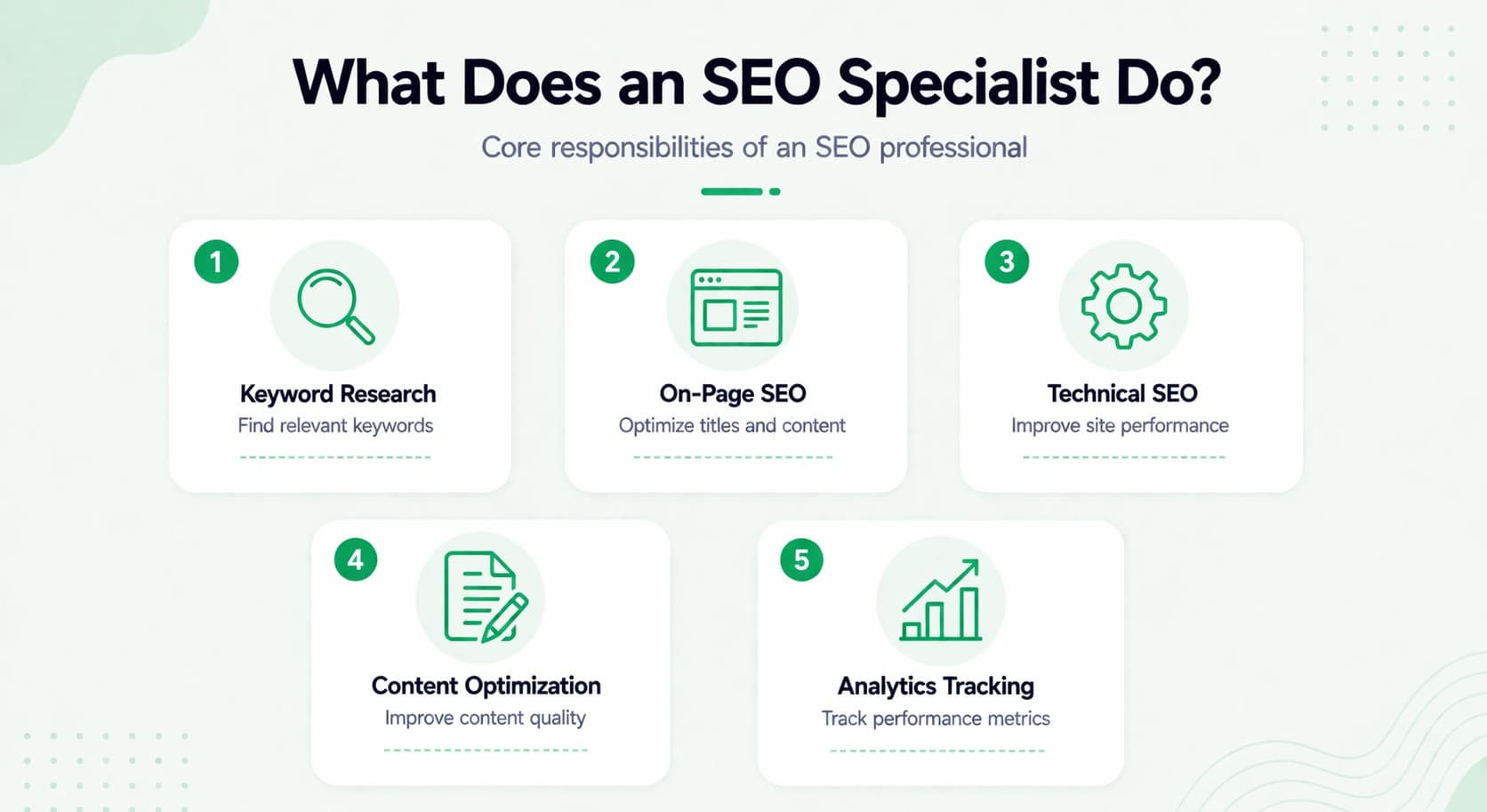
Once you understand the basics, the next step is to level up your skills. 1. Work on Case Studies Show real results Track growth 2. Learn Data-Driven SEO Use analytics deeply Understand user behavior 3. Learn AI in SEO Use AI tools for content Automate tasks 4. Build Personal Brand Share knowledge on LinkedIn Create content AI tools are also becoming important in SEO. Learning how to use them effectively can give you an advantage.
Common SEO Mistakes Beginners Should Avoid
Many beginners make mistakes that slow down their progress. Keyword stuffing is one of the most common mistakes. Instead of overusing keywords, focus on writing naturally. Ignoring technical SEO can also hurt your rankings. Even small issues like slow loading speed can impact performance. Copying content from other websites can harm your rankings because search engines prefer original content. It also reduces your credibility and trust. Always try to create unique and valuable content in your own words. Not tracking results If you don’t track your SEO performance, you won’t know what is working and what is not. Tools like Google Analytics help you measure traffic and improvements. Expecting fast results SEO is a long-term process and does not give instant results. It usually takes weeks or even months to see improvement.
SEO Career Path & Salary in 2026
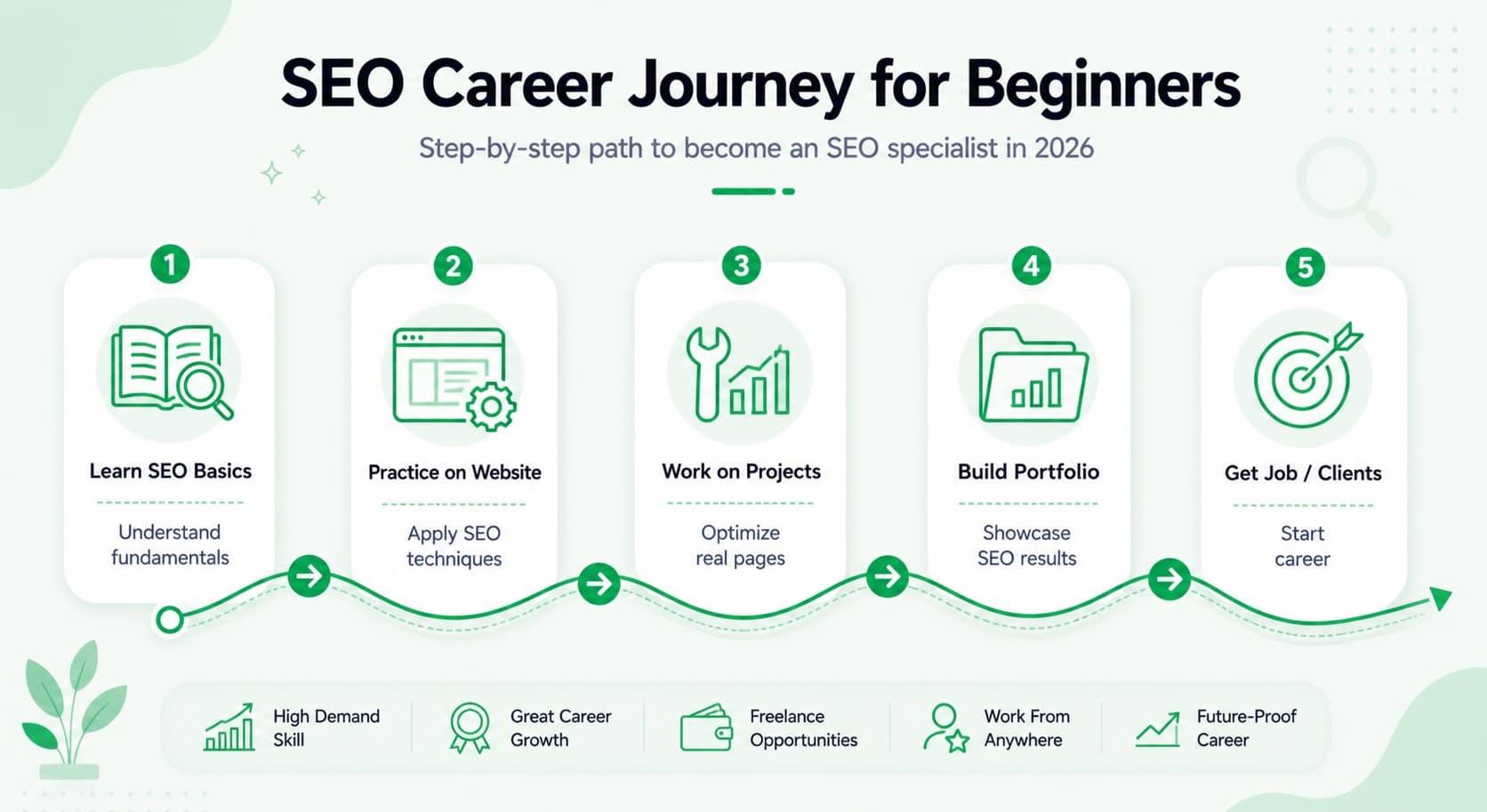
SEO offers multiple career opportunities as you grow your skills. You usually start as an SEO intern or executive, where you learn basic tasks. With experience, you can become an SEO specialist and later move into managerial roles. In India, beginners can earn around ₹15K–30K per month. With experience, this can grow significantly. Freelancing is also a good option to increase income.
Final Checklist to Become SEO Specialist
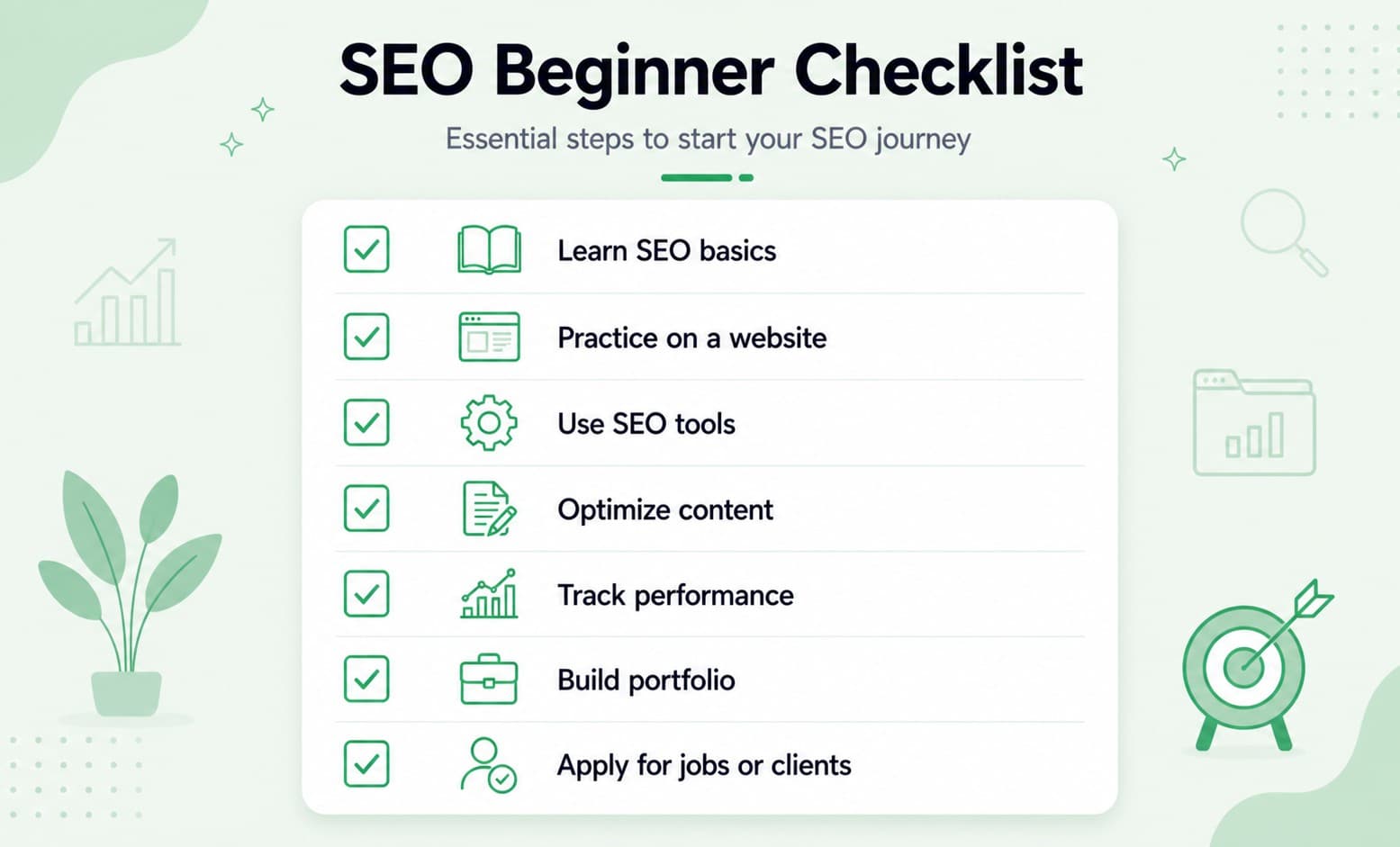
Before you start applying for jobs, make sure you have: ✔ Basic understanding of SEO ✔ Knowledge of keyword research ✔ Experience in writing optimized content ✔ Familiarity with SEO tools ✔ At least one real project This checklist will help you stay on track.
Conclusion
Becoming an SEO specialist in 2026 is all about learning step by step and practicing consistently. Start with basics, apply your knowledge, and keep improving. SEO is not difficult, it just requires patience and the right approach. If you stay consistent, you can build a strong and successful career in SEO.