Loading...
Contents
Back to BlogInterview Preparation
Why Freshers Fail Interviews Even After Studying Well
How to fix it
Apr 23, 202611 min readUpdated Oct 6, 2026
You prepared for the interview. You revised concepts, watched videos, and even searched for common interview questions. But when the interview ended, you walked out with disappointment.
This is one of the most common and painful experiences freshers face. It feels unfair, confusing, and discouraging. Many freshers start doubting their abilities or intelligence after one or two rejections.
The truth is, most freshers don’t fail interviews because they didn’t study enough. They fail because interviews test skills that traditional study doesn't allow. Understanding this difference is the first step toward fixing the problem.
In this article you will get to know about why freshers fail even after studying.
FREE TO USE
25K+ INTERVIEWS4.8★ RATING68% IMPROVEMENT
Crack Your Dream Job
Real Interviews. Real Pressure. Practice until it feels easy.
- Seamless Interview Experience
- Resume & JD Questions
- Instant Personalized Feedback
Difference Between Studying Well and Interview-Ready
One of the biggest misunderstandings among freshers is that studying theory is enough. Studying focuses on memorizing concepts, understanding definitions, and solving written problems.
But, interviews focus on:
- Explaining ideas clearly
- Applying knowledge in real situations
- Communicating under pressure
- Showing confidence and willingness to learn
An interview is a conversation with evaluation. Many freshers prepare for interviews like they are studying for a theory exam. But interviews demand clear speaking and well-structured, meaningful responses. This gap is the root cause of most interview failures.
Why Freshers Fail Interview Rounds Even They Know the Answers
Let’s look at the real, human reasons behind interview failures. These are not theory problems, but real problems that freshers face.
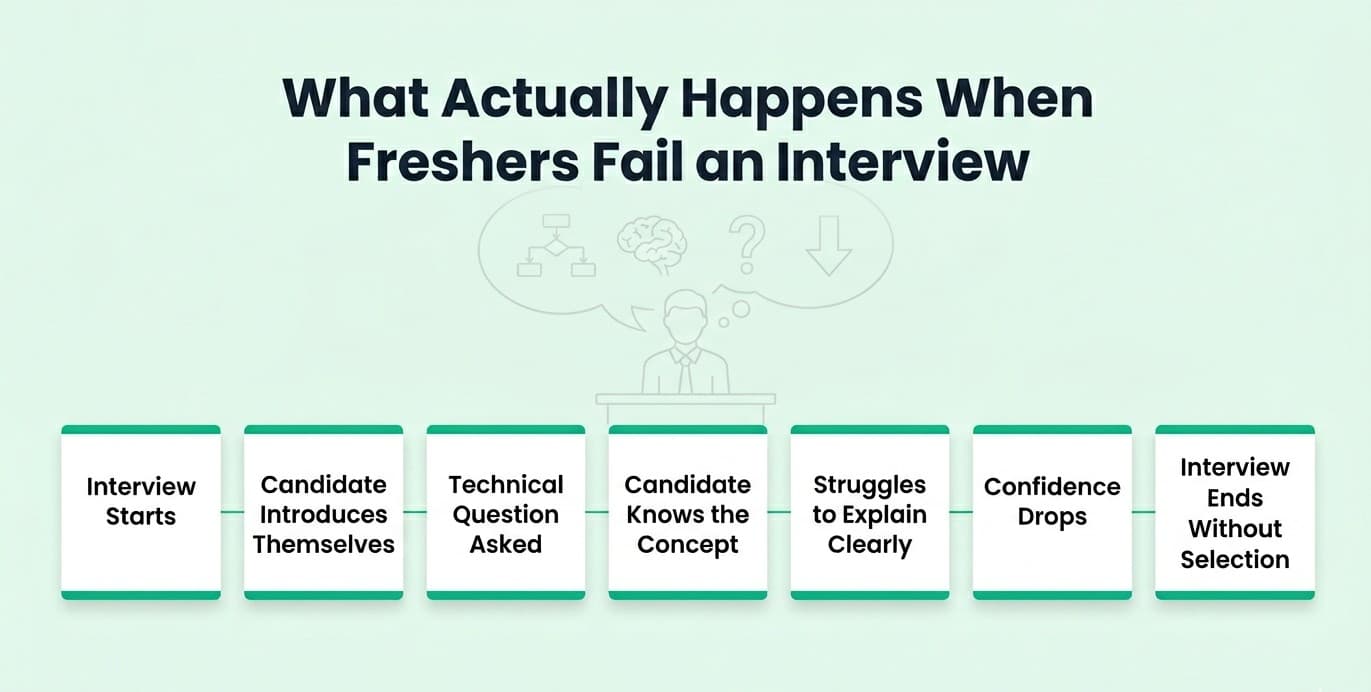
Interview Pressure
During the interview candidates feel pressure. You may know the answer but thoughts get scattered, and simple questions feel difficult.
This happens because freshers experience pressure of judgment. Without practice, pressure can dominate knowledge.
Poor Communication Skills
Many candidates get rejected because their responses are unclear. Common communication problems include:
- Speaking too fast or too early
- Using incomplete sentences
- Jumping between points
You may understand the topic well, but if you cannot explain t clearly. The interviewer won’t know your ability.
Lack of structure in answers
Freshers often start answering without a clear direction. This leads to long, confusing responses where the main point gets lost.
For example:
- Starting with nackground instead of the actual answers
- Mixing mnay ideas together
- Forgetting what the question was halfway through
Interviews reward clarity and structure, not long explanations.
No Practical or Real-World Examples
Many freshers give textbook answers without connecting them to real situations. Interviewers want to see how you think and apply knowledge, even at a basic level.
The simple examples of college projects, or internships can make your answer stronger. Without examples, answers sound memorized and shallow.
Over-Prepared but Under-Practiced
This is one of the most common problems. Freshers read many interview questions and answers, watch videos, and take notes. But they rarely practice speaking those answers out loud.
Without practice, your mind knows the answer, but you struggle to deliver it. Reading builds understanding but speaking out is required for building confidence.
Why Memorizing Interview Questions and Answers Doesn’t Work
Many freshers rely on memorized interview questions and answers. While this helps initially, it fails in real interviews because:
- Interviewers ask follow-up questions
- Questions framed differently
- Memorized answers sound unnatural
Instead of memorizing, you should focus on understanding the intent of the question and respond accordingly.
What Interviewers Actually Expect from Freshers
Understanding what interviewers expect can reduce a lot of fear. Most interviewers do not expect freshers to know everything. They know you are at the beginning of your career. Most interviewers look for: Basic clarity of concepts Honest responses (even admitting if you don’t know) Clear communication Willingness to learn Positive attitude Interviews are not about perfection. They are about potential. Once you understand this, interviews start feeling less stressful. Read More: What Freshers Should Do to Get Hired in 2026: Skills, Strategy & Smart Preparation
FREE TO USE
8k+ SESSIONS92% FLUENCY4.9★ RATING
Speak With Confidence
Real Conversations. Real Scenarios. Speak until it feels natural.
- Real-Time Speaking Practice
- Guided Conversation Flows
- Instant AI Feedback
Why Confidence Changes during an interview
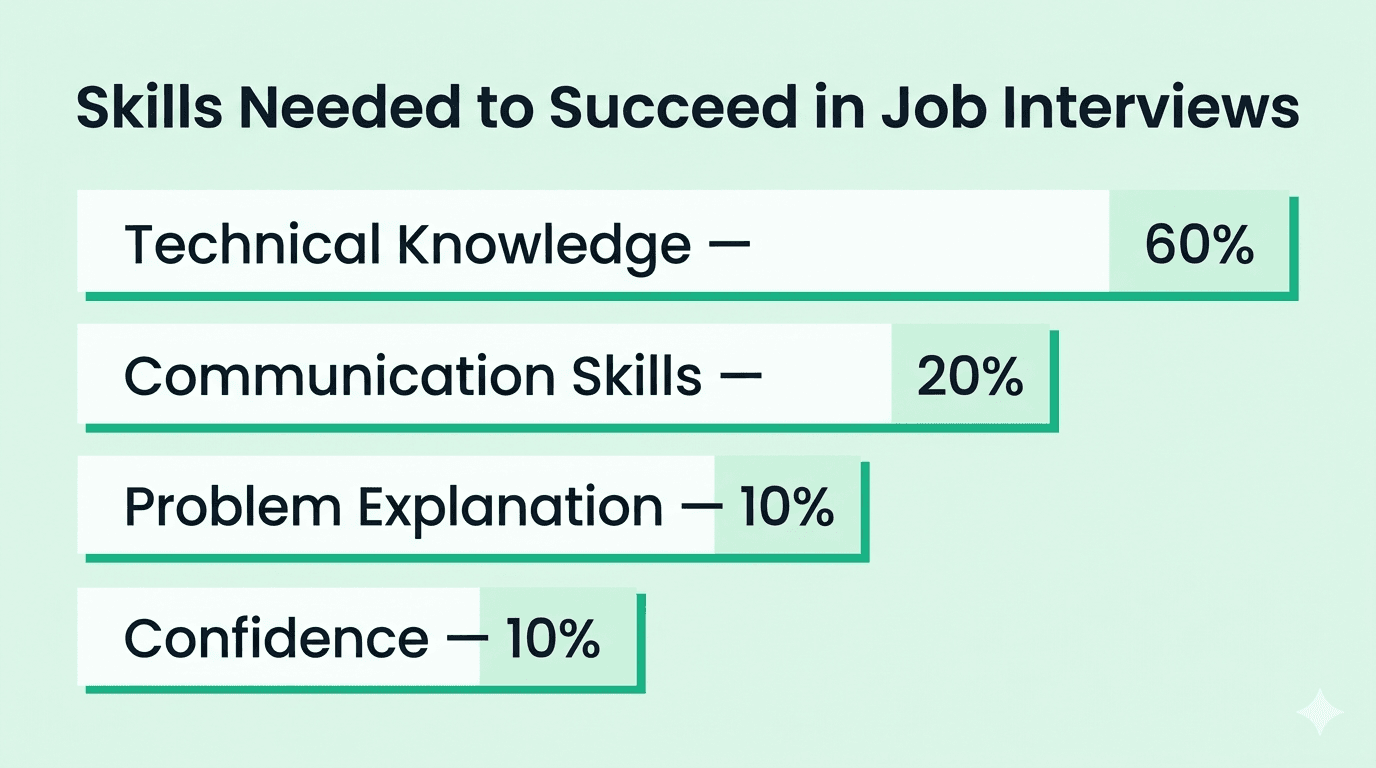
There is no pressure while practicing at home. But in interviews there is evaluation and judgment. The pressure reduces the confidence. Confidence doesn’t come from studying more content. It comes from practicing in situations that feel uncomfortable. The more you practice in real conditions, the more interview ready you become.
How Can Freshers Prepare Smarter for Interviews ?
Effective job interview preparation for freshers requires a shift in approach. Studying concepts is important, but it should be balanced with communication practice. Knowing the answer in your mind is different from explaining it clearly in an interview. What actually works: Practicing answers out loud daily Recording yourself to improve clarity and confidence Learning simple answer structures Preparing core questions deeply instead of covering too many topics Using Mock interview tool Mock interviews are very useful. They create real interview pressure and help you build confidence slowly. You learn how to answer questions in real time. And how to control nervousness and think clearly while speaking. Mocklingo is one such tool that can help you. It helps you find your mistakes during mock interviews. You can improve your communication and make better answers. Step by step, it helps you become interview-ready in a clear and structured way.
Simple tips to fix interview failures
To improve consistently, you must change their preparation mindset. Instead of asking: "How many questions should I prepare? Start asking: “How clearly can I explain what I already know?” Freshers need to focus on: Communication skills Answer structure Speaking under pressure Honest self-expression
Conclusion
Failing interviews does not mean you lack ability. It means you are still learning how interviews work. Once freshers start practicing real conversations, interviews become less stressful and more manageable. With the right approach improvement is certain. Every interview whether selected or rejected is feedback. Use that feedback wisely, and you can crack your interviews with, and you can crack your interviews with ease.