Loading...
Contents
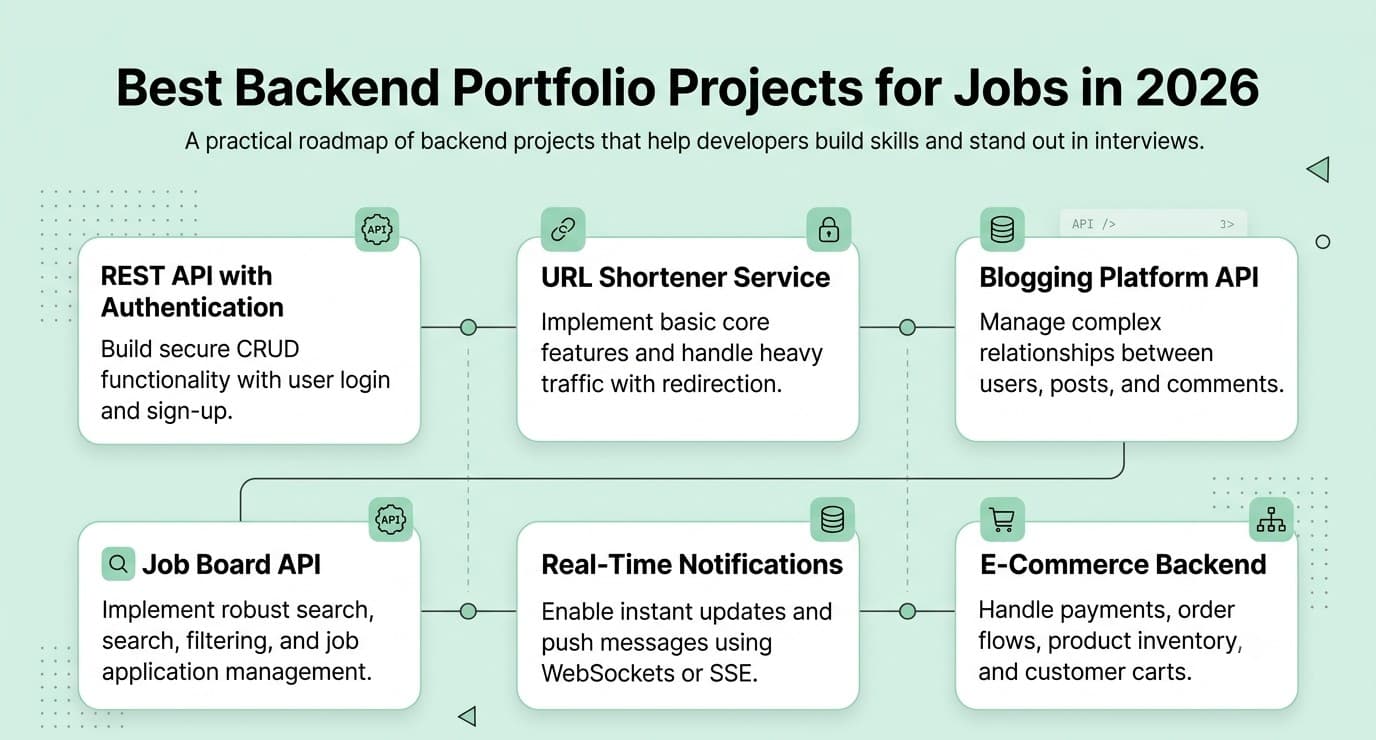
Best Backend Portfolio Projects for Jobs in 2026
Jun 23, 202622 min readUpdated Oct 3, 2026
Learning backend development and proving backend skills are two different things.
You can understand APIs, databases, authentication, and server-side logic, but recruiters cannot see that from a course certificate or a resume alone. What they can evaluate is what you have built.
That's where portfolio projects matter.
A strong backend portfolio shows how you approach real-world problems, structure applications, design databases, handle authentication, and deploy working systems. In a competitive hiring market, projects often become the deciding factor between getting shortlisted and getting ignored.
In this guide, we'll look at backend projects that genuinely strengthen a portfolio, the skills each project demonstrates, and how to present them in a way recruiters actually notice.
FREE TO USE
25K+ INTERVIEWS4.8★ RATING68% IMPROVEMENT
Crack Your Dream Job
Real Interviews. Real Pressure. Practice until it feels easy.
- Seamless Interview Experience
- Resume & JD Questions
- Instant Personalized Feedback
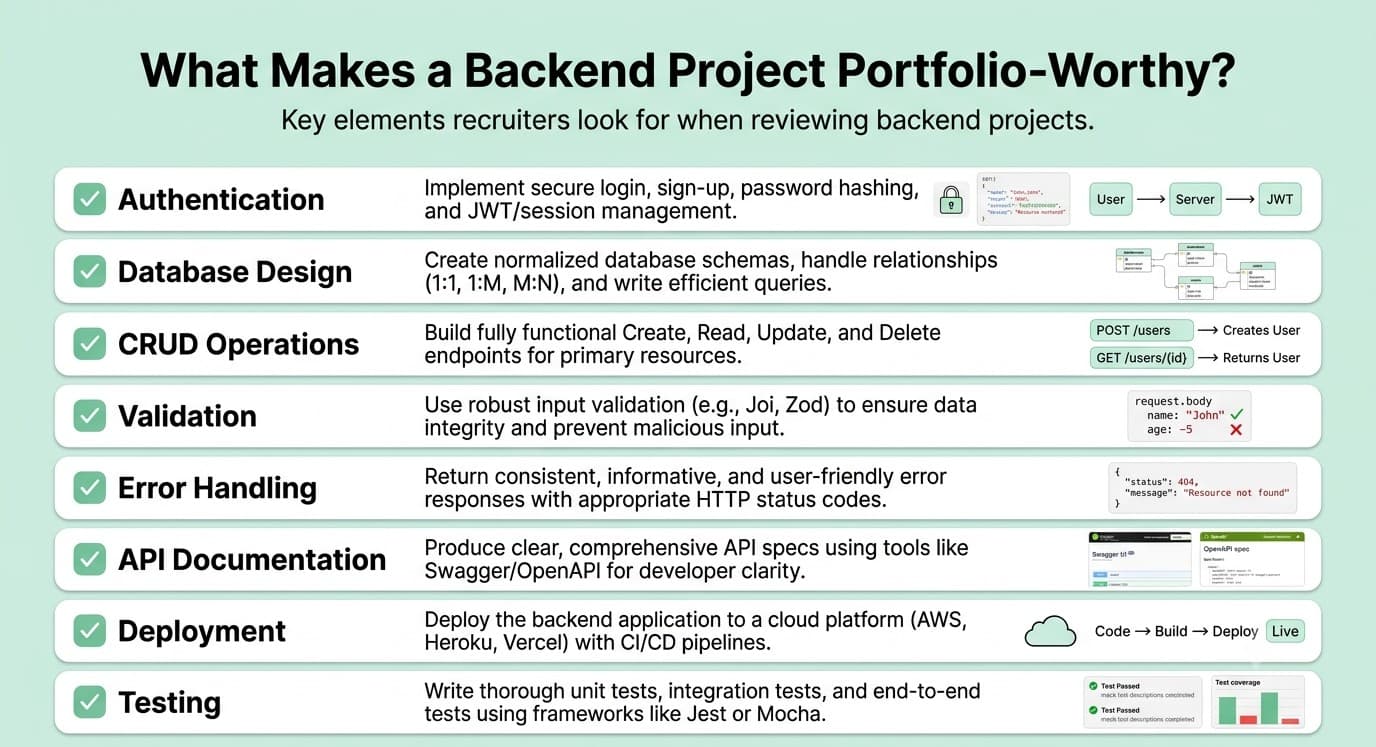
What Makes a Backend Project Portfolio-Worthy?
Not every project deserves a place on your GitHub profile. A strong backend project should include: A real database with meaningful relationships Authentication and authorization where applicable Proper error handling and validation Clean API design Documentation Deployment to a live environment On the other hand, tutorial clones and unfinished localhost projects rarely add value. A simple rule: if you cannot confidently explain the architecture, database design, and technical decisions during an interview, the project is not portfolio-ready.
1 / 2
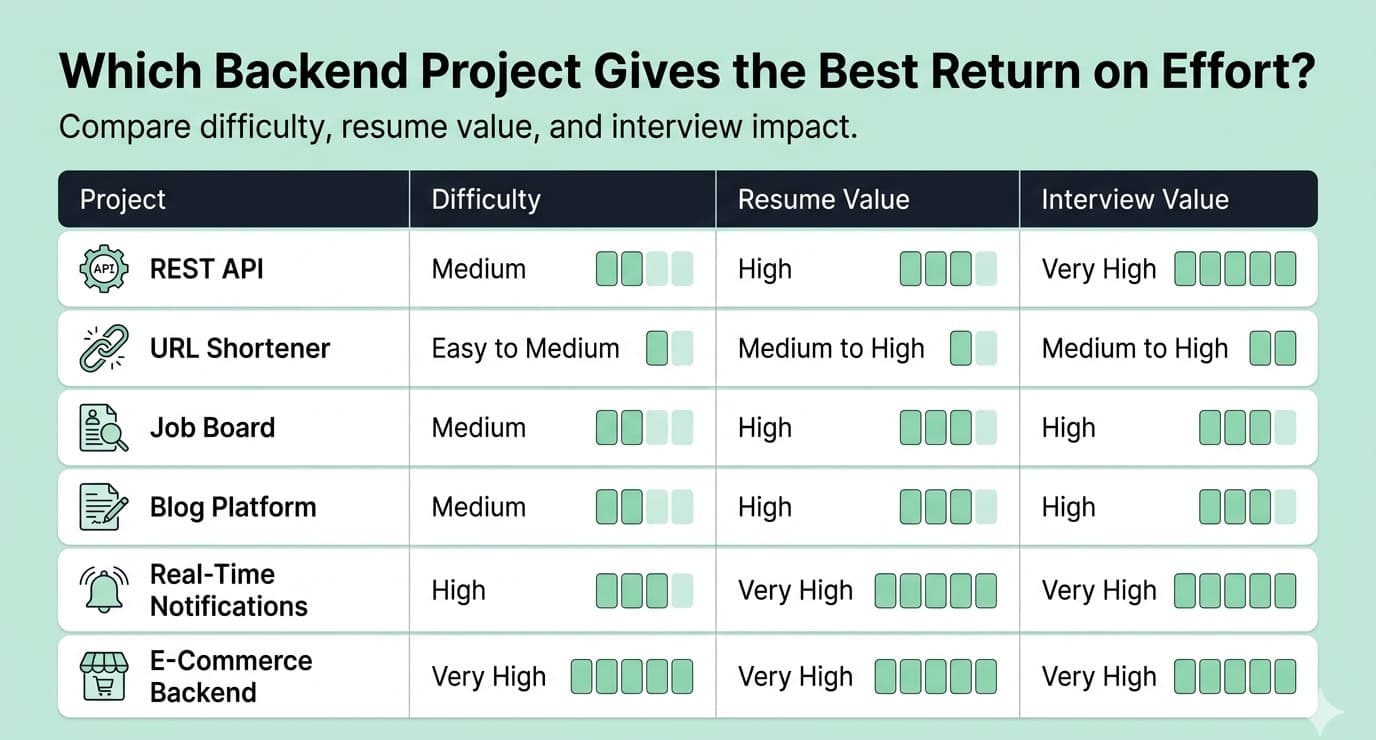
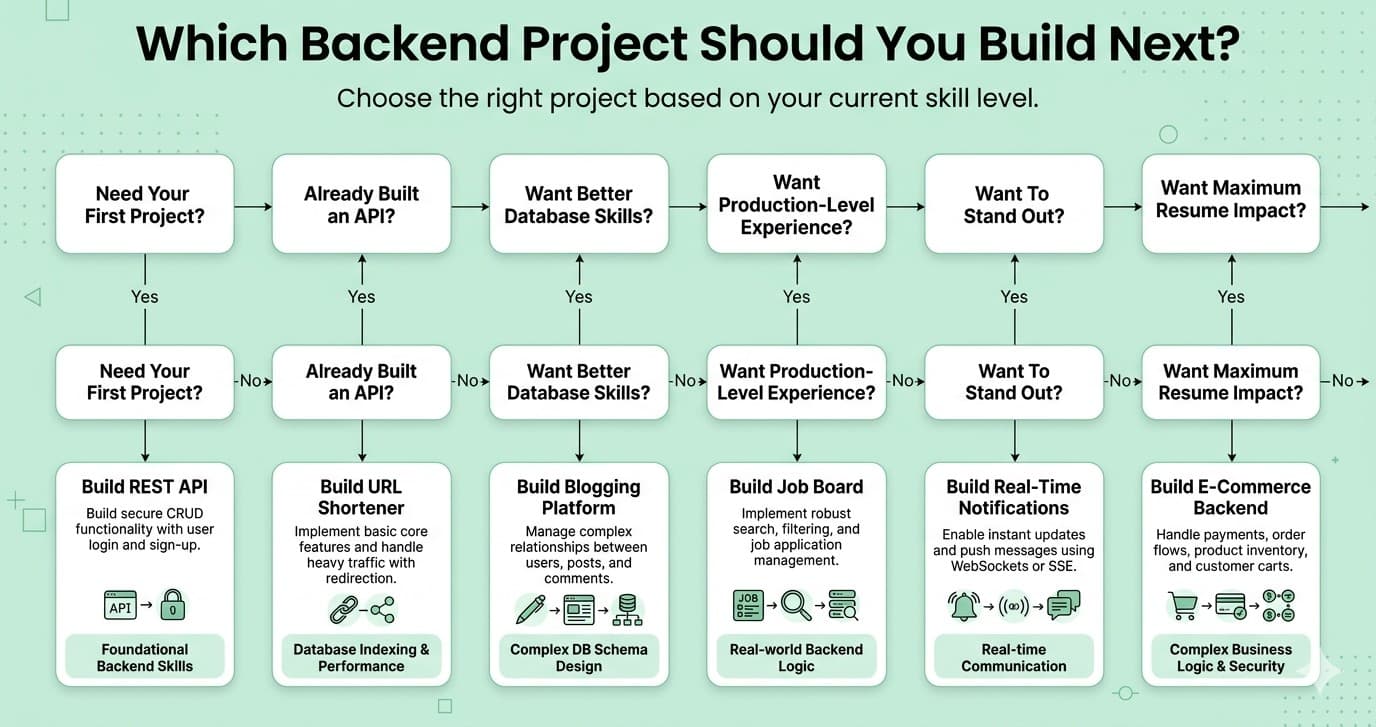
1. REST API with Authentication
If you're building only one backend project, start here. Create a REST API for a task manager, bookstore, expense tracker, or any similar application. Include user registration, login, password hashing, protected routes, and CRUD operations. Authentication workflows JWT or session-based authorization Request validation Error handling API architecture fundamentals Authentication is one of the most common backend interview topics. Building it yourself gives you practical experience instead of theoretical knowledge. Node.js + Express PostgreSQL or MongoDB JWT Authentication Render or Railway for deploymentWhat You'll Learn
Why Recruiters Like It
Suggested Stack
2. URL Shortener Service
A URL shortener seems simple until you start building it. Users submit a long URL and receive a shorter version that redirects visitors to the original link. You can also track click counts, user history, and link expiration dates. Think of it as building a simplified version of Bitly. Unique ID generation Database indexing Redirect handling Analytics tracking Rate limiting It demonstrates how you handle performance, data retrieval, and business logic within a relatively small project. Add click analytics, custom aliases, and expiration dates to make the project stand out.What You'll Learn
Why Recruiters Like It
Portfolio upgrade
3. Job Board API
This project introduces concepts commonly used in production systems. Employers can post jobs, candidates can apply, and administrators can manage listings. Different users have different permissions. Role-based access control (RBAC) Advanced database queries Search and filtering Multi-user system design Many real products involve multiple user roles. Showing that you understand permissions and access control immediately increases project credibility. Employer dashboards Candidate applications Job filtering by location and category Admin moderation panelWhat You'll Learn
Why Recruiters Like It
Features Worth Including
FREE TO USE
8k+ SESSIONS92% FLUENCY4.9★ RATING
Speak With Confidence
Real Conversations. Real Scenarios. Speak until it feels natural.
- Real-Time Speaking Practice
- Guided Conversation Flows
- Instant AI Feedback
E-Commerce Backend
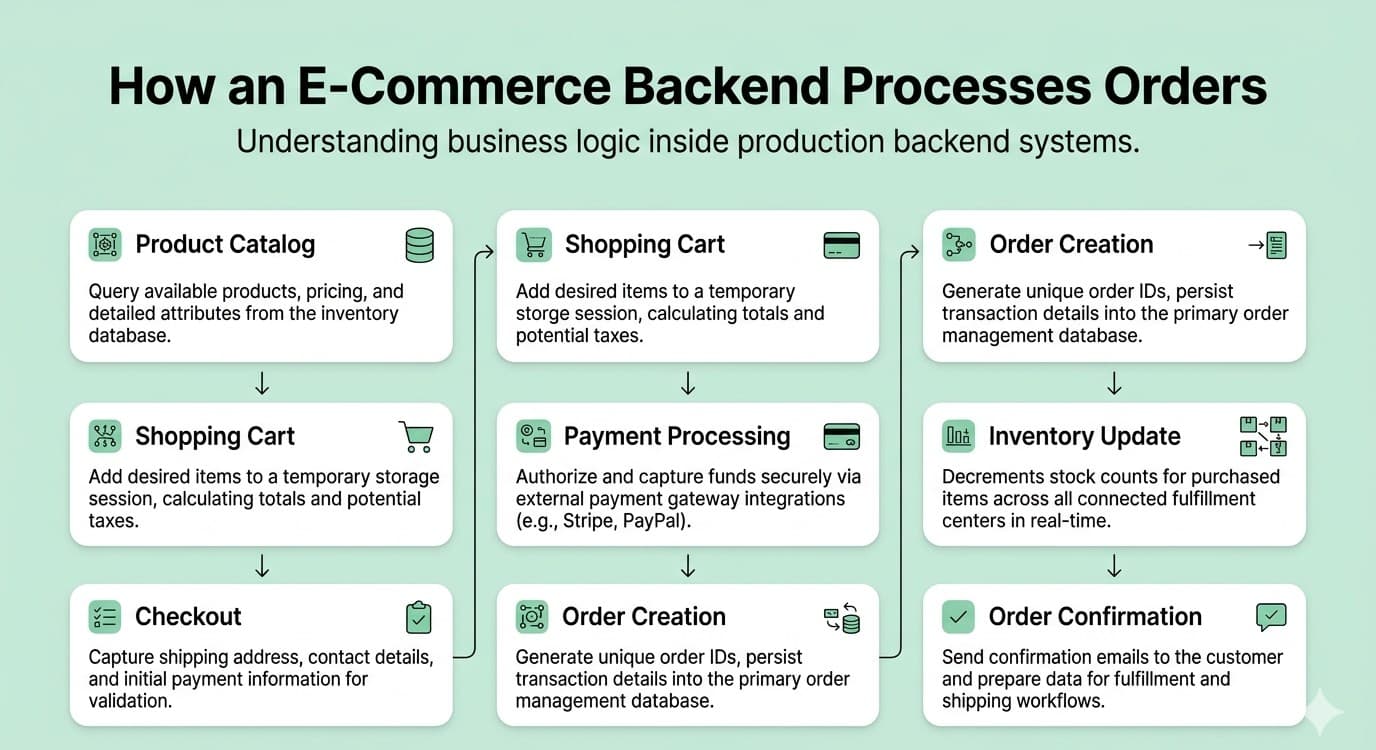
An e-commerce backend demonstrates your ability to handle real business logic. Build product management, inventory tracking, shopping carts, order placement, payment processing, and order history. Database schema design Transaction handling Inventory management Payment integration Data consistency Projects like this closely resemble production systems used by marketplaces and online stores. They showcase both technical skills and problem-solving ability. Integrate Stripe test payments and implement order status tracking.What You'll Learn
Why Recruiters Like It
Bonus Points
5. Real-Time Notification System
Most backend portfolios focus on request-response APIs. This project showcases real-time communication. Build a system that instantly notifies users when events occur, similar to Slack messages, Discord alerts, or food delivery status updates. WebSockets Server-Sent Events (SSE) Event-driven architecture Connection management Notification persistence Real-time functionality is less common in beginner portfolios and immediately helps your work stand out.What You'll Learn
Why Recruiters Like It
6. Command-Line Tool (CLI)
Not every backend project needs a web application. A well-built CLI tool can demonstrate strong programming fundamentals without requiring a frontend or API layer. Examples include: URL uptime checker File monitoring utility Codebase analyzer CSV report generator File system operations Process management Automation workflows Command-line interfaces CLI projects reveal how you think as a developer without relying on UI elements.What You'll Learn
Why Recruiters Like It
7. Blogging Platform API
A blogging platform introduces several backend concepts that appear in real-world applications. Authors can publish content, readers can comment, and posts can be categorized using tags. Database relationships Pagination Search functionality Nested comments Content management workflows The project demonstrates your ability to manage structured data and build scalable APIs. Add tests using Jest or Mocha. Most beginner portfolios skip testing entirely, which makes this a valuable differentiator.What You'll Learn
Why Recruiters Like It
Make It Stronger
How to Present Backend Projects Properly
A great project can still be overlooked if it is poorly presented. Every project should include: A detailed README Installation instructions Architecture overview API documentation Screenshots or workflow diagrams Deployment links If your API is live, document it with a public Postman collection and include the link in the repository. Also add a short section explaining key technical decisions. Recruiters are often more interested in why you chose a solution than the solution itself.
How Many Projects Should You Build?
Quality beats quantity. Three or four well-documented projects are usually enough to demonstrate backend fundamentals. Ideally, your portfolio should collectively cover: Authentication and security Database design Authorization and permissions Real-time functionality External integrations You do not need ten different tech stacks. Depth in one stack is usually more valuable than shallow exposure to many.
Conclusion
The backend projects for beginners that get developers hired are not necessarily the most complex. They are the ones where the developer clearly understood what they were building, made deliberate choices, and documented everything well enough that a reviewer can understand the project in under five minutes. Build with that reader in mind. Because in most cases that reader is a senior engineer deciding whether to bring you in for an interview. Make their decision easy.
FAQs
More Blogs
Sep 30, 2026
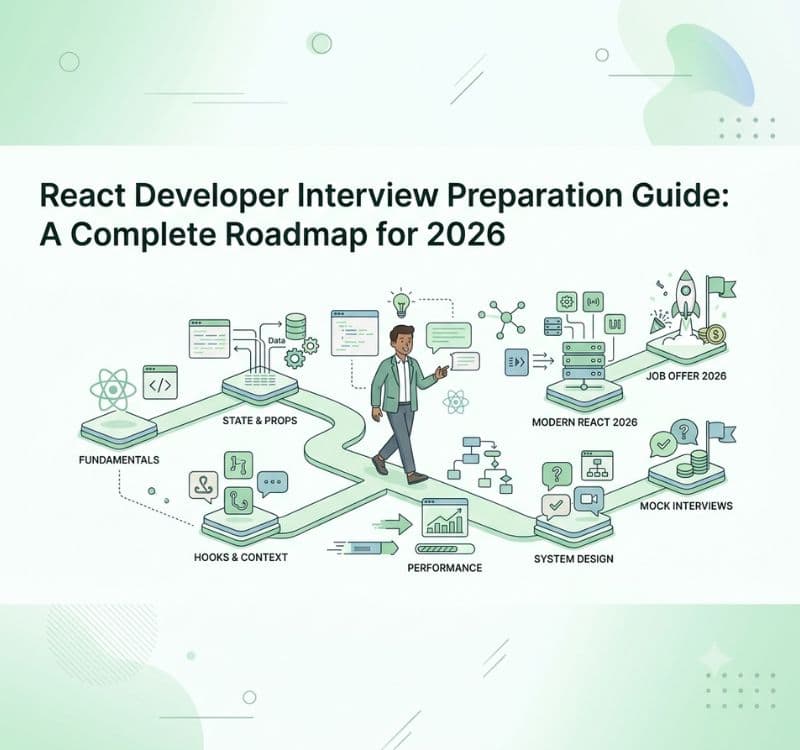
React Developer Interview Preparation Guide: A Complete Roadmap for 2026
31 min read
