Loading...
Contents
Full Stack Developer Interview: Why You're Not Getting Calls and How to Fix It
Jun 9, 202617 min readUpdated Oct 23, 2026
Getting interview calls for a Full Stack Developer role can be difficult, especially when you have applied to many jobs and received little or no response.
If this is happening to you, don't assume that you are not skilled enough. In many cases, the problem is not your technical knowledge. It is often related to your resume, job application strategy, portfolio, or online profile.
In this guide, we'll look at the most common reasons developers don't get interview calls and what you can do to improve your chances.
FREE TO USE
25K+ INTERVIEWS4.8★ RATING68% IMPROVEMENT
Crack Your Dream Job
Real Interviews. Real Pressure. Practice until it feels easy.
- Seamless Interview Experience
- Resume & JD Questions
- Instant Personalized Feedback
Why Am I Not Receiving Interview Calls?
Many developers apply to dozens or even hundreds of jobs but still struggle to hear back from recruiters.
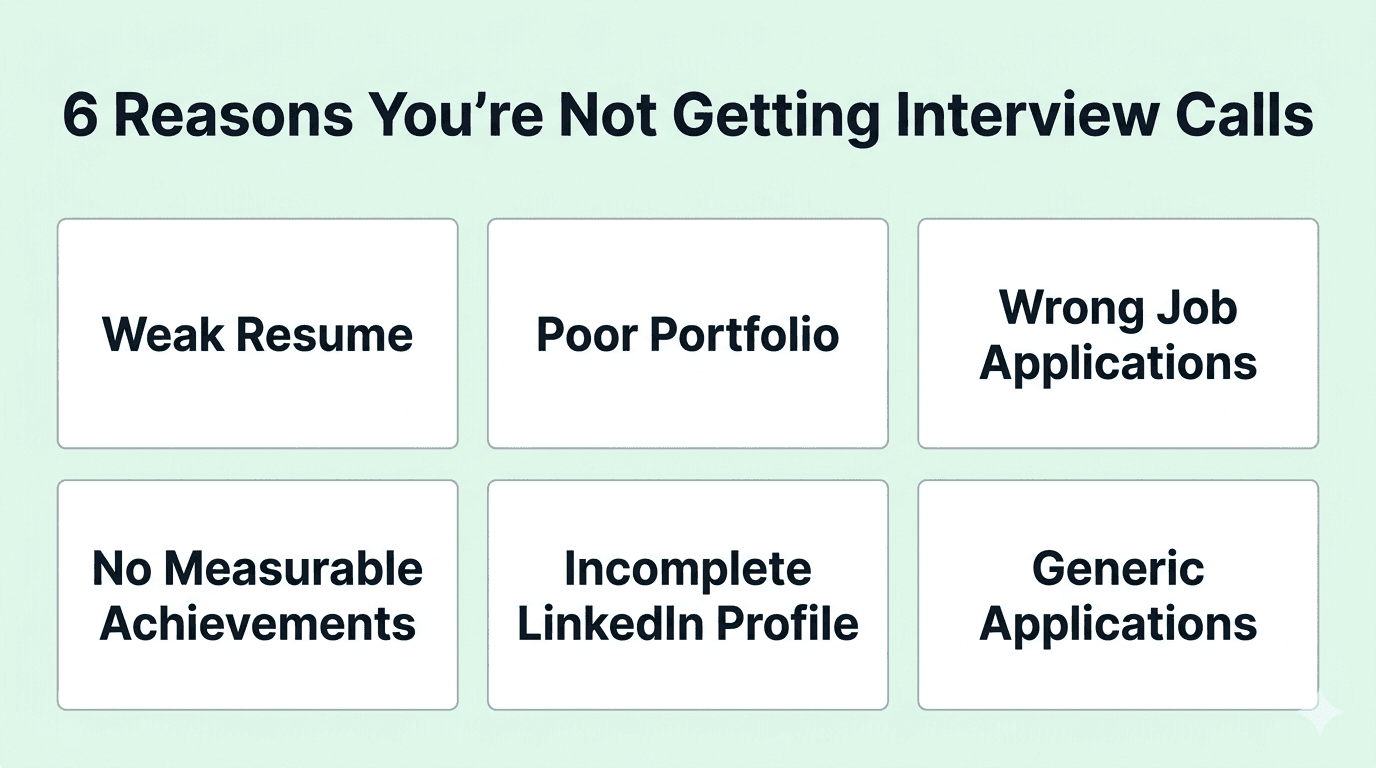
Some common reasons include:
- Your resume does not match the job requirements.
- Your skills and projects are not clearly showcased.
- You are applying for roles that do not match your experience level.
- Your LinkedIn profile is incomplete or outdated.
- The good news is that all of these problems can be fixed.
The good news is that all of these problems can be fixed.
The Real Reasons Why Recruiters are not Responding
Let us walk through the actual reasons, in order of how often they kill applications. These are not guesses. These are patterns that show up consistently across hundreds of job seekers.
1. Your Resume Needs Improvement
Your resume is the first thing recruiters see. If your resume is difficult to read, poorly organized, or missing important skills, recruiters may move on to other candidates.
What to do:
Use a simple and clean resume format.
Highlight your technical skills clearly.
Include relevant technologies such as React, Node.js, JavaScript, TypeScript, MongoDB, PostgreSQL, or any tools you have worked with.
Update your resume for different job applications when needed.
Focus on achievements instead of listing only responsibilities.
Example
Instead of:
Worked on frontend development.
Write:
Developed responsive web pages using React and improved user experience.
Specific examples help recruiters understand your contribution better.
2. Your Projects Are Not Strong Enough
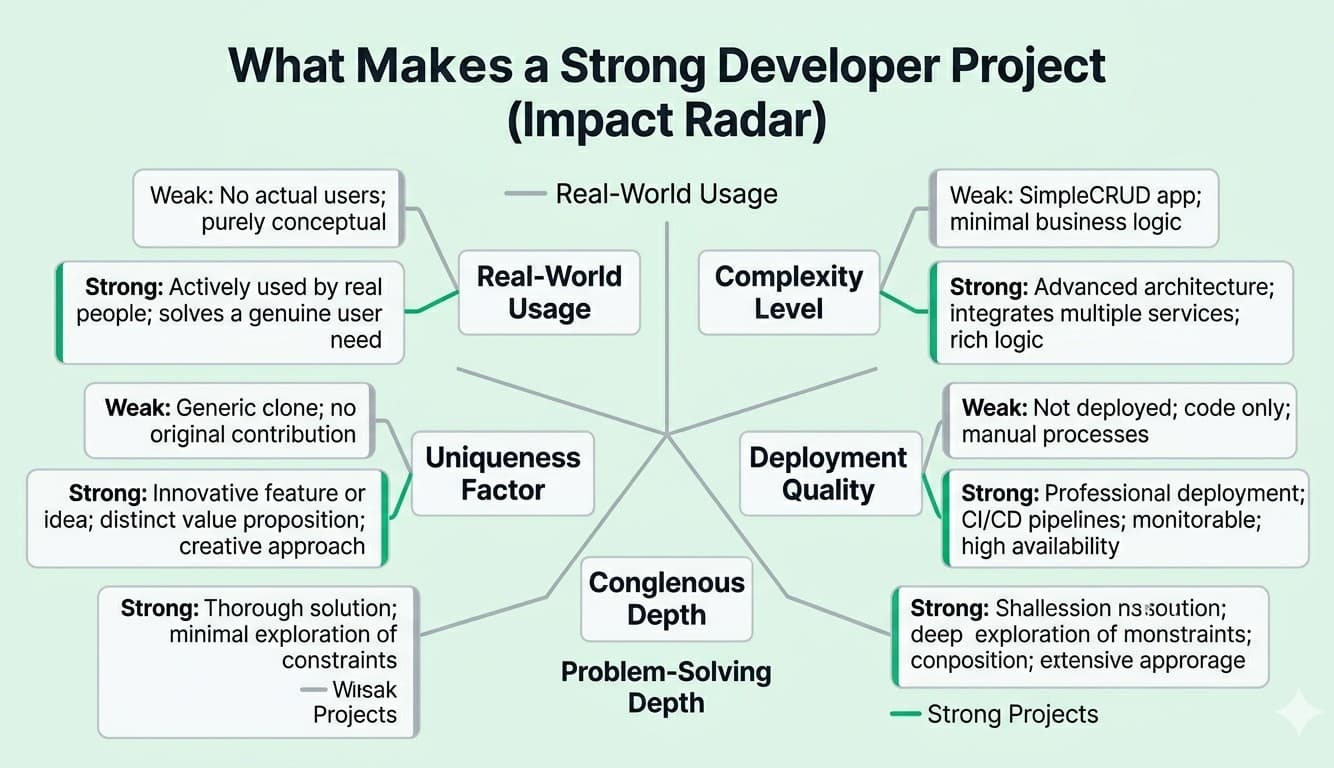
For many Full Stack Developer roles, projects are just as important as experience. Recruiters often look at your GitHub profile, portfolio website, or project links to understand your practical skills.
Common mistakes
Unfinished projects
No project descriptions
No screenshots or demo links
Very basic tutorial projects
What to do
Build one or two quality projects that solve a real problem.
For each project, include:
Project overview
Technologies used
Key features
GitHub repository
Live demo link (if available)
A well-presented project can leave a stronger impression than several incomplete ones.
3. You May Be Applying for the Wrong Roles
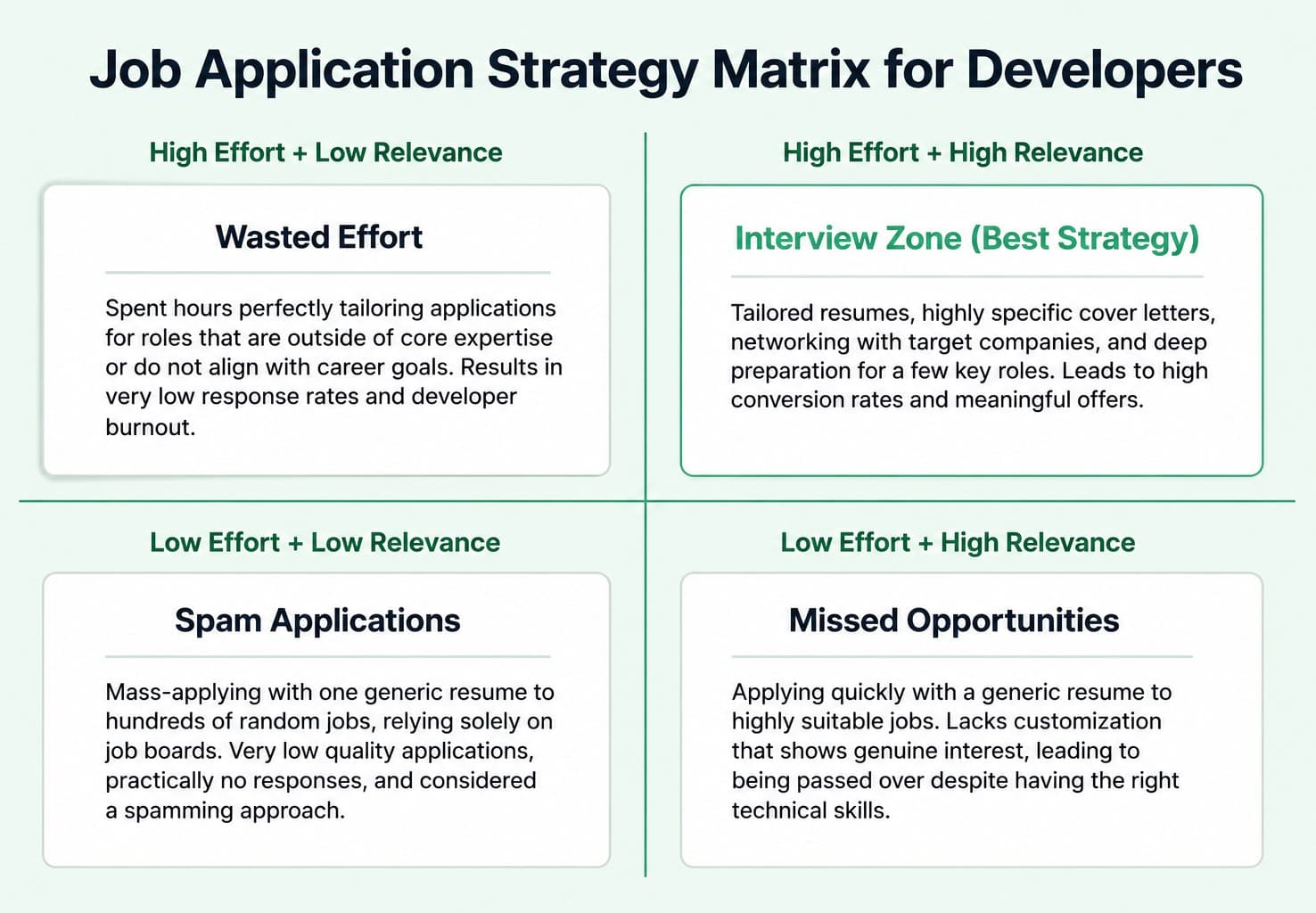
Many developers apply for every job they find, even when the requirements do not match their experience.
For example:
A fresher applying for senior developer roles
A frontend developer applying for backend-heavy positions
A developer with limited experience applying for leadership roles
This usually results in automatic rejection.
What to do
Focus on jobs that closely match:
Your skills
Your experience level
The technologies you have worked with
Applying to suitable roles increases your chances of getting shortlisted.
4. Your Resume Does Not Show Results
Recruiters want to know the impact of your work. A resume filled only with task descriptions can feel generic.
Instead of writing:
- Built APIs for the application.
Try:
- Developed REST APIs that supported key application features.
Instead of:
- Worked on website performance.
Try:
- Improved website performance through code optimization and faster loading pages.
Even if you do not have exact numbers, describe how your work helped the project.
5. Your LinkedIn Profile Needs Attention
Many recruiters use LinkedIn to search for candidates. If your profile is incomplete or outdated, you may miss opportunities.
Make sure your profile includes:
Professional profile photo
Clear headline
Updated experience section
Skills section
Project links
About section that explains your background and interests
Example Headline
Full Stack Developer | React, Node.js, JavaScript | Open to Opportunities
A complete LinkedIn profile helps recruiters learn more about you beyond your resume.
6. You Are Using the Same Resume Everywhere
Every company looks for slightly different skills. Sending the same resume to every job may reduce your chances of standing out. Read the job description carefully. Highlight the skills that match your experience. Update your resume to reflect relevant projects and technologies. Write a short, personalized application when possible. Small changes can make a big difference.What to do
Before applying:
Apply Smarter Instead of Applying More
Many job seekers believe that sending more applications automatically leads to more interviews. That is not always true. A better approach is: Identify roles that match your profile. Customize your resume. Showcase relevant projects. Keep your LinkedIn profile updated. Follow up professionally when appropriate. Ten well-targeted applications are often more effective than sending the same resume to hundreds of companies.
How to Improve Your Chances of Getting Interview Calls
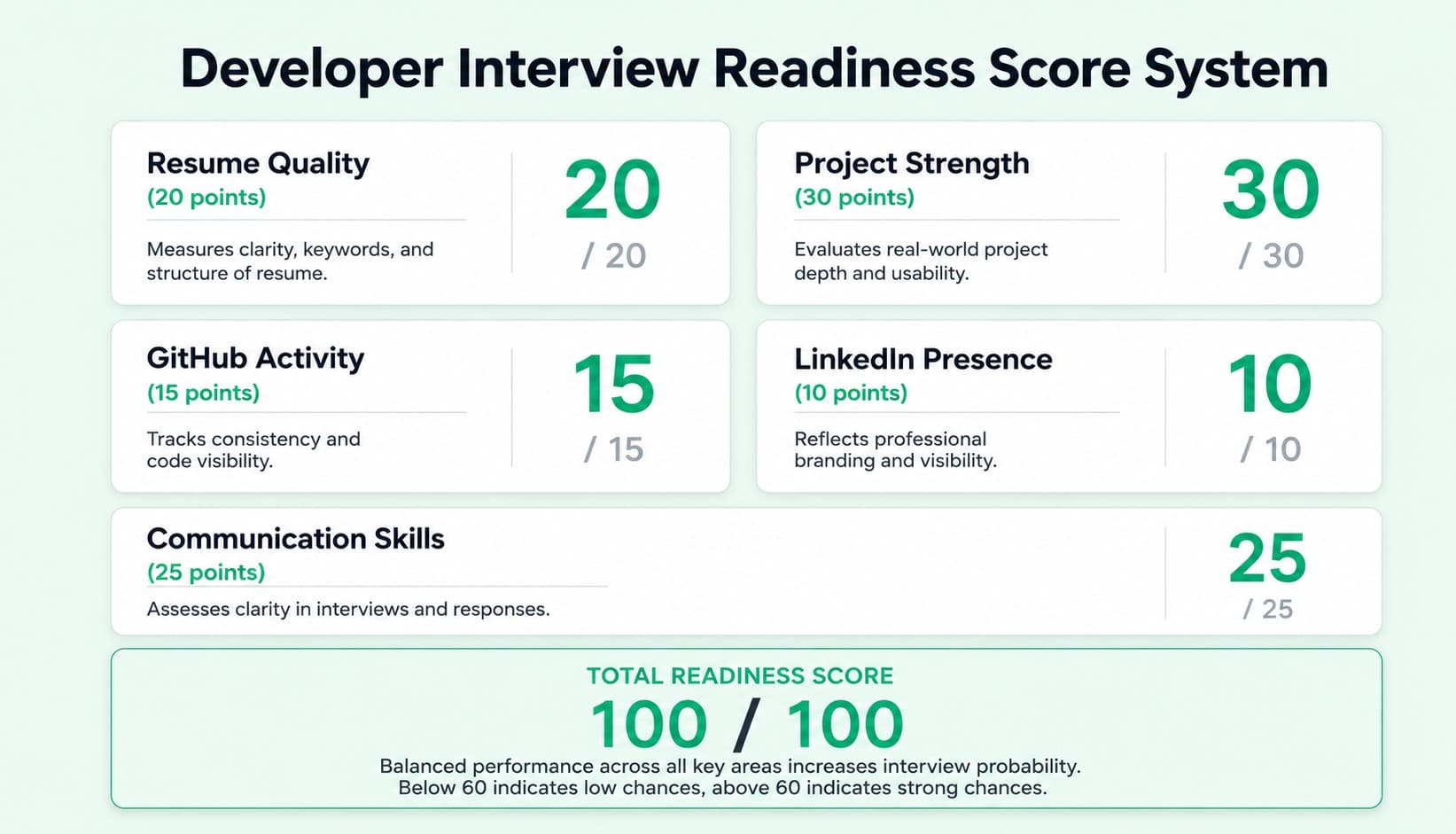
Here are some practical steps you can take today: Review your resume and make sure it clearly shows: Technical skills Projects Experience Achievements Keep the layout simple and easy to read. Choose your best project and improve its presentation. Add: Documentation Screenshots Demo links Clear explanations Update your headline, About section, and skills. Connect with developers, recruiters, and professionals in your industry. Technology changes quickly. Keep improving your skills through: Personal projects Online courses Coding challenges Open-source contributions Preparing before receiving interview calls can help build confidence. Practice: Technical questions System design basics Behavioral questions "Tell me about yourself" The better prepared you are, the more confident you will feel during interviews.Update Your Resume
Strengthen Your Portfolio
Improve Your LinkedIn Profile
Continue Learning
Practice Interview Questions
FREE TO USE
8k+ SESSIONS92% FLUENCY4.9★ RATING
Speak With Confidence
Real Conversations. Real Scenarios. Speak until it feels natural.
- Real-Time Speaking Practice
- Guided Conversation Flows
- Instant AI Feedback
Conclusion
Not getting interview calls can be frustrating, but it does not necessarily mean you are not qualified.
In many cases, small improvements to your resume, projects, LinkedIn profile, and application strategy can make a noticeable difference.
Focus on presenting your skills clearly, applying to relevant roles, and building strong projects that demonstrate what you can do.
Job searching takes time, but consistent improvements will increase your chances of getting noticed by recruiters and landing interviews.
Start Preparing with Mocklingo
Want to practice before your next interview?
Mocklingo helps developers prepare through realistic mock interviews and detailed feedback so they can approach interviews with greater confidence.
Start practicing today and be ready when the next interview opportunity arrives.
FAQs
javascript
More Blogs

Oct 22, 2026
UI/UX Designer Interview Preparation Guide: A Complete Roadmap for 2026
38 min read

