Loading...
Contents
Is Manual Testing Dead in 2026? The Truth About QA Careers, AI, and Automation
Jun 20, 20268 min readUpdated Sep 21, 2026
Automation and AI are changing software testing, but manual testing is far from obsolete. Here's what QA engineers need to know in 2026.
Few topics in software testing create as much debate as the future of manual testing.
As AI-powered testing tools, automation frameworks, and continuous delivery practices become more common, many aspiring QA engineers are asking the same question: Is manual testing still a good career choice in 2026?
The short answer is yes.
However, the role has evolved significantly. Companies are no longer looking for testers who only execute predefined test cases and document results. They want professionals who can investigate problems, validate user experiences, assess business risks, and collaborate effectively with automation teams.
The reality is that automation and AI are changing software testing, but they are not eliminating the need for human testers. Instead, they are shifting where testers create value.
Understanding that shift is the key to building a successful QA career in 2026 and beyond.
FREE TO USE
25K+ INTERVIEWS4.8★ RATING68% IMPROVEMENT
Crack Your Dream Job
Real Interviews. Real Pressure. Practice until it feels easy.
- Seamless Interview Experience
- Resume & JD Questions
- Instant Personalized Feedback
Why People Think Manual Testing Is Dying
The perception that manual testing is disappearing comes from a very real industry trend.
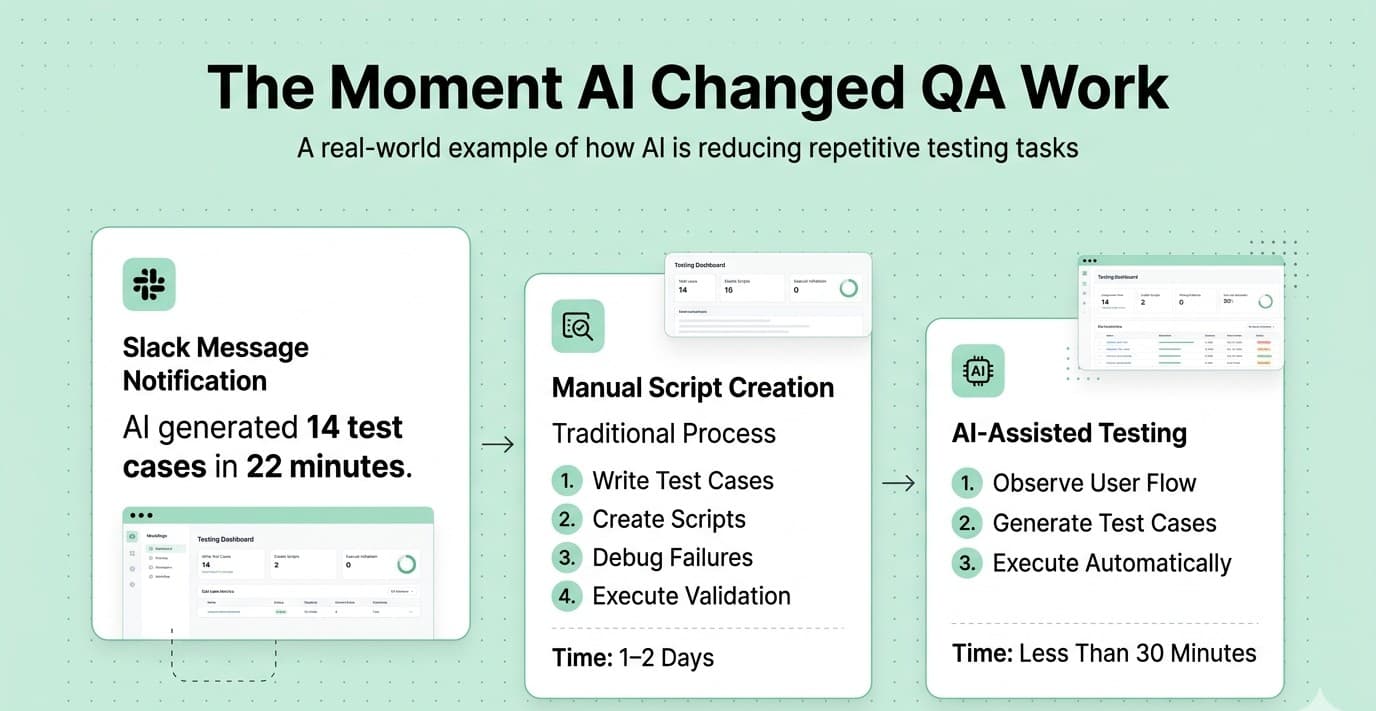
Over the last few years, automation tools have become easier to adopt and more powerful than ever before. Frameworks such as Selenium, Playwright, and Cypress have matured, while AI-assisted testing platforms can now generate test cases, maintain scripts, and detect UI changes automatically.
Tasks that once required hours of repetitive manual effort can now be completed in minutes.
Regression testing is one of the biggest examples. Many organizations that previously relied on teams of testers to execute the same test suite before every release now run automated pipelines that complete the same work much faster.
As a result, the demand for purely execution-focused testing roles has declined.
But this is where many people reach the wrong conclusion.
The decline of repetitive testing activities does not mean the decline of manual testing itself.
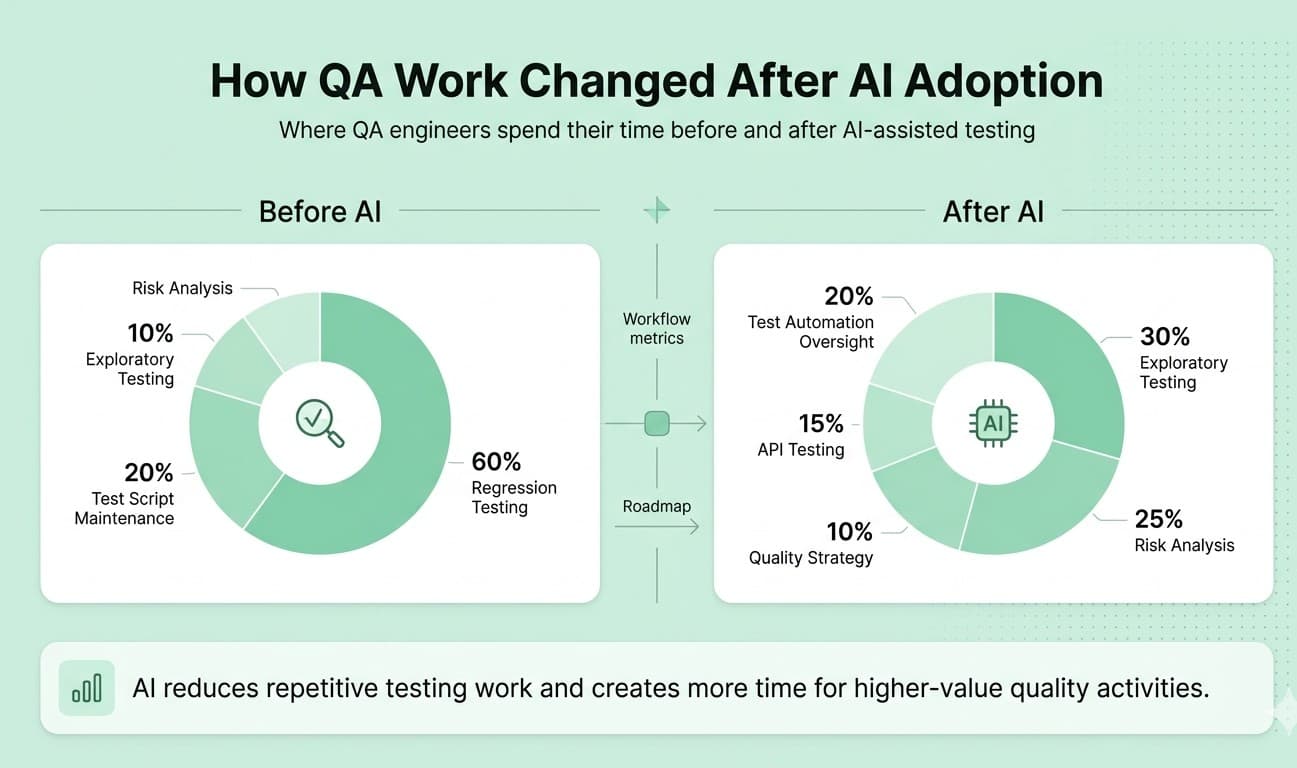
What is disappearing is low-value, repetitive work. What remains is the part of testing that requires analysis, curiosity, and human judgment.
What the Data Says in 2026
The data paints a more balanced picture than many headlines suggest.
Industry reports consistently show rapid growth in automation and AI adoption within software testing. Organizations are investing heavily in automated quality assurance processes because they reduce release cycles and improve efficiency.
At the same time, job descriptions for QA engineers continue to include skills such as exploratory testing, API testing, functional testing, usability validation, and risk assessment.
This reflects a broader shift occurring across the industry.
Organizations are not replacing testers entirely. They are changing the expectations of what a tester should contribute.
Automation handles repetitive validation.
Humans handle investigation, critical thinking, and quality decisions.
The result is not fewer testing opportunities. Instead, it is a different definition of what a valuable tester looks like.
Are Manual Testing Jobs Still in Demand?
Yes, manual testing jobs still exist, and many organizations continue to hire QA professionals with strong manual testing expertise.
However, employers are increasingly looking beyond basic test execution.
Modern QA teams value testers who can:
• Perform exploratory testing
• Validate APIs
• Analyze application behavior
• Investigate production issues
• Understand business requirements
• Communicate risks clearly
• Collaborate with developers and product teams
This is especially true in industries where software quality directly affects revenue, compliance, security, or customer trust.
For example:
• Fintech companies cannot afford payment failures.
• Healthcare platforms cannot tolerate critical data issues.
• Enterprise SaaS providers must ensure stability across thousands of users.
In these environments, human judgment remains essential.
Companies still need testers who can ask questions that automation cannot.
Manual Testing vs Automation Testing
Manual testing and automation testing are not competing disciplines—they solve different problems.
Automation testing is ideal for validating the same functionality repeatedly, making it valuable for regression testing, smoke testing, and CI/CD pipelines.
Manual testing is best for evaluating new features, exploring user journeys, assessing usability, and uncovering unexpected issues.
For example, an automated test can confirm that a checkout process works correctly. A human tester can determine whether the experience is intuitive or if users encounter confusion and friction.
The most effective QA teams use both approaches together.
Automation delivers speed and consistency. Manual testing delivers insight and context.
Together, they create a stronger quality strategy.
FREE TO USE
8k+ SESSIONS92% FLUENCY4.9★ RATING
Speak With Confidence
Real Conversations. Real Scenarios. Speak until it feels natural.
- Real-Time Speaking Practice
- Guided Conversation Flows
- Instant AI Feedback
Skills QA Engineers Need in 2026
The skills that helped testers succeed five years ago are no longer enough on their own.
Today's QA professionals need a broader understanding of how software systems work and how quality fits into the development process.
Some of the most valuable skills include:
Exploratory Testing
The ability to investigate applications without relying entirely on predefined test cases remains one of the most important testing skills.
API Testing
Modern applications depend heavily on APIs. Understanding how to validate requests, responses, and integrations is increasingly important.
SQL and Data Validation
Many defects originate at the data layer. Basic database knowledge helps testers validate information beyond the user interface.
CI/CD Awareness
Understanding how software is built, tested, and deployed allows testers to contribute more effectively throughout the development lifecycle.
Risk-Based Testing
Not every feature carries the same business impact. Strong testers know how to prioritize testing efforts based on risk.
Communication Skills
Finding bugs is important.
Explaining their impact clearly to developers, product managers, and stakeholders is equally important.
Why Human Testers Still Matter
AI and automation continue to improve every year.
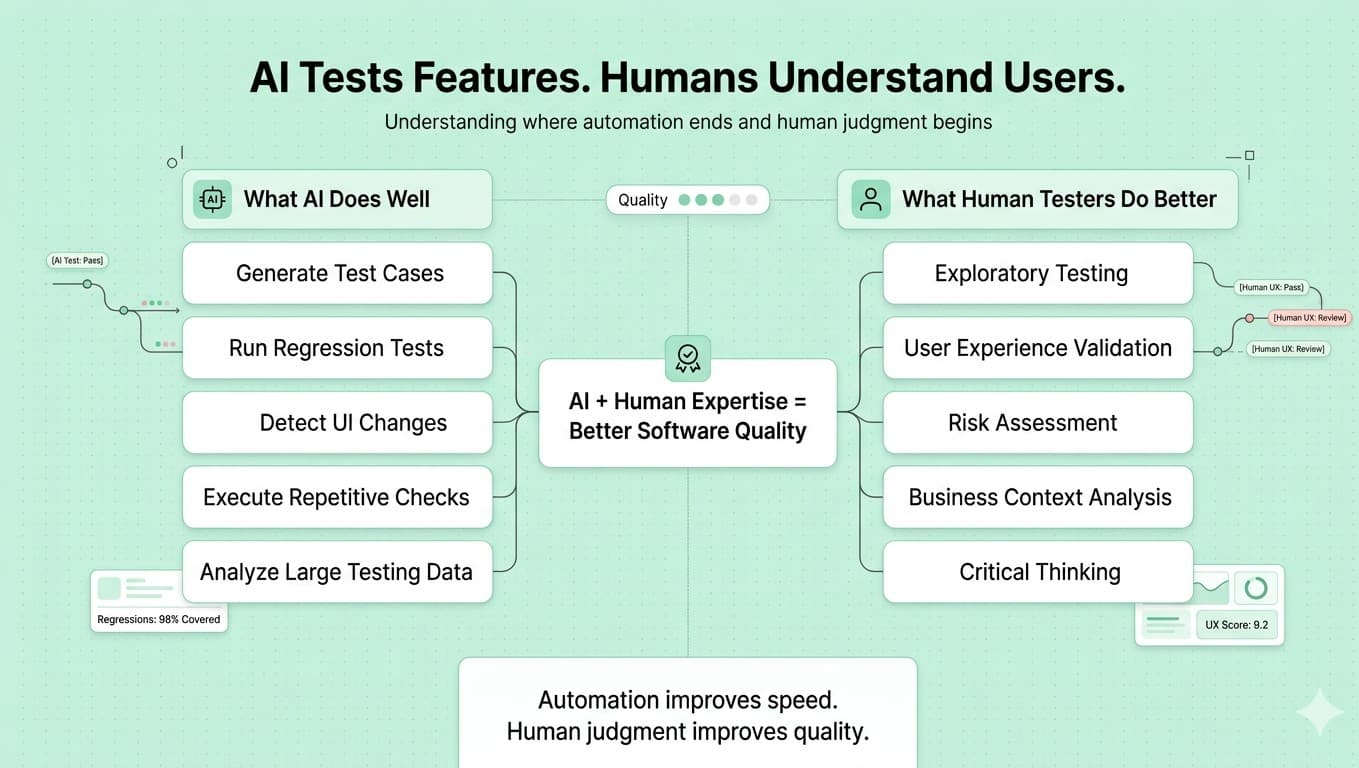
They can generate test cases, identify UI changes, execute large test suites, and analyze testing data at scale. Yet some aspects of software quality remain deeply human.
Human testers understand user expectations.
They recognize confusing workflows. They identify inconsistencies in product behavior. They question assumptions.
Most importantly, they explore software in ways that scripted automation cannot.
A testing tool can confirm whether a feature works according to predefined rules.
A human tester can determine whether the feature actually makes sense for the people using it.
This distinction becomes increasingly important as products grow more complex.
As automation handles more repetitive work, human judgment becomes more valuable rather than less.
Career Paths for Manual Testers
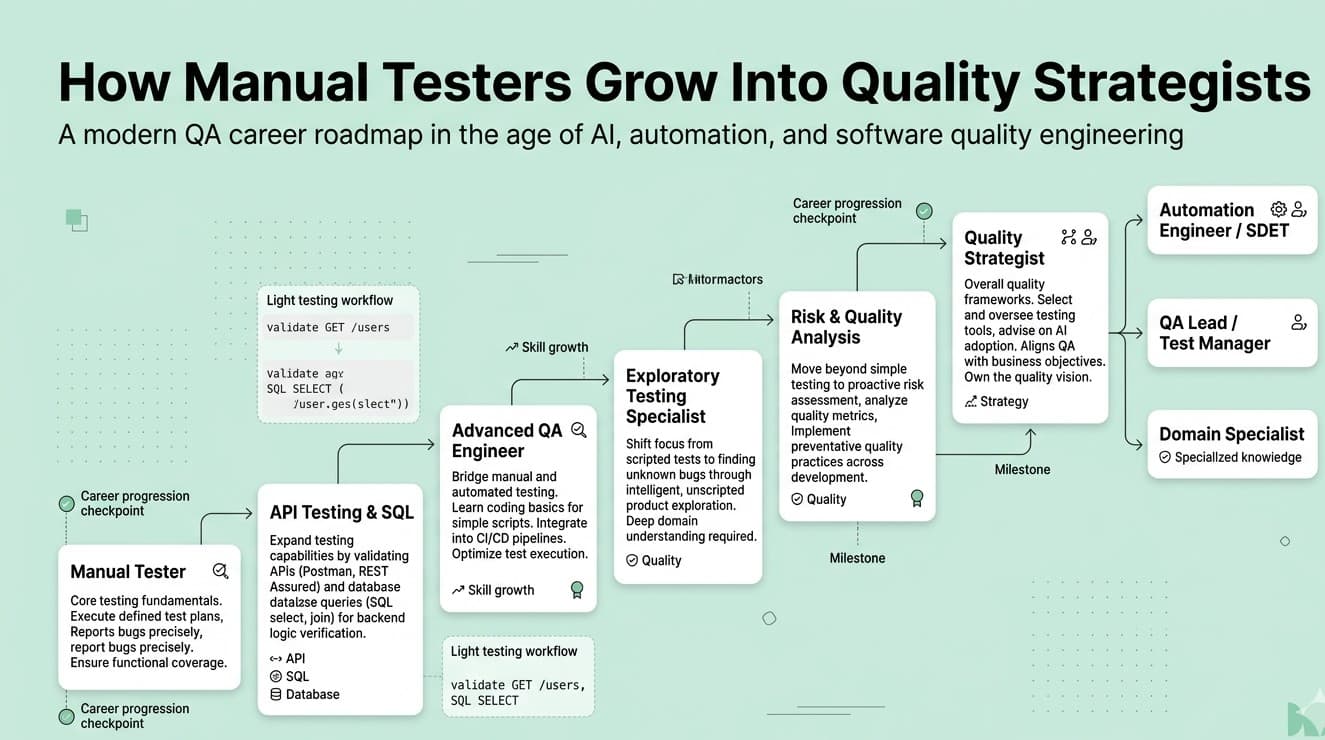
Manual testing remains one of the most accessible entry points into software quality assurance.
However, it should be viewed as a foundation rather than a final destination.
Several career paths can grow from a manual testing background.
Automation Engineer or SDET
Many testers transition into automation roles where they build frameworks, develop test scripts, and improve testing infrastructure.
QA Lead or Test Manager
Experienced testers often move into leadership positions where they define testing strategies, manage teams, and oversee quality initiatives.
Quality Engineering Specialist
Quality engineering focuses on improving quality throughout the software development lifecycle rather than simply identifying defects.
Domain Specialist
Deep expertise in industries such as fintech, healthcare, cybersecurity, or enterprise software can create significant career opportunities.
Organizations place tremendous value on professionals who understand both testing and the business domain.