Loading...
Contents
Junior Full Stack Developer Jobs in 2026: What Has Changed?
Jun 9, 202619 min readUpdated Sep 13, 2026
If you are applying for junior full stack developer jobs and not getting responses, it is not just your experience or luck. Many beginners are facing the same situation. The job market has become more competitive, and companies have changed how they hire. This blog explains what is actually happening in simple terms and what you should realistically focus on instead of feeling confused or discouraged.
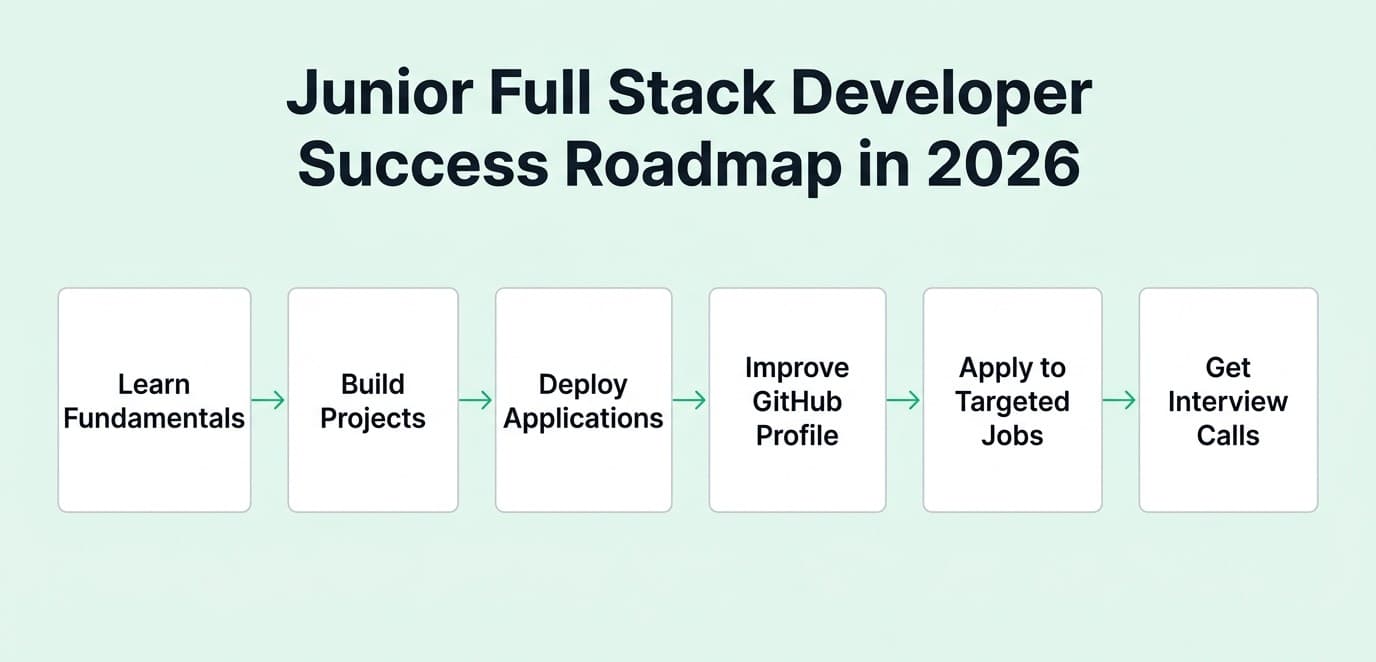
FREE TO USE
25K+ INTERVIEWS4.8★ RATING68% IMPROVEMENT
Crack Your Dream Job
Real Interviews. Real Pressure. Practice until it feels easy.
- Seamless Interview Experience
- Resume & JD Questions
- Instant Personalized Feedback
What is Really Happening in the Job Market?
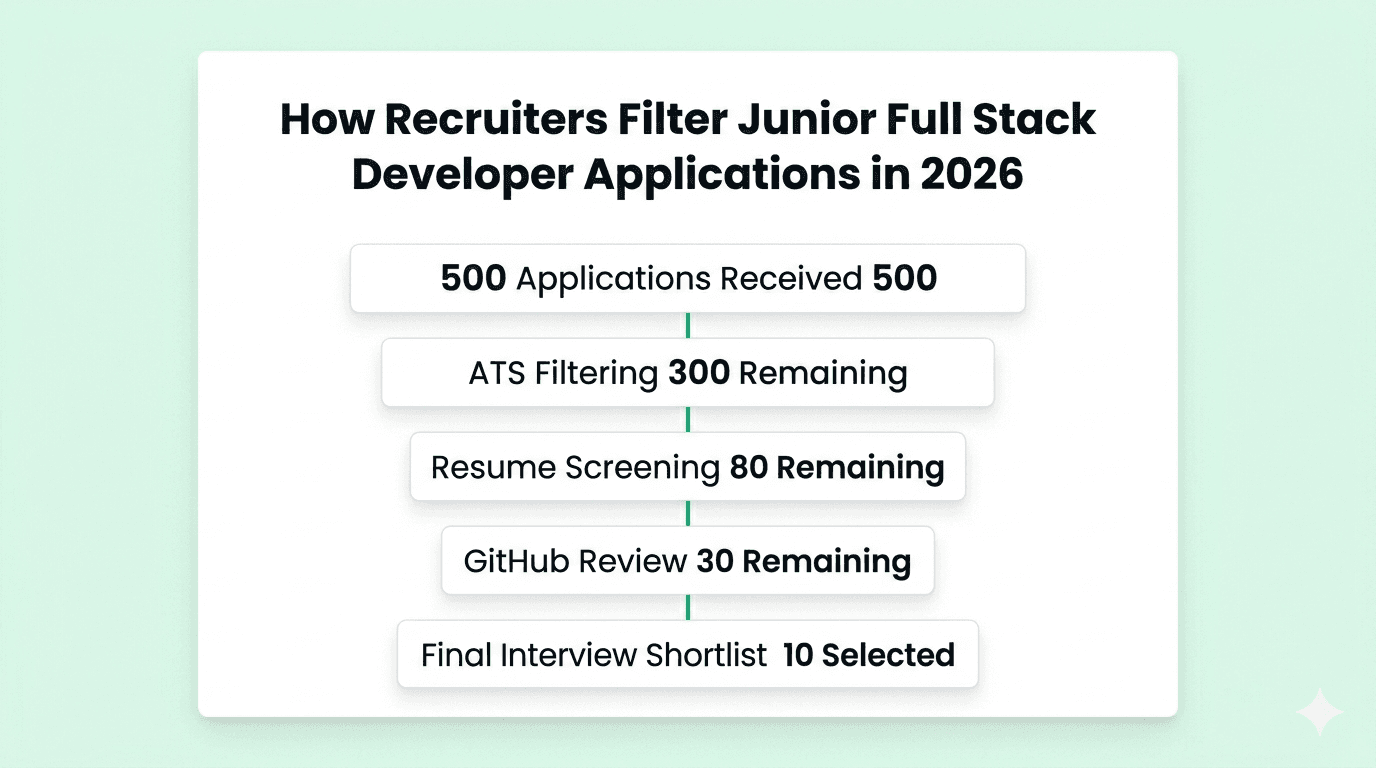
A few years ago, especially around 2021 and 2022, getting a junior developer job was much easier. Companies were hiring quickly, and even beginners with basic projects could get interview calls. But things have changed since then. Between 2023 and 2026, companies became more careful with hiring. Many tech layoffs happened, and hiring slowed down. At the same time, more people started learning web development through bootcamps, online courses, and self-learning platforms. So now there are: More candidates Fewer entry-level roles Higher expectations from companies This does not mean jobs are gone. It just means competition is higher and companies are more selective.
Why Junior Developer Jobs Feel Harder to Get
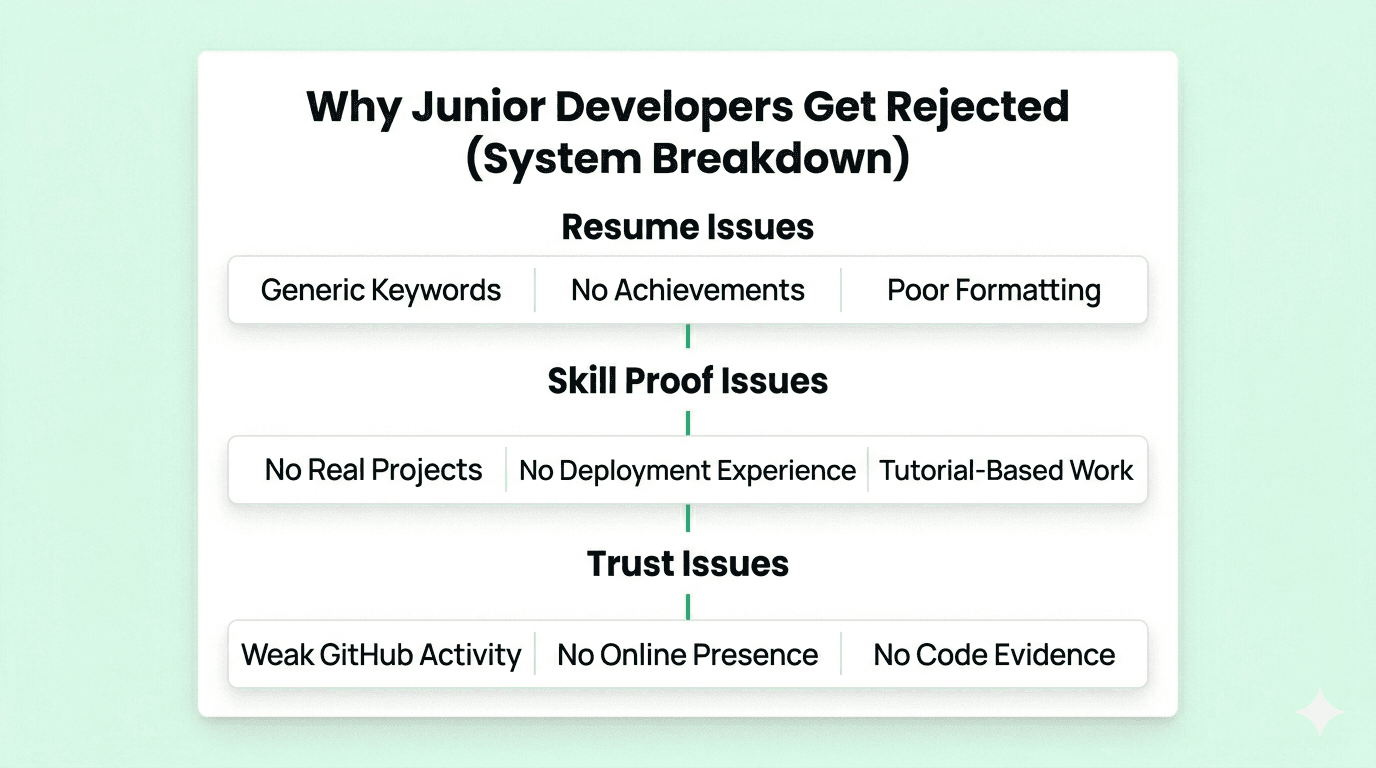
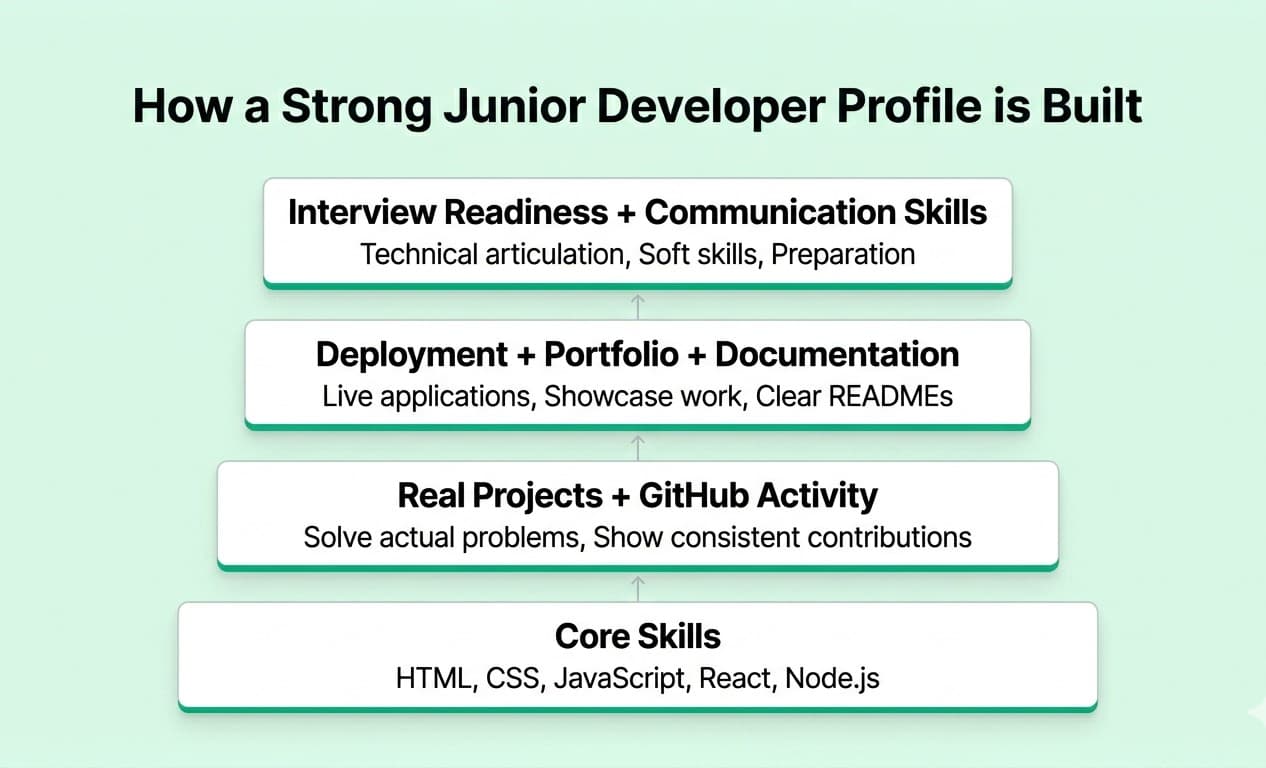
Let’s break it down in simple points. Earlier, a few basic projects were enough to get shortlisted. Now, companies want to see: Real projects (not just tutorial clones) Clean GitHub profiles Understanding of deployment Basic problem-solving skills They don’t expect perfection, but they do expect effort beyond basic learning. Most beginners build similar projects like: To-do apps Weather apps Calculator apps Simple CRUD systems There is nothing wrong with these, but when everyone has the same projects, it becomes difficult for recruiters to notice differences. Because learning development has become easier and more accessible, many people are applying for the same roles. So even if a company has 10 junior openings, they might receive hundreds or even thousands of applications. Remote work is good, but it also means: You are no longer competing locally You are competing with candidates from everywhere This increases competition for every job post.1. Companies expect more from beginners now
2. Same type of projects everywhere
3. More candidates in the market
4. Remote jobs increased competition
Where Junior Developer Jobs Still Exist
Despite everything above, developers are still being hired. The market is selective, not dead. Here is where entry level opportunities actually exist right now. 1. Startups Small and mid-stage startups often hire juniors because they need people who can learn quickly and contribute 2. Non-tech companies going digital Companies in: Healthcare Logistics Education Local businesses Frontend work Backend integration Dashboard building Not all good jobs are in big cities or famous companies. Many smaller companies offer good learning opportunities with less competition.They are slowly building tech teams and often hire fresh developers.3. AI-related companies and toolsCompanies building tools on top of AI platforms often need developers for:4. Smaller companies outside big tech hubs
Are Junior Developer Jobs Disappearing Entirely? No, But Here Is the Real Answer
They are not disappearing. They are concentrating. Instead of being spread broadly across companies of all sizes and industries, junior developer opportunities are consolidating in specific places. Companies that have a genuine training culture. Teams that are small enough to need a generalist. Products that are early stage enough to need builders rather than maintainers. The mistake most junior developers make is applying broadly to the same companies that everyone else is applying to. Large companies with well-known names, companies that appear on every "top tech employers" list, companies whose job postings get thousands of applications within 48 hours. A better strategy is to identify the companies in the middle. Growing but not yet famous. Building something real. With engineering teams small enough that one good hire makes a noticeable difference. Those companies are harder to find because they are not advertising on the same channels. But the competition for their roles is significantly lower.
FREE TO USE
8k+ SESSIONS92% FLUENCY4.9★ RATING
Speak With Confidence
Real Conversations. Real Scenarios. Speak until it feels natural.
- Real-Time Speaking Practice
- Guided Conversation Flows
- Instant AI Feedback
What Has Actually Disappeared Versus What Has Changed
It is important to be precise here, because "junior developer jobs are disappearing" is not entirely accurate. What has actually disappeared is the easy path. The route where completing a bootcamp, building three tutorial-based projects, and applying broadly resulted in offers within a few weeks. That path is gone. What has changed is the bar. The roles that still exist for junior and entry level developers now require candidates to demonstrate things that were previously optional. Companies filling junior full stack developer positions in 2026 consistently look for candidates who have real projects deployed and in use, not tutorial clones. They want candidates who understand how to work with AI tools and can demonstrate productivity with them. They want some evidence of being able to work on a real codebase, whether through open source contributions, internships, or freelance work. And they want developers who can communicate clearly about technical decisions, not just write the code. None of that is impossible. But it requires a different kind of preparation than what most people are doing.
What Actually Works in 2026 Job Market
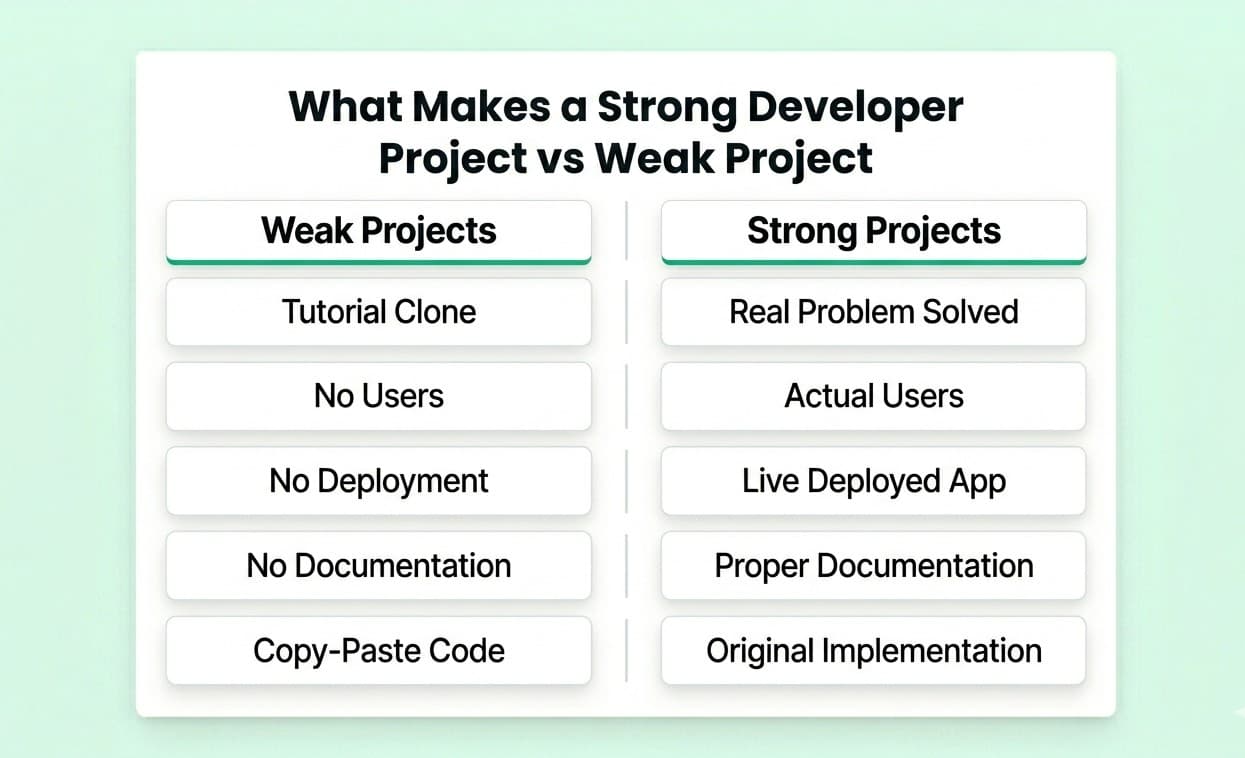
Stop applying to hundreds of positions with the same resume hoping something sticks. That approach is not working for most people. Instead of doing more courses or building more small projects, focus on these things: One good project is better than five small ones. It should have: Clear purpose Live demo GitHub repository Simple explanation of what it does Even a small tool used by real users is valuable. Companies are not against AI tools. They actually expect developers to use them. But you should also: Understand what the code does Be able to explain it Fix basic issues without help Try: Open source projects Freelance work Small business websites This teaches things tutorials cannot. Your LinkedIn and GitHub matter a lot. Make sure: Your profile is updated Your projects are explained properly Your headline is clear and simple Applying to 100+ jobs randomly usually does not help. Instead: Choose relevant roles Customize your resume slightly Apply carefully Even 10 good applications are better than 100 random ones.1. Build one real project properly
2. Use AI tools, but understand your code
3. Learn from real codebases
4. Improve how you present yourself
5. Apply with focus, not volume
Conclusion
The path into a junior developer role has not closed. It has just become more specific. The developers who will get hired in this market are not the ones who learned the most frameworks or completed the most courses. They are the ones who built real things, thought clearly about how technology solves problems, and can demonstrate that in a genuine conversation. That bar is higher than it was in 2021. But it is also clearer. And it is reachable.