Loading...
Contents
Mocklingo Interview Roadmap: Your Personalized Interview Preparation Plan
Oct 17, 202626 min readUpdated Oct 23, 2026
Preparing for an interview can feel overwhelming when you do not know where to start. You might spend hours watching tutorials, saving interview questions, revising technical concepts, and reading articles without having a clear idea of what to prioritize.
The challenge is not always finding preparation resources. It is knowing which resources to use, what to practice first, and how to track your progress before the interview.
That is why we built Mocklingo Interview Roadmap: a feature designed to turn your interview goal into a structured preparation journey.
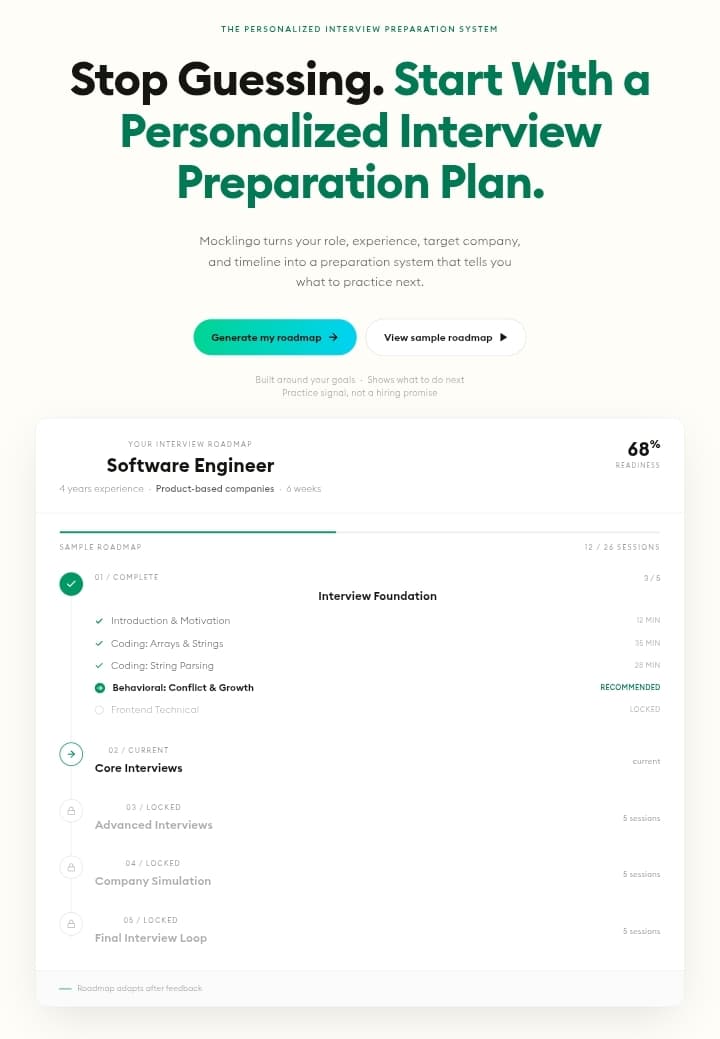
Instead of leaving you to organize every step yourself, Mocklingo creates a personalized roadmap based on your target role and preparation needs. It brings together preparation stages, practice sessions, learning resources, and feedback to help you work toward your next interview more systematically.
In this article, we will explain what Mocklingo Interview Roadmap does, how its preparation journey is organized, and how you can use it to plan your interview preparation.
FREE TO USE
25K+ INTERVIEWS4.8★ RATING68% IMPROVEMENT
Crack Your Dream Job
Real Interviews. Real Pressure. Practice until it feels easy.
- Seamless Interview Experience
- Resume & JD Questions
- Instant Personalized Feedback
What Is Mocklingo Interview Roadmap?
Mocklingo Interview Roadmap is a personalized interview preparation feature that helps candidates organize their learning and practice around a specific career goal.
It is designed for candidates who want more structure than a general interview checklist or a collection of questions.
Your roadmap organizes preparation into stages and connects learning with practical interview exercises. The experience includes AI-powered practice sessions, a dedicated practice workspace, coding practice, curated reading resources, and feedback intended to help you identify areas that need attention.
The objective is to give you a clearer answer to three important questions:
What should I prepare for my target role?
What should I practice first?
How can I identify areas that need more improvement?
By connecting these parts of preparation, Mocklingo helps you follow a more organized path instead of preparing randomly.
How Does Mocklingo Interview Roadmap Work?
Mocklingo Interview Roadmap is designed to make interview preparation more relevant to your target opportunity and current experience.
Step 1: Define Your Interview Goal
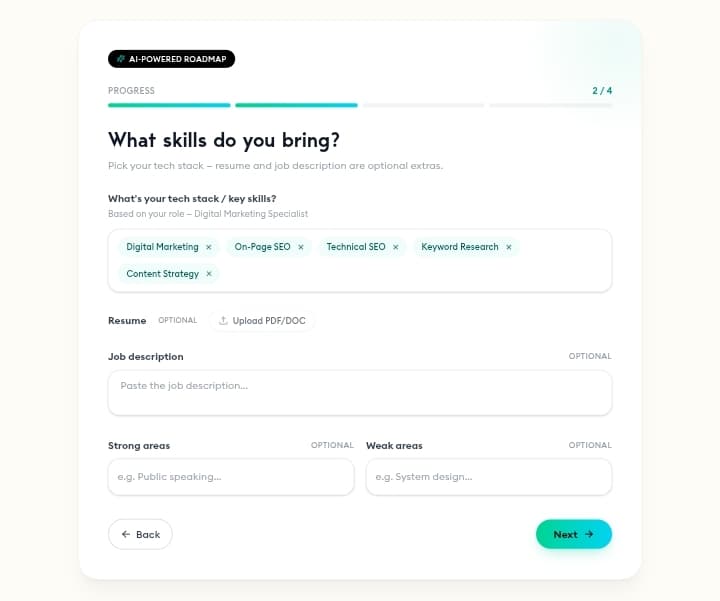
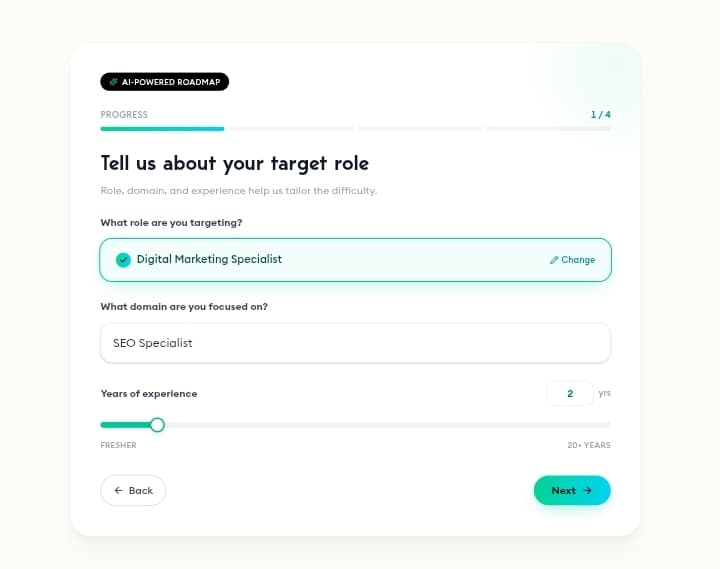
Start by identifying the role you want to prepare for and the experience level relevant to your situation.
Your target role matters because interview expectations vary between professions. A software engineering candidate may need to focus on programming, problem-solving, and technical fundamentals, while a product manager candidate may need to prepare for product thinking, prioritization, communication, and decision-making.
The roadmap is intended to organize preparation around your chosen goal rather than offering every candidate the same generic plan.
Step 2: Set Your Preparation Timeline
Your preparation timeline helps establish the period in which you want to get ready for an interview.
For example, a candidate preparing for an interview in one month may need a different study sequence from someone who has several months available.
A structured plan can help you divide your preparation into manageable stages and decide how to use your available time.
Choose a timeline that reflects your actual schedule so that your preparation plan is realistic and easier to follow.
Step 3: Follow Your Personalized Roadmap
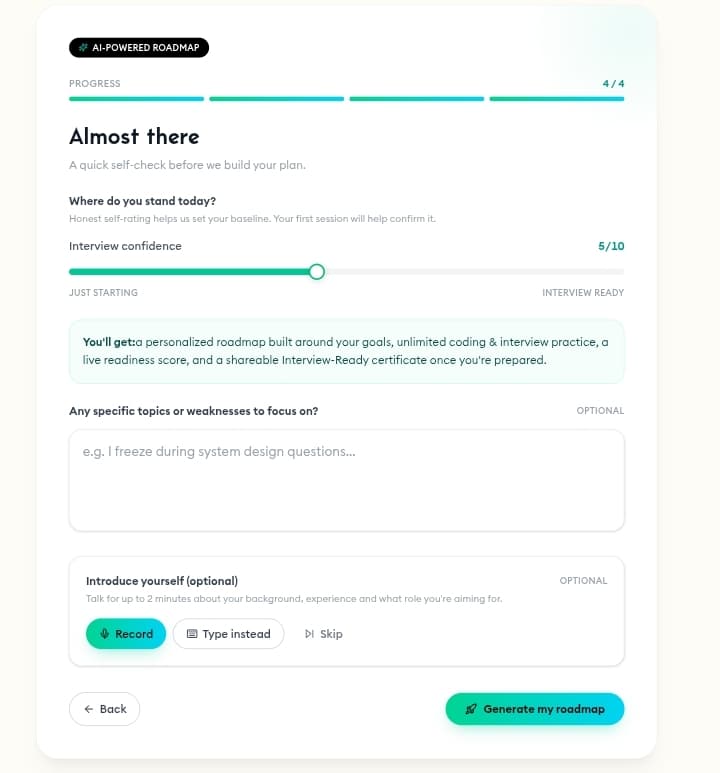
After the relevant details are provided, Mocklingo generates a roadmap that organizes preparation into a sequence of stages, practice activities, and learning resources.
Instead of deciding what to study every day from scratch, you can use the roadmap to understand your next preparation priorities.
This structure is particularly useful when you need to balance learning new concepts, revising existing knowledge, practicing interview questions, and reviewing your performance.
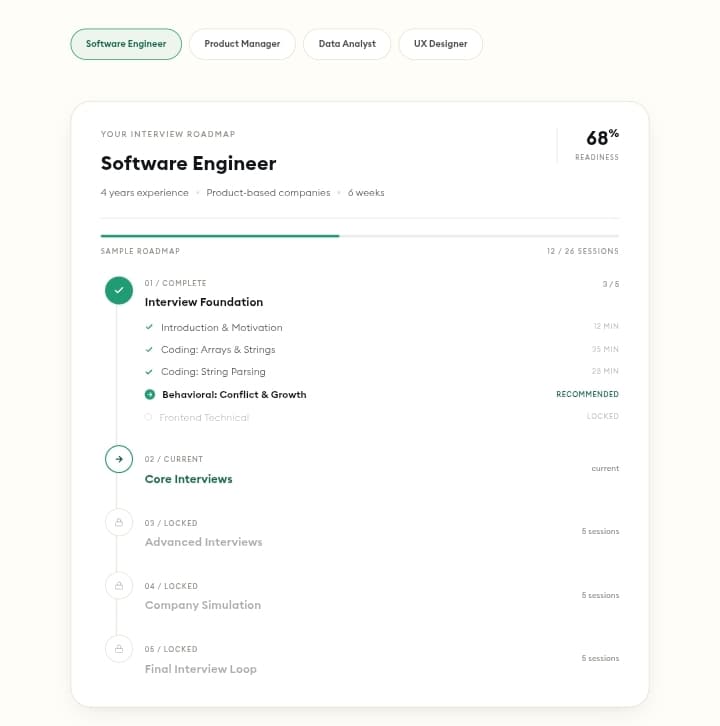
Explore the Five Stages of Mocklingo Interview Roadmap
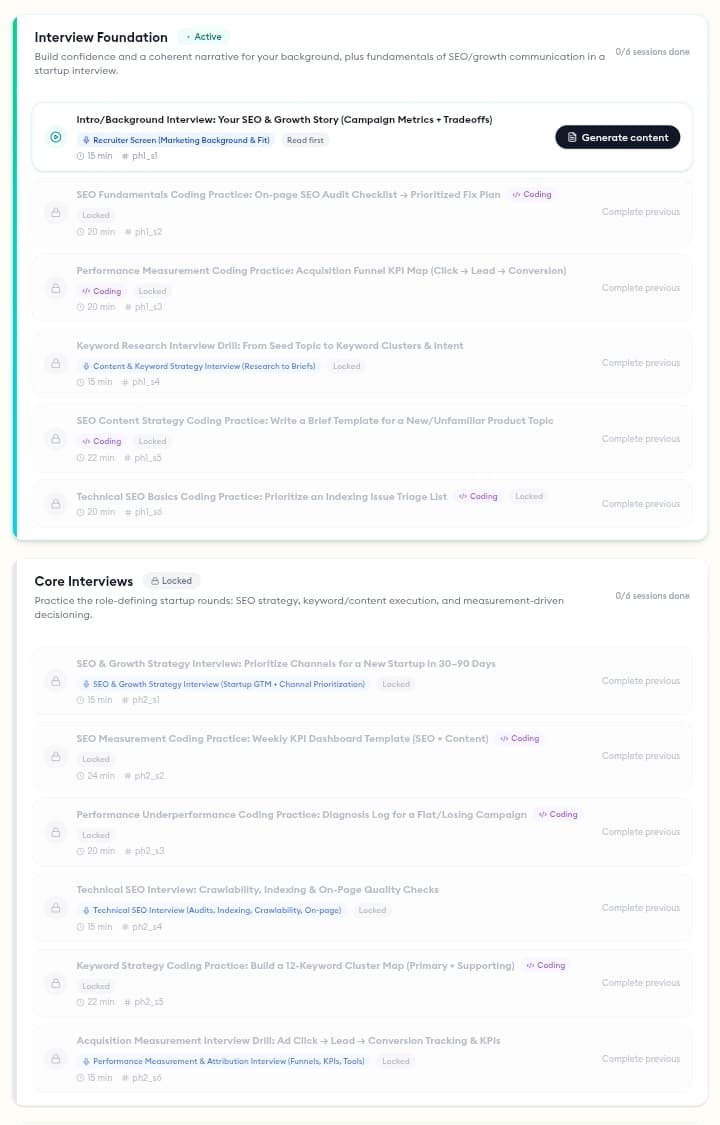
The roadmap example on Mocklingo illustrates five preparation stages. Together, they represent a progression from building the basics to rehearsing the interview experience.
1. Interview Foundation
The foundation stage focuses on preparing the groundwork for your target interview.
This may involve revisiting important concepts, understanding the skills expected for the role, and identifying the knowledge you need to strengthen.
For a technical role, foundational preparation may include core programming concepts or essential subject knowledge. For a business role, it may involve understanding key frameworks, terminology, and role-specific responsibilities.
Building a strong foundation makes it easier to approach more advanced interview questions later.
2. Core Interviews
Once the fundamentals are in place, preparation can move toward the questions and skills most relevant to the target role.
This stage is about practicing the core areas an interviewer may evaluate, rather than spending all your time reading theory.
You can use this part of the roadmap to focus on common role-related questions, explain concepts aloud, and identify topics that still require revision.
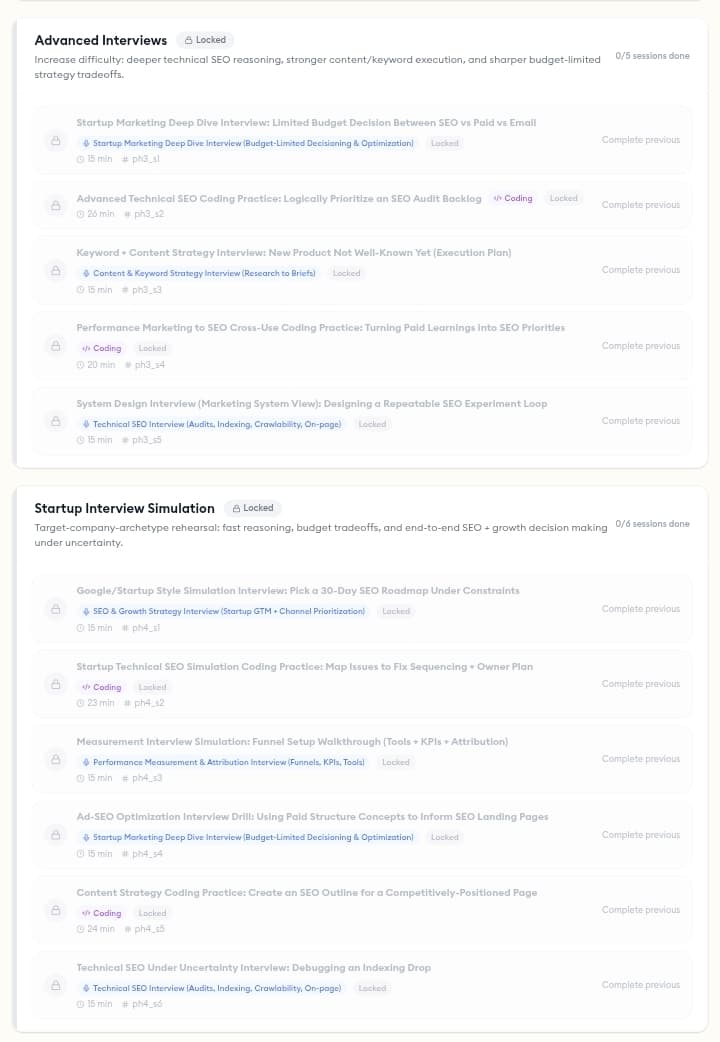
3. Advanced Interviews
Advanced preparation helps you work on more challenging questions and apply your knowledge to practical situations.
Depending on the role, this may involve complex technical problems, case-based questions, deeper explanations, or questions that require you to justify your decisions.
The purpose is to move beyond simply remembering information and become more comfortable explaining how you would use it.
4. Company Simulation
Interviews can differ between companies, even when the job title is the same.
The company simulation stage is designed to help candidates prepare for a more targeted interview experience. It represents a move toward practicing with the expectations and demands associated with a particular opportunity.
When using this stage, focus on the role requirements, relevant skills, and the kinds of problems the employer may expect you to address.
The exact level of company-specific personalization depends on the options available in your roadmap.
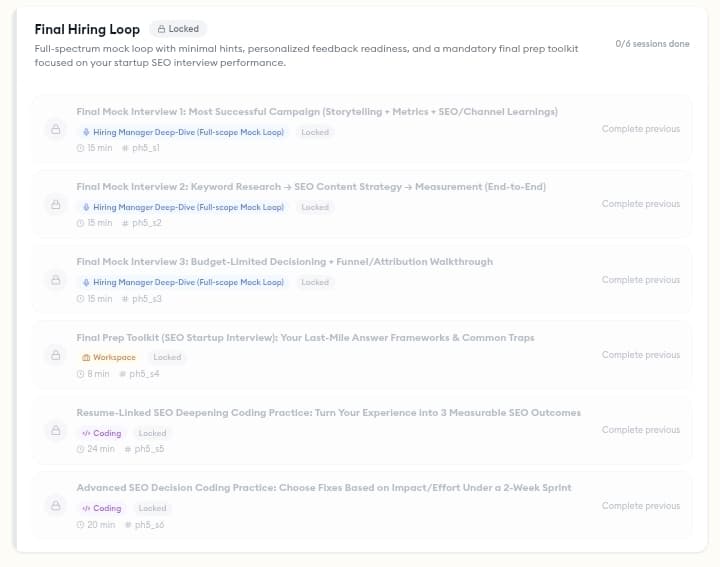
5. Final Interview Loop
The final stage brings preparation closer to the interview experience itself.
At this point, the focus is on bringing together the knowledge, problem-solving, and communication skills you have practiced.
Use this stage to revisit important topics, practice explaining your answers under interview-like conditions, and review areas that still need attention.
The five-stage structure gives you a clearer way to think about preparation as a progression rather than a single last-minute revision session.
1 / 3
What Does Your Mocklingo Interview Roadmap Include?
The roadmap connects several preparation activities so you can work on different aspects of interview readiness.
AI-Powered Interview Practice Sessions
Mocklingo's roadmap page describes at least 12 AI-powered interview practice sessions as part of the preparation experience.
These sessions provide opportunities to rehearse answering interview questions instead of relying exclusively on passive learning.
You can use interview practice to test your understanding, explain your reasoning, and identify questions that require more revision.
For additional practice outside the roadmap, you can also explore Mocklingo AI Mock Interview, which offers interactive voice-based interview practice, role-relevant questions, follow-ups, and personalized feedback.
A Dedicated Practice Workspace
Keeping preparation organized can be difficult when notes, questions, learning resources, and practice activities are scattered across different places.
The roadmap includes a dedicated practice workspace to support a more organized preparation process.
Use the workspace as the place to return to your planned activities and continue working through your preparation journey.
Coding Practice
Candidates preparing for software engineering and other coding-focused roles often need to do more than read technical explanations. They also need opportunities to solve problems and explain their approach.
Mocklingo's roadmap includes coding practice as part of the preparation experience.
This can help candidates combine conceptual revision with practical problem-solving as they prepare for technical interviews.
The coding activities most relevant to you will depend on your target role and the content included in your roadmap.
Curated Reading Resources
Sometimes you need to revisit a concept before attempting an interview question.
The roadmap includes curated reading material to support the learning part of your preparation.
Rather than treating every question as something to memorize, use relevant resources to strengthen your understanding of the topic. Then return to practice and check whether you can explain the concept clearly.
Feedback and Recommended Practice
Preparation becomes more useful when you can identify the areas that need additional work.
The roadmap example includes feedback categories such as technical knowledge, communication, problem-solving, and confidence, along with recommended practice topics.
These indicators can help you reflect on your current performance and decide what deserves attention next.
Use the feedback as a guide for your preparation, not as a guarantee of how an employer will evaluate you. Interview outcomes depend on many factors beyond a single practice score.
FREE TO USE
8k+ SESSIONS92% FLUENCY4.9★ RATING
Speak With Confidence
Real Conversations. Real Scenarios. Speak until it feels natural.
- Real-Time Speaking Practice
- Guided Conversation Flows
- Instant AI Feedback
How Is Mocklingo Interview Roadmap Different from a Normal Study Plan?
A traditional study plan usually lists topics and deadlines. It can help you organize your time, but it may not connect your learning with interview practice and feedback.
Mocklingo Interview Roadmap is designed to bring those elements together.
The key difference is the connection between planning, learning, practicing, and reviewing.
The roadmap is not simply intended to tell you what to study. It is designed to help you work through a more complete interview preparation process.
Who Should Use Mocklingo Interview Roadmap?
Mocklingo Interview Roadmap can be useful for candidates who need a clearer structure for their preparation.
Students preparing for placements can use a roadmap to organize their learning and practice before campus interviews.
Freshers applying for their first job can follow a structured sequence instead of trying to prepare for every possible interview question at once.
Experienced professionals can organize preparation around the requirements of a new role or a career move.
Career switchers can use a target-role-focused preparation plan to identify relevant skills and topics they need to strengthen.
Candidates with a fixed interview deadline can use a preparation timeline to make better decisions about what to prioritize within the time available.
If you already have a clear study plan, the roadmap can still be useful as a way to connect your revision with practice and feedback.
How to Get Started with Mocklingo Interview Roadmap
You can explore the feature on the Mocklingo Interview Roadmap page.
To make the most of your roadmap, follow these practical steps.
Step 1: Identify Your Target Role
Be specific about the position you want. Preparing for a data analyst interview, for example, requires a different focus from preparing for a product manager interview.
Step 2: Set a Realistic Timeline
Consider your interview date, available study hours, and existing knowledge. A realistic timeline helps you plan preparation without overloading your schedule.
Step 3: Work Through the Roadmap in Sequence
Use the roadmap's stages to organize your preparation. Avoid jumping between unrelated topics without a clear reason.
Step 4: Complete Your Practice Sessions
Use the available AI-powered practice sessions to apply what you have learned. Practicing answers aloud can reveal gaps that reading alone may not expose.
Step 5: Review Your Feedback
Look for recurring weaknesses and areas where you need stronger explanations or deeper knowledge.
Step 6: Adjust Your Preparation Priorities
Use your feedback and recommended practice topics to decide what to revisit. If the current roadmap provides adaptive recommendations, follow those recommendations as you progress.
The aim is not to complete activities as quickly as possible. It is to make meaningful progress toward the skills and knowledge required for your target interview.
1 / 4
How Interview Roadmap and AI Mock Interview Work Together
Mocklingo Interview Roadmap and Mocklingo AI Mock Interview address two connected parts of preparation.
The Interview Roadmap helps organize what to prepare, which stages to work through, and which learning or practice activities to prioritize.
The AI Mock Interview gives you an opportunity to rehearse interview conversations, respond to follow-up questions, and review feedback on your performance.
For example, suppose your roadmap identifies technical explanations as an area to improve. You can revise the relevant concepts, use AI mock interview practice to explain them aloud, and review your feedback afterward.
This creates a practical cycle:
Plan your preparation.
Learn or revise a topic.
Practice answering relevant questions.
Review feedback.
Focus on the next area that needs improvement.
By using the two features together, you can connect preparation planning with active interview practice instead of treating them as separate activities.
Why We Built Mocklingo Interview Roadmap
Candidates often have access to plenty of interview preparation material but still struggle to decide how to use it effectively.
They may collect question lists, bookmark tutorials, revise technical concepts, and practice occasionally without knowing whether their efforts are addressing the right priorities.
We built Mocklingo Interview Roadmap to make the preparation process more structured.
By bringing together preparation stages, AI-powered practice, learning resources, and feedback, the feature is designed to help candidates approach their interview goals with greater clarity.
It does not guarantee interview success or replace the need to develop the skills required for a job. Instead, it gives you a framework for organizing your preparation and making more deliberate use of your practice time.
Start Building Your Interview Preparation Plan with Mocklingo
Effective interview preparation is not only about how much material you study. It is also about whether you are working on the right topics, practicing what you learn, and using feedback to improve.
With Mocklingo Interview Roadmap, you can organize your preparation into stages, work through AI-powered practice sessions, access learning resources, and identify areas that deserve more attention.
Instead of wondering what to prepare next, start with a clearer plan and build your preparation step by step.
Ready to organize your interview preparation? Explore Mocklingo Interview Roadmap and start planning your next interview journey.
FAQs
More Blogs

Oct 22, 2026
UI/UX Designer Interview Preparation Guide: A Complete Roadmap for 2026
38 min read

