Loading...
Contents
Top DevOps Engineer Skills Recruiters Look for in 2026
Sep 3, 202676 min readUpdated Oct 25, 2026
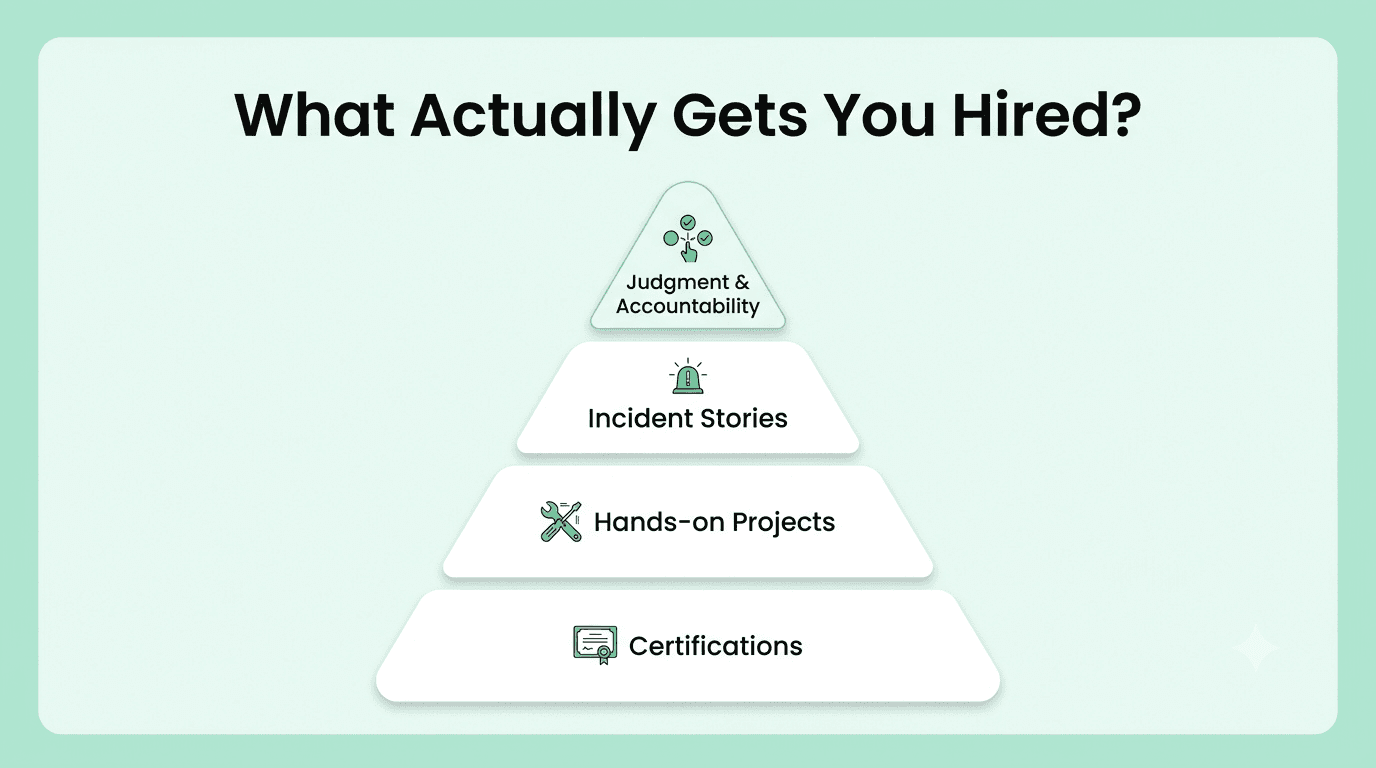
In 2026, recruiters hiring DevOps engineers prioritize five things above everything else: strong Linux and networking fundamentals, hands-on Infrastructure as Code (Terraform/OpenTofu), container orchestration (Docker + Kubernetes), CI/CD pipeline design, and cloud cost-and-security literacy — combined with the judgment to know when not to automate something. Certifications help you get noticed; production incident stories get you hired.
This guide is written the way an actual hiring loop works resume screen, recruiter call, technical screen, system design/practical round, and final panel, so you know exactly where each skill gets tested and what "good" looks like at fresher, mid, and senior level.
FREE TO USE
25K+ INTERVIEWS4.8★ RATING68% IMPROVEMENT
Crack Your Dream Job
Real Interviews. Real Pressure. Practice until it feels easy.
- Seamless Interview Experience
- Resume & JD Questions
- Instant Personalized Feedback
How This Guide Is Organized
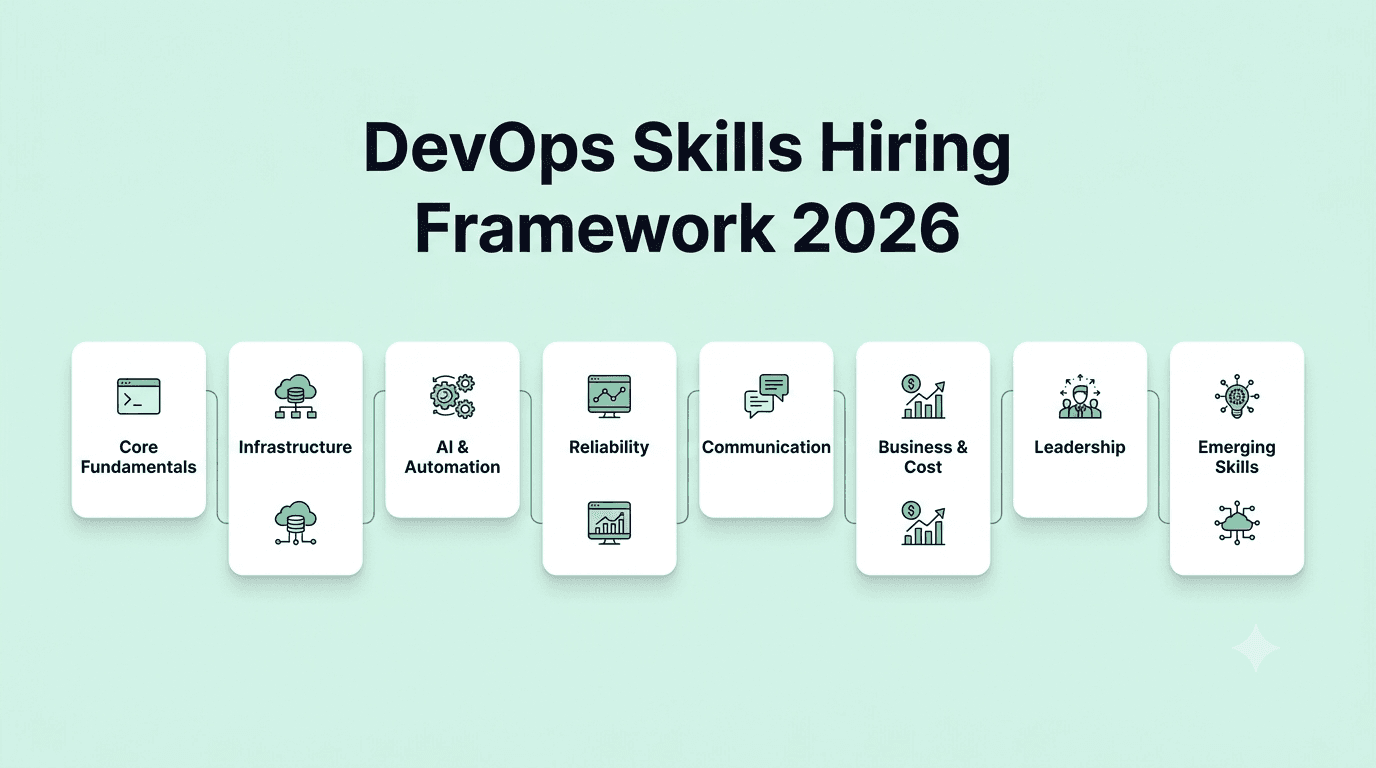
DevOps hiring in 2026 isn't really about "tools" anymore — most mid-size and large companies assume you can learn a specific tool. What they're actually screening for is whether you understand the systems thinking underneath the tools: reliability, blast radius, cost, and repeatability. Skills below are grouped into: Core Fundamentals Technical / Infrastructure Skills AI & Automation Skills Reliability & Operations Skills Collaboration & Communication Skills Business & Cost Skills Leadership Skills (mid-to-senior) Emerging Skills for 2026 Skills are ranked roughly by hiring weight within each category, based on how consistently they show up as blocking criteria (not "nice to have") in current job descriptions and interview loops.
Category 1: Core Fundamentals
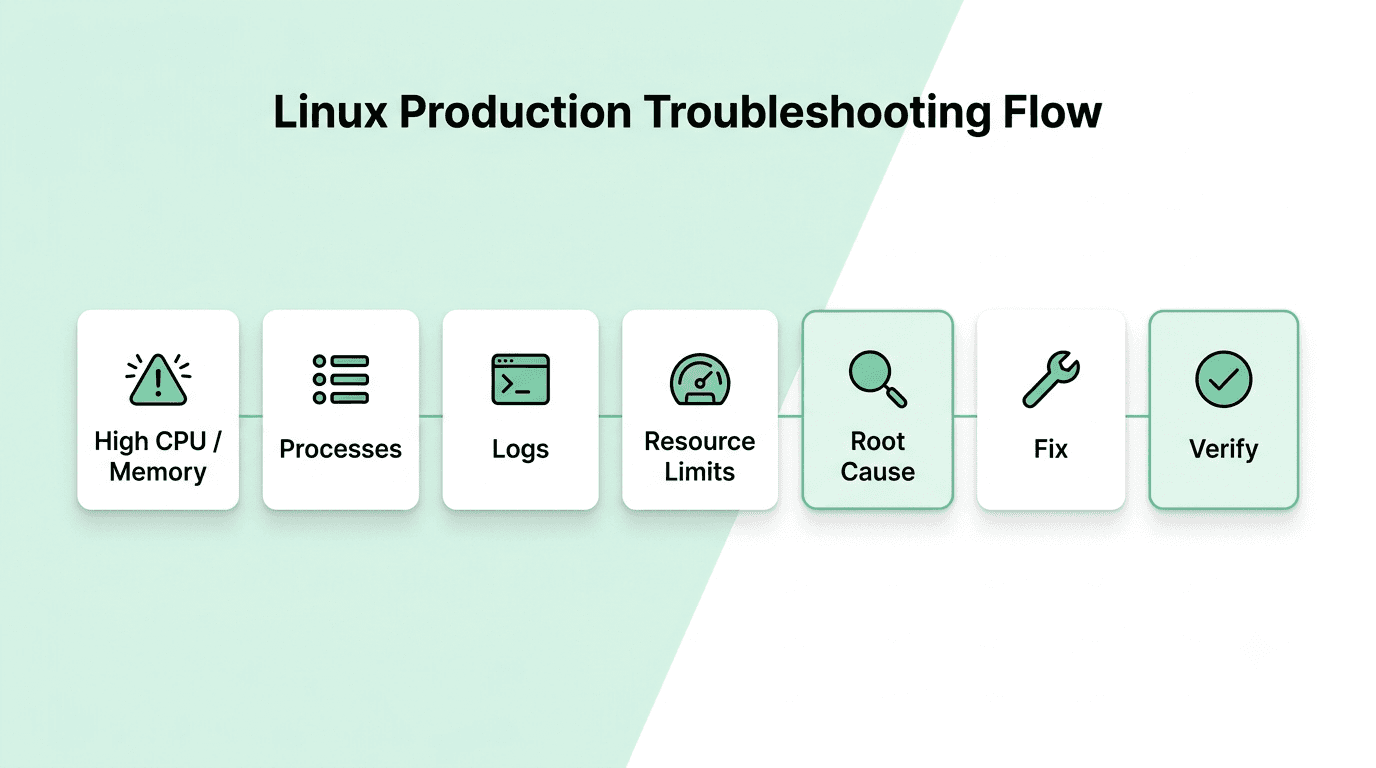
Why Recruiters Prioritize This Skill Every layer of the modern stack — containers, Kubernetes nodes, CI runners, cloud VMs — ultimately runs on Linux. A hiring manager can teach you a company's specific tool stack in a week. They cannot quickly teach someone who freezes at a shell prompt how an operating system actually behaves under load. This is why it's almost always the first filter, even at companies that are "fully cloud-native." What Recruiters Actually Expect in 2026 Not memorized commands — the ability to diagnose. Recruiters expect you to explain what happens when a process consumes 100% CPU, how to read strace or journalctl output, how file descriptors and memory limits cause containers to get OOM-killed, and basic shell scripting (loops, conditionals, text processing with awk/sed/grep) without Googling the syntax mid-interview. Interview Evaluation Resume screening: Look for specific OS/tool depth ("debugged kernel-level networking issue," not "familiar with Linux"). Technical interviews: Live terminal tasks — find the process eating memory, fix a broken systemd service, parse a log file for an error pattern. Practical rounds: SSH into a broken sandbox VM and restore a service. Portfolio review: Home-lab write-ups, blog posts explaining a debugging session. Real Workplace Example A payments API starts returning 502s intermittently. The on-call engineer checks dmesg and finds OOM-killer logs, correlates the timing with a batch cron job competing for memory, and adjusts cgroup limits — not just restarting the pod and hoping. Fresher Expectations Comfortable navigating the filesystem, permissions, process management, and writing a basic Bash script to automate a repetitive task. Mid-Level Expectations Can troubleshoot performance issues across CPU, memory, disk I/O, and network without hand-holding; understands systemd, cron, and package management deeply enough to harden a server. Senior-Level Expectations Designs standard AMIs/base images and OS-hardening baselines for the whole org; mentors others on production debugging; makes calls on kernel tuning, resource limits, and OS-level security policy. Common Mistakes Relying entirely on GUI dashboards and being unable to work when the dashboard is the thing that's down; not understanding the difference between a process being slow versus a process being stuck. How to Build This Skill Run a home lab (even a $5 VPS or a Raspberry Pi), break things on purpose and fix them, do the "Linux Journey" or OverTheWire Bandit exercises, write a weekly log of one problem you solved with the shell. Example Interview Questions "A server's load average is high but CPU usage looks low — what do you check next?" "Walk me through what happens between typing a command and seeing output on screen." Strong Sample Answer Direction A strong answer narrates a process, not a memorized fact: which tool you'd reach for first, what you'd rule out, and how you'd confirm the fix worked — not just naming the right command. Why Recruiters Prioritize This Skill Most production incidents that aren't application bugs are networking problems in disguise — DNS, load balancer misconfiguration, security group rules, TLS expiry. Candidates who don't understand networking end up guessing during incidents instead of isolating the layer that's broken. What Recruiters Actually Expect in 2026 Practical fluency with DNS resolution, TCP/IP basics, load balancing algorithms, TLS/certificate lifecycle, and how service-to-service traffic flows inside a VPC/Kubernetes cluster (ClusterIP vs NodePort vs Ingress vs service mesh). Deep OSI-model trivia matters less than being able to reason about a specific failure. Interview Evaluation Technical interviews: "A service can't reach another service — walk me through your debugging order." Case studies: Given a network diagram, identify the single point of failure. Practical rounds: curl, dig, traceroute/mtr, and tcpdump used live to isolate a fault. Real Workplace Example An app team reports intermittent timeouts calling an internal API. The DevOps engineer uses dig to confirm DNS is resolving correctly, then tcpdump to show the timeout is happening at the load balancer's idle-timeout setting, not the application — saving days of app-side debugging. Fresher Expectations Understands DNS records, HTTP status codes, ports, and can explain the difference between a load balancer and a reverse proxy. Mid-Level Expectations Designs VPC subnetting, security groups/NACLs, and can troubleshoot cross-region latency or asymmetric routing issues. Senior-Level Expectations Architects multi-region network topology, decides between mesh vs. simple ingress, owns security review of network policy at the org level. Common Mistakes Treating "the network" as a black box and escalating too early instead of isolating which hop is failing; not understanding TLS handshake failures versus application-layer errors. How to Build This Skill Stand up a small multi-service app across VPC subnets manually (no managed networking) at least once; practice with tcpdump/Wireshark on your own traffic; read RFC-adjacent explainers instead of only video tutorials. Example Interview Questions "How would you debug a service that works locally but times out in production?" "Explain what happens during a TLS handshake and where it can fail." Strong Sample Answer Direction Show a layered elimination process (DNS → connectivity → TLS → application) rather than jumping straight to a guess.Skill: Linux & Systems Administration
Skill: Networking Fundamentals
Category 2: Technical / Infrastructure Skills
1 / 2
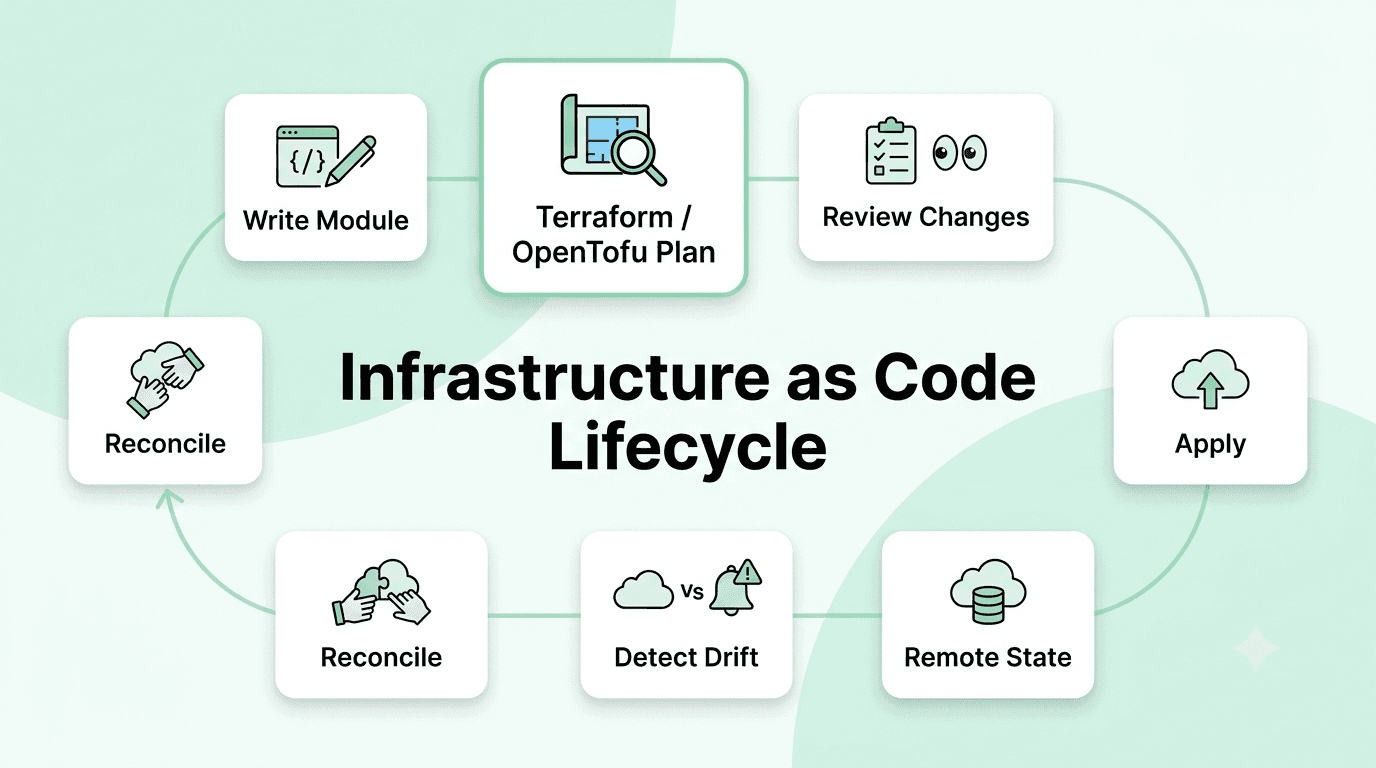
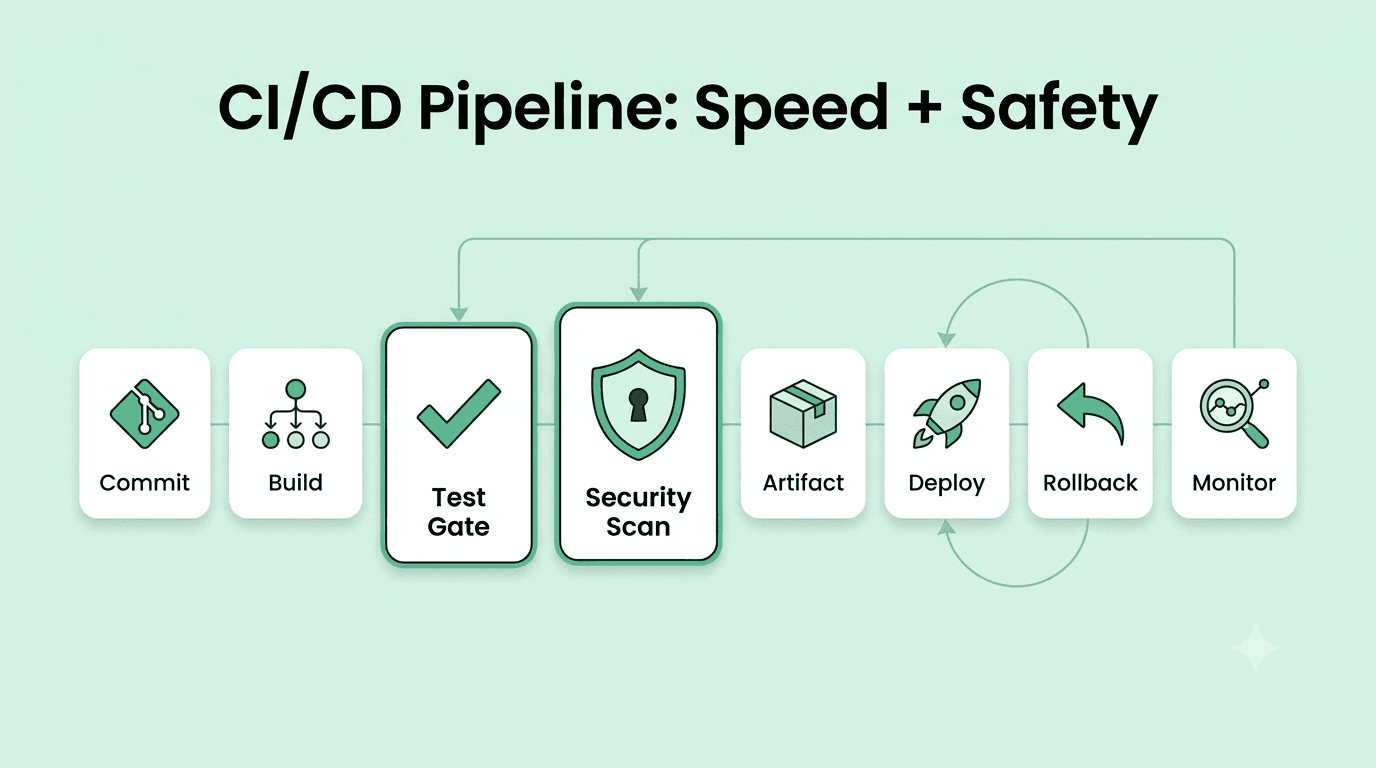
Why Recruiters Prioritize This Skill Manual infrastructure changes don't scale and aren't auditable. Almost every serious DevOps job description in 2025–2026 lists IaC as a non-negotiable, because it's the mechanism that makes environments reproducible, reviewable, and rollback-able. What Recruiters Actually Expect in 2026 Not just writing .tf files — module design, state management (remote state, locking, drift detection), and increasingly comfort with OpenTofu given the post-license fork of Terraform reshaping tooling choices at some companies. Recruiters also test whether you understand why a change is risky, not just how to write it. Interview Evaluation Resume screening: Specific mentions of module design, state backends, multi-environment setups. Technical interviews: Review a Terraform plan output and explain what will happen, including anything destructive. Assignments: Take-home to provision a small environment (VPC + compute + basic networking) with reusable modules. Portfolio review: Public GitHub repos with real modules, README explaining design decisions, not copy-pasted tutorials. Real Workplace Example A team needs to replicate a staging environment for a new region. Instead of manually clicking through the cloud console, the engineer parameterizes an existing Terraform module, runs plan, catches an unintended resource replacement before apply, and ships the environment in an afternoon. Fresher Expectations Can write and apply basic Terraform for common resources, understands plan vs apply, and knows never to hardcode secrets in code. Mid-Level Expectations Designs reusable modules, manages remote state safely across multiple environments, integrates IaC into CI/CD with automated plan review. Senior-Level Expectations Sets IaC standards org-wide, decides tool strategy (Terraform vs Pulumi vs cloud-native IaC), designs for safe destructive-change prevention, and owns disaster-recovery-via-code strategy. Common Mistakes Treating Terraform state casually (no locking, no backup), writing monolithic non-reusable configs, applying changes without reading the plan output carefully. How to Build This Skill Rebuild a personal project's infrastructure from scratch in Terraform, deliberately introduce and recover from state drift, contribute a small fix to an open-source Terraform module. Example Interview Questions "What's the danger of running terraform apply without reviewing the plan, and how have you prevented that in practice?" "How do you handle secrets in Terraform code?" Strong Sample Answer Direction Anchor the answer in a specific near-miss or real incident involving state or drift — generic "IaC is good practice" answers signal no hands-on experience. Why Recruiters Prioritize This Skill Kubernetes has become the de facto orchestration layer at mid-size-and-up companies, and even teams that don't run it directly usually run on a managed flavor of it (EKS/GKE/AKS). Recruiters need engineers who can operate it, not just deploy a YAML file someone else wrote. What Recruiters Actually Expect in 2026 Operational fluency: debugging CrashLoopBackOff, understanding resource requests/limits, readiness vs liveness probes, autoscaling (HPA/VPA/cluster autoscaler), and increasingly, cost-aware scheduling. Helm/Kustomize familiarity is assumed, not a differentiator by itself. Interview Evaluation Technical interviews: "A pod keeps restarting — what do you check, in order?" Practical rounds: Live debugging session in a broken cluster (many companies now use sandboxed clusters for this instead of whiteboard questions). Case studies: Design a deployment strategy (rolling vs blue-green vs canary) for a specific reliability requirement. Real Workplace Example A service starts getting OOMKilled after a traffic spike. The engineer checks the pod's resource limits versus actual memory usage via kubectl top, correlates with a recent dependency upgrade that increased memory footprint, and adjusts both the limits and the HPA target — rather than just bumping limits blindly. Fresher Expectations Can deploy an app to Kubernetes using existing manifests/Helm charts, understands pods/services/deployments, and can read basic kubectl output. Mid-Level Expectations Debugs cluster-level issues independently, designs deployment strategies, writes Helm charts from scratch, understands namespace-level resource governance. Senior-Level Expectations Owns cluster architecture (multi-tenancy, node pools, upgrade strategy), sets policies via admission controllers/OPA, makes build-vs-buy calls on service mesh and platform tooling. Common Mistakes Not setting resource requests/limits at all (or copying arbitrary numbers), ignoring probe configuration until an outage forces the issue, treating Kubernetes YAML as static instead of something to template and version properly. How to Build This Skill Run a local cluster (kind/minikube), deliberately break things (misconfigure probes, remove limits, simulate node failure) and practice recovery, deploy a real multi-service app rather than a single "hello world" pod. Example Interview Questions "Explain the difference between a readiness and liveness probe, and a scenario where misconfiguring one caused an outage." "How would you design a zero-downtime deployment for a stateful service?" Strong Sample Answer Direction Ground the answer in trade-offs (rolling deploys are simple but slower to roll back; canary is safer but needs more tooling) rather than reciting definitions. Why Recruiters Prioritize This Skill CI/CD is the backbone of delivery speed. A DevOps engineer who can design pipelines that are fast, secure, and reliable directly affects how quickly a company can ship — which is a business metric leadership cares about, not just an engineering nicety. What Recruiters Actually Expect in 2026 Beyond writing YAML for GitHub Actions/GitLab CI/Jenkins: designing pipelines with proper test gating, artifact promotion between environments, secrets management, and increasingly, supply-chain security (SBOM generation, image signing, dependency scanning) as this has become a hard requirement in regulated industries. Interview Evaluation Resume screening: Evidence of pipeline ownership, not just "used CI/CD tools." Technical interviews: Design a pipeline for a specific scenario (monorepo with multiple services, or a pipeline that must support rollback). Assignments: Build a working pipeline for a sample repo with tests, build, and deploy stages. Real Workplace Example A team's deploys take 40 minutes and block releases. The engineer parallelizes independent test suites, caches dependencies properly, and splits a monolithic pipeline into stages that fail fast — cutting deploy time to under 10 minutes without reducing test coverage. Fresher Expectations Can write a basic pipeline (build, test, deploy) and understands why tests gate deployment. Mid-Level Expectations Designs multi-stage pipelines with proper environment promotion, secrets handling, and rollback mechanisms; optimizes for speed without sacrificing safety. Senior-Level Expectations Sets CI/CD standards across teams, owns supply-chain security posture, makes strategic calls on build vs. buy for internal developer platforms. Common Mistakes Pipelines that are "green" but don't actually test anything meaningful; storing secrets in plaintext pipeline variables; no clear rollback path when a deploy fails mid-way. How to Build This Skill Set up a full pipeline for a personal project including test gating and deployment to a real environment (not just echo "deployed"); study a postmortem of a real CI/CD-related outage and identify what pipeline design would have prevented it. Example Interview Questions "How do you decide what should block a deployment versus what should just warn?" "Describe a pipeline you built or improved and the trade-offs you made." Strong Sample Answer Direction Talk about the trade-off between pipeline speed and safety explicitly, and give a concrete before/after metric if possible. Why Recruiters Prioritize This Skill Almost no company runs on-prem-only infrastructure anymore. Cloud fluency is treated as table stakes, but deep fluency in the specific services a company uses (compute, networking, IAM, managed databases) is what separates candidates who can operate independently from those who need constant guidance. What Recruiters Actually Expect in 2026 Not "I have an AWS certification" alone — real experience with IAM policy design (least privilege), cost optimization, and multi-account/multi-project structuring. Multi-cloud experience is a plus but rarely required; deep expertise in one cloud beats shallow knowledge of three. Interview Evaluation Resume screening: Specific services used in production, not a generic list of every AWS service that exists. Technical interviews: IAM policy design scenario ("this service needs to read from this bucket but nothing else — write the policy"). Case studies: Architecture review for cost or reliability improvements. Real Workplace Example A monthly cloud bill spikes unexpectedly. The engineer uses cost-explorer-style tooling to trace the spike to an over-provisioned autoscaling group left running after a load test, fixes the immediate cost leak, and adds a budget alert to catch it earlier next time. Fresher Expectations Comfortable navigating the console and CLI for core services (compute, storage, networking, IAM) and understands the shared responsibility model. Mid-Level Expectations Designs secure, cost-aware architectures independently; understands managed service trade-offs (e.g., managed database vs. self-hosted). Senior-Level Expectations Owns cloud governance and cost strategy org-wide, makes multi-account/landing-zone design decisions, negotiates trade-offs between vendor lock-in and operational simplicity. Common Mistakes Over-broad IAM policies ("just use admin access to unblock this"); not understanding the cost implications of architectural choices until the bill arrives. How to Build This Skill Build and tear down real projects in the cloud (not just tutorials with a $0 free-tier toy app); intentionally review IAM policies for least privilege; read your own cloud bill line by line at least once. Example Interview Questions "How would you reduce this architecture's monthly cost by 30% without hurting reliability?" "Walk me through how you'd design IAM permissions for a new microservice." Strong Sample Answer Direction Show cost and security as first-class design constraints, not afterthoughts bolted on at the end.Skill: Infrastructure as Code (Terraform / OpenTofu / Pulumi)
Skill: Containers & Kubernetes
Skill: CI/CD Pipeline Design
Skill: Cloud Platforms (AWS / Azure / GCP)
Category 3: AI & Automation Skills
Why Recruiters Prioritize This Skill By 2026, AI coding and ops assistants are standard tooling, not novelty. Recruiters aren't testing whether you use AI tools — almost everyone does — they're testing whether you can verify, correct, and take responsibility for AI-generated infrastructure code and automation, since a hallucinated Terraform module or a bad auto-generated runbook can cause a real outage. What Recruiters Actually Expect in 2026 Ability to use AI tools to speed up writing IaC, scripts, and pipeline configs, while still being able to explain and defend every line that goes into production. Increasingly, comfort using AI for log triage and anomaly summarization during incidents — but always with a "trust, then verify" mindset. Interview Evaluation Technical interviews: "Here's some AI-generated Terraform — what's wrong with it?" (Often includes a subtle security or cost issue.) Case studies: How would you use AI tooling to speed up a specific ops task, and what would you double-check before trusting the output? Real Workplace Example An engineer uses an AI assistant to draft a Kubernetes network policy quickly, then manually reviews it against the principle of least privilege before merging — catching that the AI had left an overly permissive egress rule. Fresher Expectations Uses AI tools productively for boilerplate and learning, but can explain what the generated code does line by line. Mid-Level Expectations Integrates AI tooling into daily workflow (code review assistance, log summarization) while maintaining ownership and accountability for anything shipped. Senior-Level Expectations Sets team norms for safe AI tool usage (what's allowed to be AI-generated without review, what isn't), evaluates AI-powered platform tooling for the org. Common Mistakes Copy-pasting AI-generated infrastructure code into production without review; being unable to explain or debug something you didn't personally reason through. How to Build This Skill Practice generating code with AI tools and then deliberately auditing it for security and cost issues before using it; keep a personal log of times AI got something wrong, to calibrate your trust level. Example Interview Questions "Tell me about a time an AI tool gave you something that looked right but wasn't." "How do you decide when to use AI-generated code as-is versus rewriting it?" Strong Sample Answer Direction Demonstrate healthy skepticism paired with productive use — neither "I don't use AI tools" nor "I ship whatever it gives me" reads well to an experienced interviewer. Why Recruiters Prioritize This Skill DevOps is fundamentally about eliminating repetitive manual work. Scripting ability signals whether a candidate solves problems once (by automating) or repeatedly (by doing the same manual steps every time). What Recruiters Actually Expect in 2026 Practical Python (for tooling, API interaction, automation glue) and Bash for quick operational scripts; Go is increasingly valued for building internal CLI tools and controllers, especially at platform-engineering-focused companies. Interview Evaluation Technical interviews: Live coding — write a script to parse logs and extract a pattern, or interact with a cloud API. Assignments: Automate a described manual process end-to-end. Portfolio review: GitHub scripts/tools that solve real (not toy) problems. Real Workplace Example An engineer notices the team manually rotates API keys every quarter, a two-hour process prone to error. They write a Python script that automates rotation and verification, turning it into a five-minute, auditable job. Fresher Expectations Can write small scripts to automate a repetitive task and knows basic error handling. Mid-Level Expectations Builds internal tools used by the whole team; writes maintainable, tested automation code, not throwaway scripts. Senior-Level Expectations Designs internal platform tooling/CLIs that other engineers rely on daily; makes language/tooling standardization decisions. Common Mistakes Scripts with no error handling that fail silently; automating a broken process instead of fixing the process first. How to Build This Skill Automate one real annoyance from your own workflow every month; contribute to or build a small open-source CLI tool. Example Interview Questions "Tell me about something you automated and the impact it had." "How do you decide what's worth automating versus what isn't?" Strong Sample Answer Direction Include a before/after (time saved, errors reduced) — vague "I automate things" answers don't land.Skill: AI-Assisted Engineering & Prompt-Literate Operations
Skill: Automation & Scripting (Python / Bash / Go)
FREE TO USE
8k+ SESSIONS92% FLUENCY4.9★ RATING
Speak With Confidence
Real Conversations. Real Scenarios. Speak until it feels natural.
- Real-Time Speaking Practice
- Guided Conversation Flows
- Instant AI Feedback
Category 4: Reliability & Operations Skills
Why Recruiters Prioritize This Skill Systems fail. What separates strong DevOps engineers is how fast they detect, diagnose, and resolve incidents — and how well they prevent repeats. This is one of the most heavily weighted skills in senior hiring because it's a direct proxy for how you'll behave during a real 3 a.m. outage. What Recruiters Actually Expect in 2026 Practical experience with metrics/logs/traces (the "three pillars"), setting meaningful alerts (not alert-fatigue-inducing noise), and running blameless postmortems. Increasingly, familiarity with OpenTelemetry as the vendor-neutral standard for instrumentation. Interview Evaluation Technical interviews: "Walk me through your last production incident from alert to resolution." Case studies: Given a dashboard snapshot, identify the likely root cause. Panel rounds: Postmortem write-up review — do they blame people or fix systems? Real Workplace Example An alert fires for elevated error rates. The on-call engineer checks a service dashboard, traces the spike to a recent deploy via distributed tracing, rolls back within minutes, and later writes a blameless postmortem identifying a missing canary check as the systemic gap. Fresher Expectations Can read dashboards and logs to help diagnose an issue when guided by a senior engineer. Mid-Level Expectations Leads incident response independently, writes clear postmortems, designs meaningful alerting for services they own. Senior-Level Expectations Owns org-wide observability strategy, sets SLOs/error budgets, mentors incident commanders, drives systemic fixes from postmortem patterns. Common Mistakes Alerting on everything (leading to alert fatigue and missed real incidents); postmortems that stop at "human error" instead of the process gap that allowed it. How to Build This Skill Instrument a personal project with real metrics/logging/tracing; practice writing a postmortem for even a small self-inflicted outage; shadow or read public postmortems from companies like Google, GitHub, or Cloudflare. Example Interview Questions "Tell me about your most difficult production incident and what you learned." "How do you decide what should page someone at 3 a.m. versus what can wait until morning?" Strong Sample Answer Direction Structure the story clearly: detection → diagnosis → mitigation → root cause → prevention. Interviewers are listening for process, not just a dramatic outage story. Why Recruiters Prioritize This Skill Security incidents are expensive and reputationally damaging, and regulation (SOC 2, ISO 27001, industry-specific rules) has made security a shared responsibility rather than a separate team's job. DevOps engineers are now expected to "shift left" on security by default. What Recruiters Actually Expect in 2026 Secrets management (Vault, cloud-native secret stores), dependency/image scanning integrated into CI/CD, least-privilege IAM as a default habit, and basic compliance literacy (what SOC 2 actually requires operationally, not just the acronym). Interview Evaluation Technical interviews: Review a pipeline or IAM policy and spot the security gaps. Case studies: "A dependency scan just flagged a critical CVE in a service running in production — what do you do, in what order?" Real Workplace Example A routine dependency scan flags a critical vulnerability in a widely used library. The engineer triages by checking actual exploitability in the app's context, patches the highest-risk services first, and coordinates a rollout schedule instead of either ignoring it or panicking and breaking prod with an untested emergency patch. Fresher Expectations Understands not to hardcode secrets, knows basic principle of least privilege. Mid-Level Expectations Integrates security scanning into pipelines, manages secrets properly at scale, responds to vulnerability disclosures with a clear triage process. Senior-Level Expectations Owns security posture and compliance readiness org-wide, balances security rigor against delivery speed, leads audits. Common Mistakes Treating security as a gate at the end instead of built into the pipeline; overreacting to every CVE regardless of actual exploitability, causing alert fatigue similar to observability. How to Build This Skill Set up secret scanning and dependency scanning on a personal project's pipeline; read a SOC 2 Type II report structure to understand what auditors actually check; practice triaging real CVEs against real usage context. Example Interview Questions "How do you balance shipping speed with security review?" "Tell me about a time you found or fixed a security issue before it became a real incident." Strong Sample Answer Direction Show risk-based prioritization, not blanket paranoia or blanket dismissal.Skill: Observability & Incident Response
Skill: Security & Compliance (DevSecOps)
Category 5: Collaboration & Communication Skills
Why Recruiters Prioritize This Skill DevOps sits at the intersection of development, security, product, and leadership. An engineer who can fix anything but can't explain trade-offs to a non-technical stakeholder becomes a bottleneck, not an enabler. What Recruiters Actually Expect in 2026 The ability to explain a technical trade-off (cost vs. reliability, speed vs. security) in terms a product manager or executive can act on, and to write clear documentation/runbooks that someone else can follow during an incident when you're unavailable. Interview Evaluation HR interviews: Behavioral questions about explaining technical issues to non-technical stakeholders. Panel rounds: Asked to explain a technical concept to a "pretend" non-technical panelist. Portfolio review: Quality of documentation/READMEs in past projects. Real Workplace Example Leadership wants to know why a migration is taking longer than planned. Instead of a technical deep-dive, the engineer frames it in terms of risk avoided and cost saved by not rushing a database cutover, giving leadership what they need to make a decision. Fresher Expectations Can write a clear ticket or Slack update; asks clarifying questions instead of guessing. Mid-Level Expectations Writes documentation and runbooks others can follow without hand-holding; communicates incident status clearly under pressure. Senior-Level Expectations Frames technical trade-offs in business terms for leadership; represents the team in cross-org planning. Common Mistakes Over-explaining technical detail to the wrong audience; writing documentation only they can understand (tribal knowledge that doesn't scale). How to Build This Skill Practice writing a one-paragraph, non-technical summary for every technical project you finish; write runbooks for your own on-call rotations and get feedback from teammates on clarity. Example Interview Questions "Tell me about a time you had to explain a technical decision to a non-technical stakeholder." "How do you keep a team aligned during a live incident?" Strong Sample Answer Direction Show adaptation of communication style to audience, the same incident explained differently to an engineer versus an executive.Skill: Cross-Functional Communication
Skills Recruiters Value More Than Certifications
Certifications (AWS Certified DevOps Engineer, CKA, Terraform Associate, etc.) are useful as a screening signal, they prove baseline knowledge and get a resume past automated filters. But in the actual interview, recruiters consistently weight these higher: Debugging stories with specifics (what broke, how you found it, what you changed) over a list of exam badges. Public proof of independent work - GitHub repos, blog posts, home-lab write-ups - because it shows initiative certifications can't prove. Judgment under ambiguity - certifications test known-answer scenarios; real incidents rarely have a clean textbook answer. Certifications are best treated as a floor, not a ceiling: they open the door to an interview, but they rarely win it.
Skills That Are Becoming Less Important
Manual server provisioning/config management without version control - clicking through cloud consoles for anything beyond a quick experiment is increasingly seen as a red flag rather than a neutral habit. Deep Jenkins-only pipeline expertise with no exposure to modern CI/CD - Jenkins is still widely used, but candidates whose only CI/CD experience is legacy Jenkins Groovy pipelines, with no exposure to newer declarative/cloud-native systems, are seen as less adaptable. Monitoring via manual dashboard-watching instead of automated alerting/SLOs - treated as an operational maturity gap today, not just a stylistic preference. Rote memorization of CLI flags - with AI assistants handling syntax lookup, recruiters care far more about knowing what to do than perfectly recalling how to type it.
AI Is Changing DevOps
Which skills AI is replacing: Boilerplate script and IaC generation, first-draft documentation, and basic log pattern recognition are increasingly automated. Writing a simple Terraform resource block from scratch, by hand, is no longer a differentiating skill. Which skills AI is enhancing: Incident triage (summarizing logs across services fast), code review (catching common misconfigurations before a human even looks), and onboarding documentation. Engineers who use AI well move faster on the repetitive 80%, freeing time for the hard 20%. Which human skills are becoming more valuable: Judgment about when automation is risky, architectural decision-making, cross-team negotiation, and accountability someone has to own the outcome when AI-generated infrastructure changes are wrong, and that responsibility hasn't shifted. How professionals should adapt: Treat AI tools as a fast junior collaborator, not an oracle use them to accelerate drafting, but keep your own verification habits (reading the plan, checking the policy, testing the rollback) exactly as rigorous as before. The engineers who get replaced are the ones whose entire value was typing syntax quickly; the ones who get promoted are the ones whose value was judgme knt.
Skills That Instantly Differentiate Candidates
A clear, specific incident story told with a real timeline and a real root cause — this alone often outweighs a stack of certifications. Cost-awareness baked into technical decisions — most candidates can make something work; fewer can make it work and explain what it costs and why that's acceptable. Evidence of teaching or documenting for others (internal wikis, blog posts, onboarding guides), signals someone who scales their impact beyond themselves. Comfort saying "I don't know, but here's how I'd find out" — a surprisingly rare and highly valued trait in senior interviews, since it signals honesty over bluffing.
Common Skill Gaps Recruiters Notice
Strong tool knowledge but weak fundamentals can write a Kubernetes manifest but can't explain what happens at the networking layer underneath it. No cost-consciousness technically correct solutions that would be prohibitively expensive at real scale. Weak incident communication technically capable engineers who go silent or panic during a live incident instead of narrating status clearly. Security as an afterthought functional pipelines with no scanning, secrets in plaintext, or overly broad IAM roles used "to get it working." Automation without idempotency scripts that work once but break or duplicate resources if run twice.
Learning Roadmap
Linux fundamentals + Bash scripting Networking basics (DNS, HTTP, TCP/IP) Git and version control workflows Docker fundamentals One cloud provider's core services (compute, storage, IAM, networking) Basic CI/CD pipeline (build → test → deploy) Kubernetes operations (deploy, debug, scale) Infrastructure as Code (Terraform) with reusable modules Observability basics (metrics, logs, one tracing tool) Security fundamentals (secrets management, least-privilege IAM) Scripting for automation in Python Multi-environment CI/CD pipeline design with promotion strategy Kubernetes architecture (multi-tenancy, autoscaling, service mesh evaluation) Cost optimization and cloud governance Incident command and postmortem leadership Mentoring and cross-team documentation Platform engineering / internal developer platform strategy Org-wide reliability strategy (SLOs, error budgets) Security and compliance ownership (audits, SOC 2/ISO readiness) Build-vs-buy and vendor strategy decisions Technical leadership: mentoring, hiring input, architecture review boardsFreshers (0–1 years)
1–3 Years
3–7 Years
Senior Professionals
Self-Assessment Checklist
Use this to gauge interview readiness, check off what you can genuinely do without looking it up: [ ] I can debug a Linux performance issue live, narrating my steps out loud. [ ] I can explain what happens end-to-end when a DNS lookup fails. [ ] I can write a Terraform module from scratch and explain what plan will do before running it. [ ] I can debug a CrashLoopBackOff pod without help. [ ] I can design a CI/CD pipeline with proper test gating and rollback. [ ] I can explain the cost implications of at least one architectural decision I've made. [ ] I have a real incident story with a clear timeline and root cause. [ ] I can write a runbook someone else could follow without me. [ ] I know how to set up secrets management properly, not just "avoid hardcoding." [ ] I can explain a technical trade-off to a non-technical stakeholder in under two minutes. If you checked fewer than 7, focus your next few months on the unchecked items rather than adding another certification.
Portfolio or Resume Proof
Resume and LinkedIn should lead with outcomes ("cut deploy time 75% by redesigning CI pipeline") rather than tool lists ("proficient in Docker, Kubernetes, Terraform") recruiters skim tool lists in seconds; outcomes make them stop and read.
FAQs
More Blogs

Oct 22, 2026
UI/UX Designer Interview Preparation Guide: A Complete Roadmap for 2026
38 min read

