Loading...
Contents
Why Am I Not Getting a Software Testing Job After Completing a Course?
Jun 19, 202610 min readUpdated Sep 16, 2026
You finished the course. You watched the videos, learned manual testing, practiced test cases, maybe even tried Selenium or Postman. Then you updated your resume, started applying, and waited.
Nothing happened.
Or maybe a few recruiters reached out, but the calls did not lead anywhere. Maybe you got one interview and it did not go well. Now it has been a few months, and you are starting to wonder whether the course actually helped at all.
If this sounds familiar, you are not the only one. A lot of QA freshers go through this exact phase. The good news is that the problem is usually not random. There are clear reasons behind it, and once you understand them, you can fix them one by one.
FREE TO USE
25K+ INTERVIEWS4.8★ RATING68% IMPROVEMENT
Crack Your Dream Job
Real Interviews. Real Pressure. Practice until it feels easy.
- Seamless Interview Experience
- Resume & JD Questions
- Instant Personalized Feedback
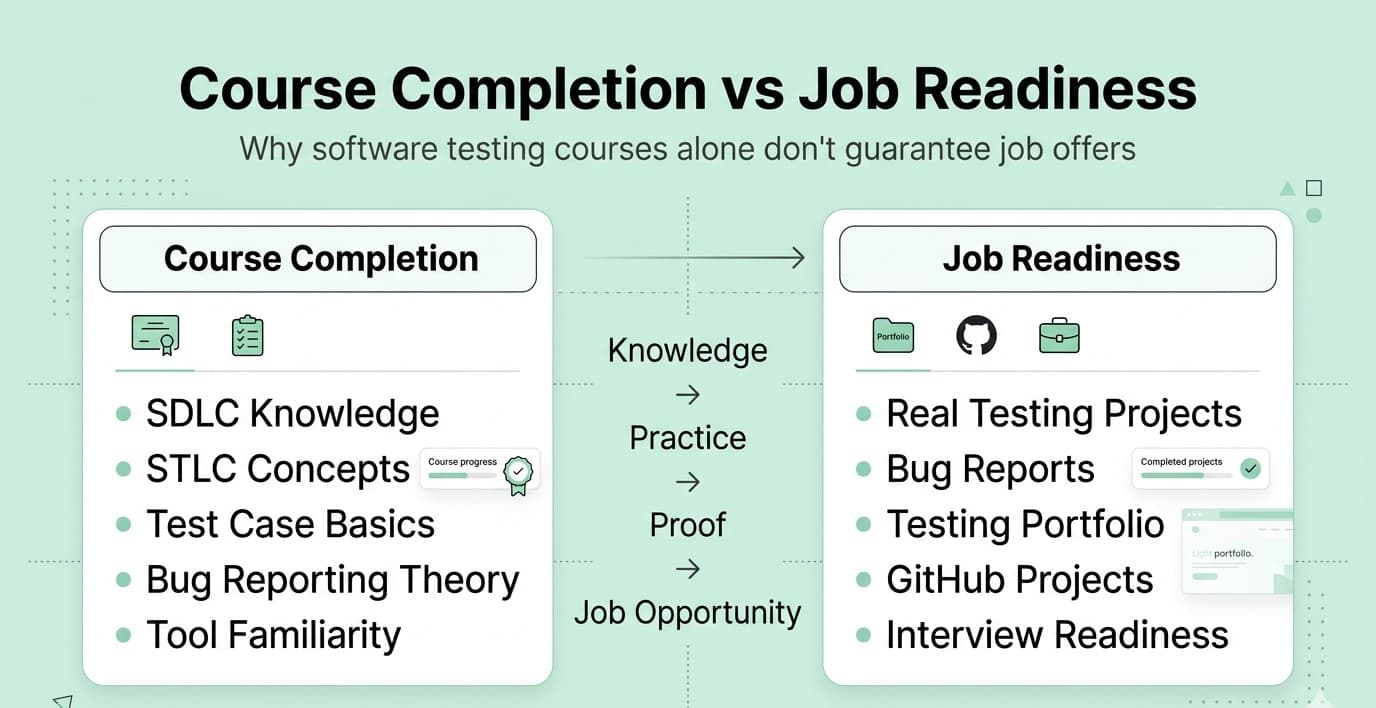
The course gave you knowledge. The job needs proof.
This is the biggest gap.
A software testing course teaches you the basics. You learn about SDLC, STLC, writing test cases, bug reporting, and maybe a few tools. That knowledge is useful, and it absolutely matters.
But when a company hires a QA tester, even at the fresher level, they are not hiring for knowledge alone. They want to know whether you can actually do the work. And if your resume only shows course names and tool names, you look the same as every other fresher who took the same course.
The candidates who get selected usually have something extra. They built something. They tested something real. They documented their work. That proof matters more than the certificate.
Reason 1: Your resume looks like every other fresher resume
This is one of the most common problems.
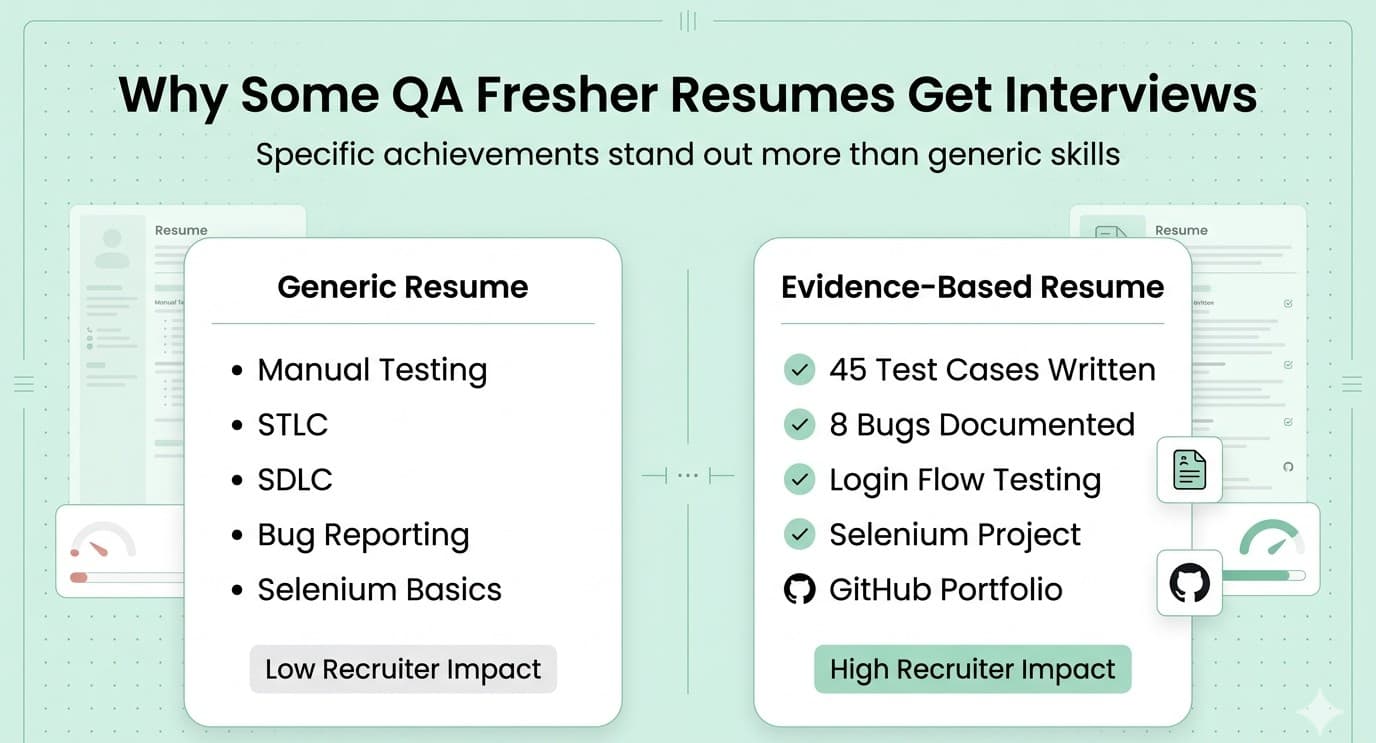
A hiring manager may look at dozens of QA fresher resumes in a week. Most of them say the same things: manual testing, test case writing, STLC, SDLC, bug reporting, hardworking, quick learner, and so on.
Nothing is wrong with those words. The issue is that they do not give the recruiter a reason to remember you.
What stands out is detail.
For example, instead of writing “familiar with test case writing,” say something like: “Wrote 45 test cases for a demo e-commerce app covering login, cart, search, and checkout flows.” That sounds real because it is specific.
What to do:
Rewrite your resume around actual work, not just skills. If you practiced testing during your course, add the best examples. If you found bugs in a live website or a practice application, describe them properly. Use the same format a real tester would use: title, steps to reproduce, expected result, actual result, and severity.
Reason 2: You have not tested anything real
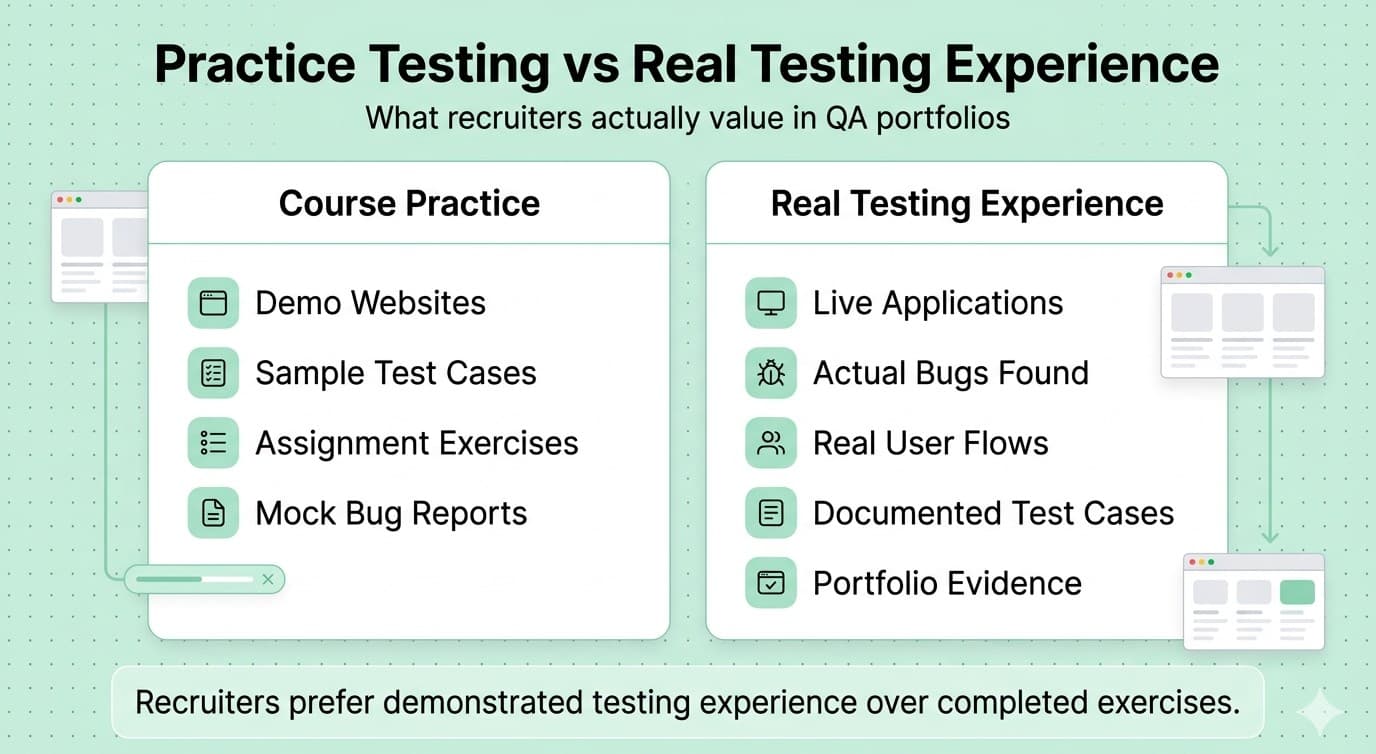
A lot of courses use demo websites or practice apps. That is fine for learning, but it is not enough if it is the only thing on your resume.
Employers want to see that you have interacted with real software, even if it was not a paid job. Someone who explored a live app, found actual issues, and wrote them up clearly has already shown they understand how testing works in practice.
What to do:
Pick an app you actually use. It could be an e-commerce site, a food delivery app, a booking site, or any web app you use regularly. Spend a couple of hours testing one flow, like sign-up, login, or checkout. Write test cases. Try different inputs. Look for bugs. Document everything in a Google Sheet, Notion page, or PDF.
You can also contribute to open-source projects if you are comfortable doing that. Even one properly reported bug on a real project gives you something concrete to talk about in interviews.
Reason 3: You are applying too broadly and too fast
This usually feels productive, but it often is not.
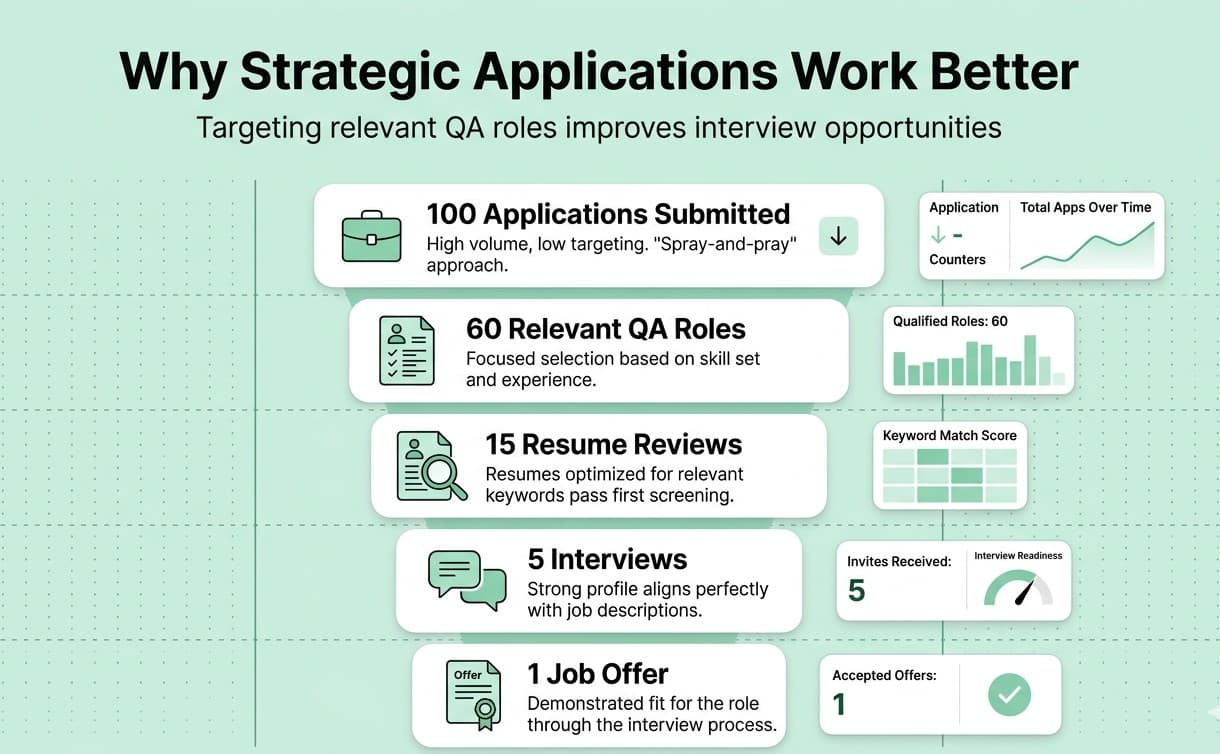
Sending 100 applications in a week sounds impressive, but if half of them are for senior roles or automation-heavy roles, your effort is going to waste. Many freshers apply to every QA job they see without checking whether the role actually matches their profile.
That is not a skills problem. It is a targeting problem.
What to do:
Focus on freshers, trainees, junior QA roles, and entry-level testing jobs. Read the job description carefully before applying. Tailor the top part of your resume to match the role. A few thoughtful applications are usually better than a pile of random ones.
Also, do not ignore LinkedIn. Smaller companies often post there, and those posts sometimes get fewer applications than large job portals.
FREE TO USE
8k+ SESSIONS92% FLUENCY4.9★ RATING
Speak With Confidence
Real Conversations. Real Scenarios. Speak until it feels natural.
- Real-Time Speaking Practice
- Guided Conversation Flows
- Instant AI Feedback
Reason 4: You cannot explain testing clearly in interviews
This is where a lot of candidates lose out.
The resume gets the call, but the interview does not go well. Usually the reason is not that the candidate knows nothing. It is that they cannot explain what they know in a practical way.
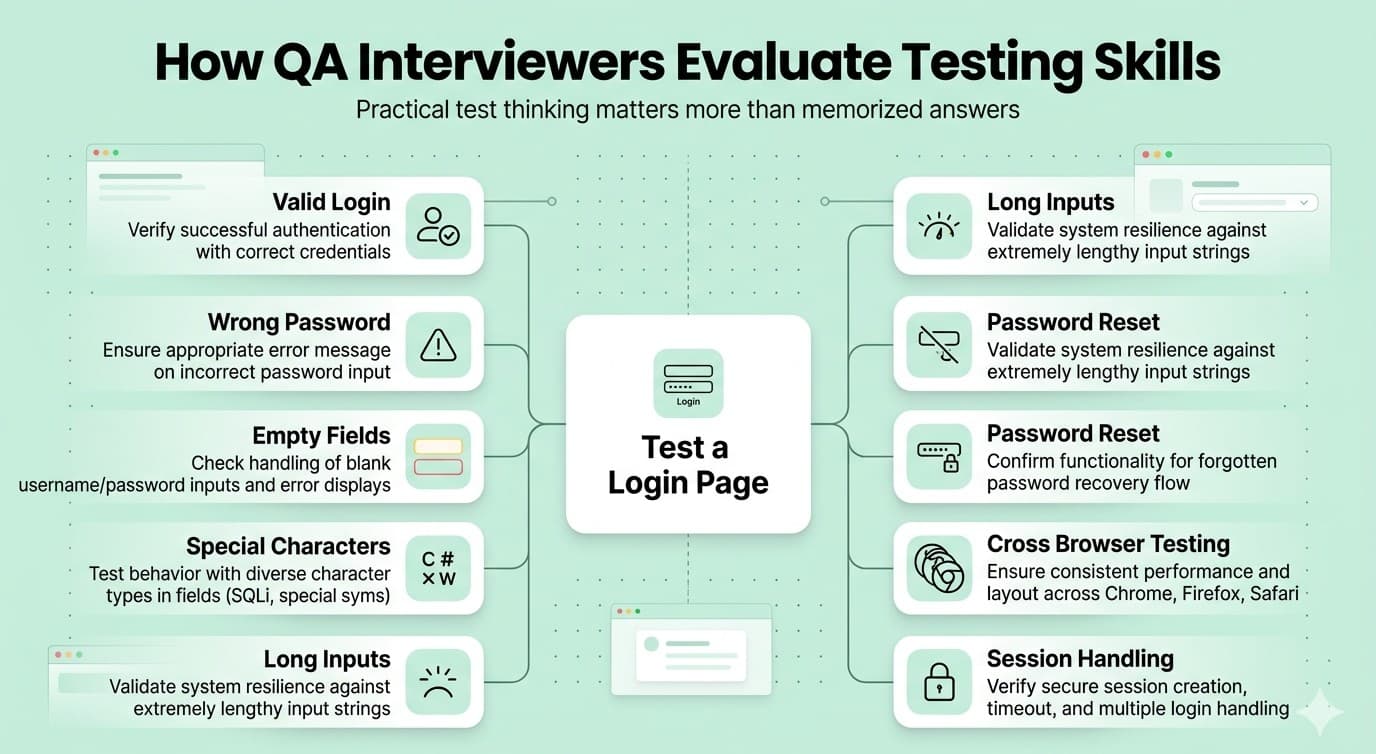
If someone asks, “How would you test a login page?” they do not want a textbook definition. They want to know how you think.
Would you check empty fields? Wrong passwords? Special characters? Long inputs? Browser differences? Error messages? Password reset? Account lockout?
That is the kind of answer that makes an interviewer feel confident.
What to do:
Practice common QA interview questions out loud. Do not just read answers in your head. Say them aloud, record yourself, and listen back if you can. Prepare examples for questions like:
- How do you write a test case?
- How do you report a bug?
- What is the difference between severity and priority?
- How would you test a login or signup page?
- What would you do if a developer says your bug is not valid?
The more practical your answers sound, the better.
Reason 5: You ignored automation completely
Manual testing is still important. But in 2026, many companies expect freshers to at least understand basic automation.
You do not need to be an expert. You do not need to build a huge framework. But if you know even a little Selenium, Playwright, or Cypress, you already have an edge over someone who only knows manual testing.
What to do:
Pick one tool and learn the basics. Selenium with Python is still a common starting point. Build a few simple scripts for login, form submission, or search. Put them on GitHub. You do not have to be amazing.
You just need enough to say, “I have written basic automation scripts and I am continuing to learn.”
That alone makes your profile stronger.
Reason 6: Your LinkedIn profile is empty or incomplete
A lot of freshers ignore LinkedIn after making the account. That is a missed opportunity.
Recruiters do search LinkedIn for QA freshers. If your profile has no summary, no projects, no featured work, and no activity, it is much harder for them to notice you.
What to do:
Write a simple, honest LinkedIn summary in first person. For example:
“I am a QA fresher with hands-on experience in manual testing, test case writing, and bug reporting. I have worked on real-world practice applications and am learning Selenium with Python. I am looking for my first role in software testing.”
Add your testing work as a project. Link your test cases or bug reports. If possible, ask a mentor, trainer, or peer for a short recommendation. Even one or two posts a month can help you look active and serious.
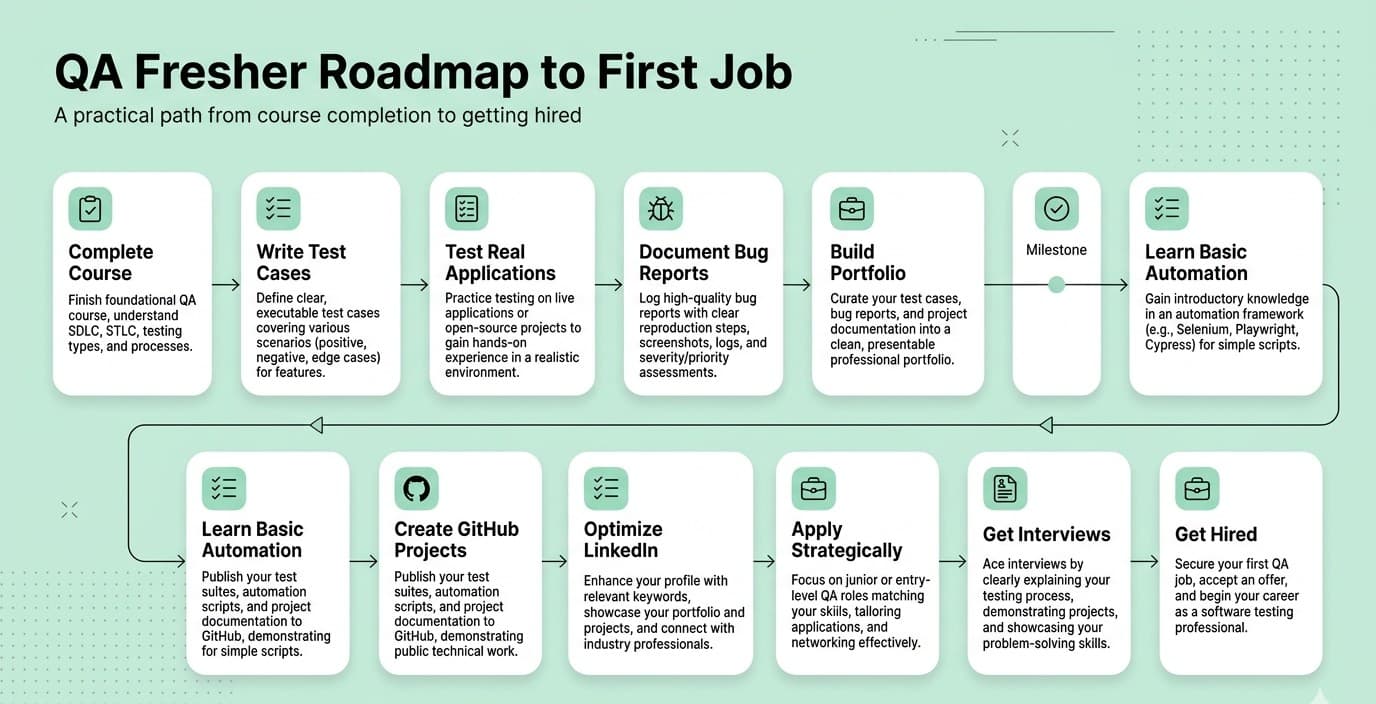
The real path to getting your first software testing job
The fresher who gets hired usually does a few things consistently.
They build a small testing portfolio with real test cases and bug reports.
They apply to the right roles instead of sending random applications everywhere.
They practice interview answers out loud and learn to think through test scenarios.
They learn the basics of one automation tool.
They keep LinkedIn updated so recruiters can actually find them.
None of that is complicated. But it does take effort, and many freshers skip at least two or three of these steps.