Loading...
Contents
Top 10 Data Science Tools for Beginners in 2026
Complete Guide
Apr 30, 202623 min readUpdated Oct 4, 2026
Data science is one of the most popular career fields today. Companies use data to understand customers, improve products, and make better decisions. Because of this, the demand for data scientists and data analysts is growing every year. If you are planning to learn data science, you will quickly notice that there are many tools available. For beginners, this can feel confusing. You might wonder which tools are important and which ones you should learn first. In this guide, we will explore the top 10 data science tools for beginners in 2026. These tools are widely used in the industry and are beginner-friendly. Learning them will help you start your journey in data science with confidence.
FREE TO USE
25K+ INTERVIEWS4.8★ RATING68% IMPROVEMENT
Crack Your Dream Job
Real Interviews. Real Pressure. Practice until it feels easy.
- Seamless Interview Experience
- Resume & JD Questions
- Instant Personalized Feedback
What Are Data Science Tools?
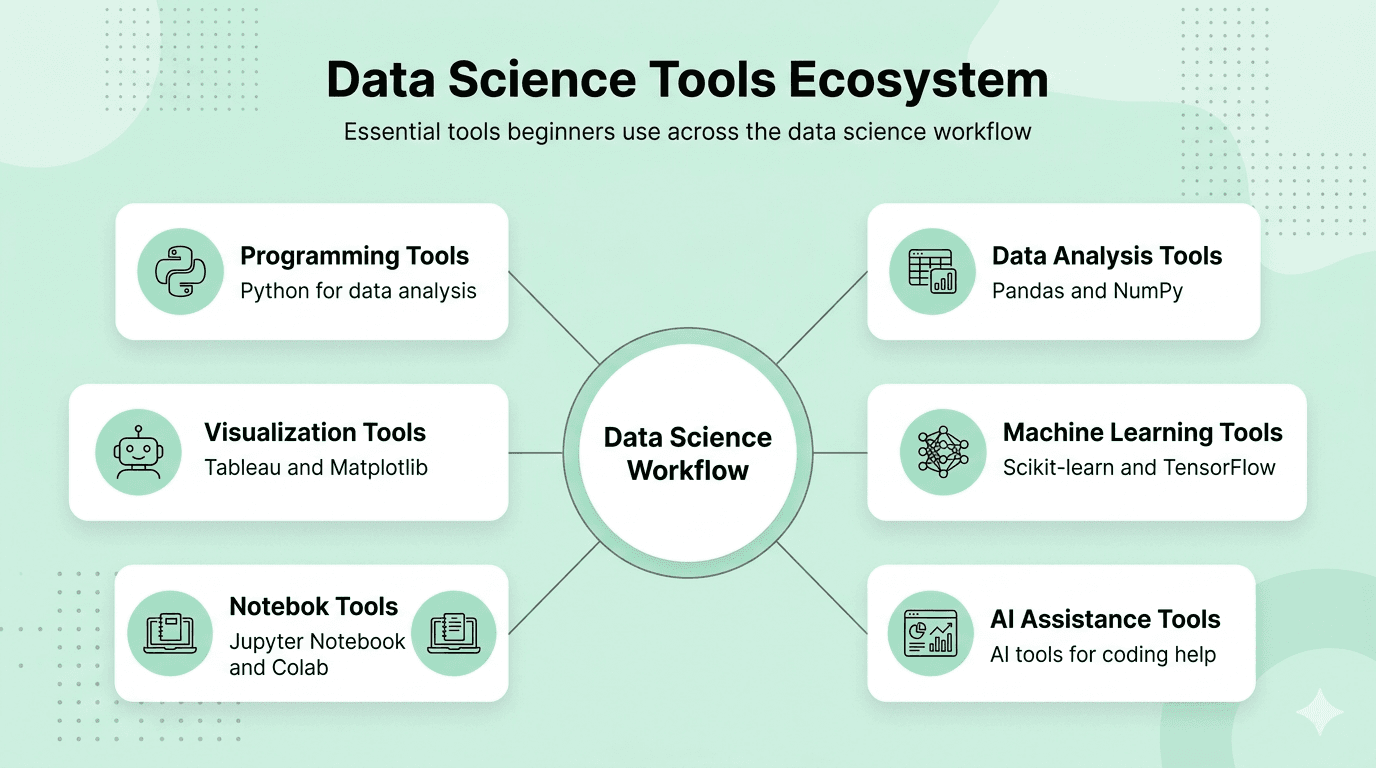
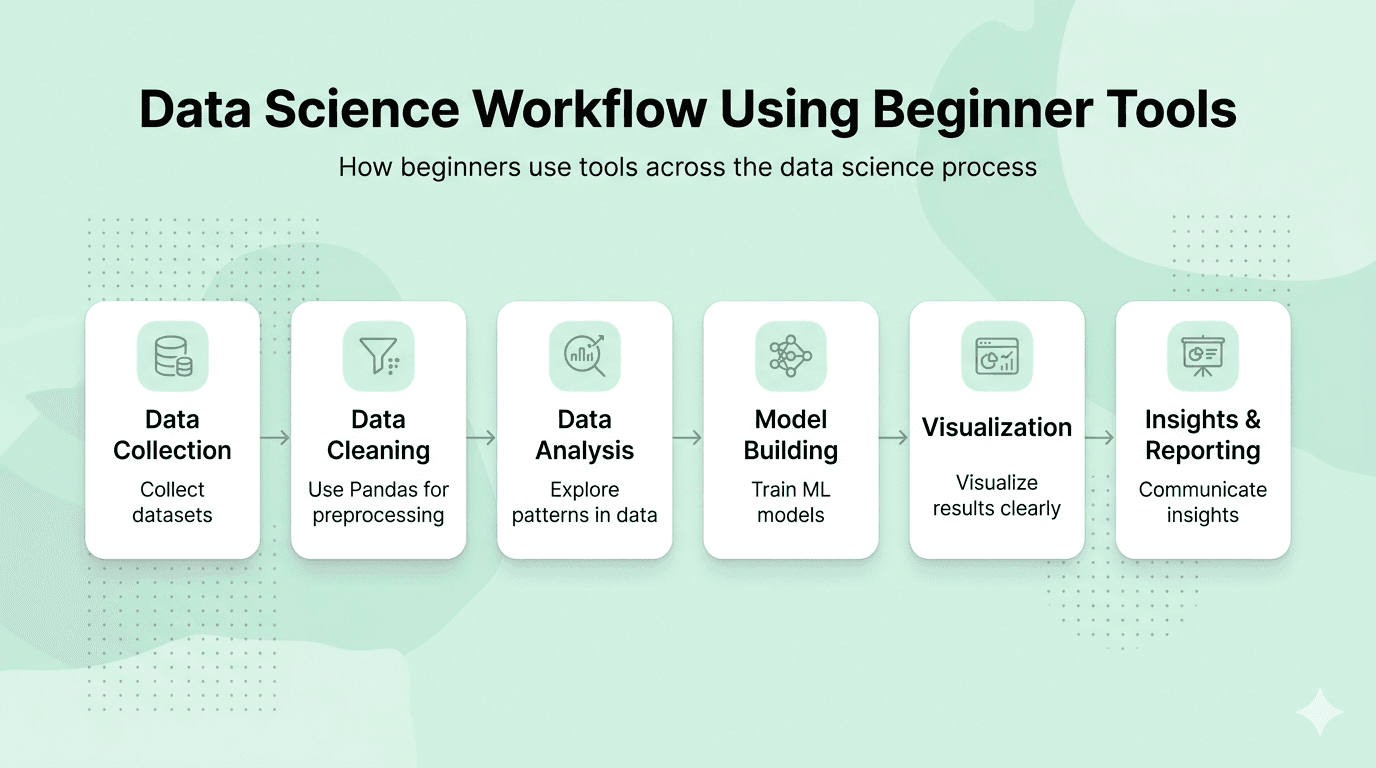
Data science tools are software or programming platforms used to work with data. They help data scientists collect, clean, analyze, and visualize data. With the help of these tools, data professionals can: Analyze large datasets Create visual reports and dashboards Build machine learning models Find patterns and trends in data In simple words, data science tools make it easier to turn raw data into useful insights.
Why Beginners Should Learn Data Science Tools
Learning the right tools is very important when starting a career in data science. Here are a few reasons why beginners should focus on tools early: Tools help you analyze data quickly and efficiently. Most companies look for candidates who know popular data science tools. Many modern tools are designed to be beginner-friendly. Tools allow you to work on real datasets and build practical experience. Now let’s look at the best data science tools to learn in 2026.Faster Data Analysis
Better Job Opportunities
Easier Learning Process
Real-World Practice
Top 10 Data Science Tools for Beginners in 2026
Python is the most popular programming language used in data science. It is simple to learn and very powerful. Many beginners start their data science journey with Python. Some popular Python libraries used in data science include: Pandas for data analysis NumPy for numerical calculations Scikit-learn for machine learning Matplotlib for data visualization Python is used for tasks like: Data analysis Machine learning models Automation scripts Because of its simplicity and large community support, Python is often considered the best data science tool for beginners. Jupyter Notebook is a tool that allows you to write and run code in an interactive environment. It is widely used by data scientists because it allows you to combine code text, explanations, and visualizations all in a single document. For beginners, Jupyter Notebook is very helpful because it makes learning and experimenting with data much easier. Many tutorials and data science courses also use Jupyter notebooks. SQL stands for Structured Query Language. It is used to work with databases. Most companies store their data in databases, and SQL helps you retrieve that data. With SQL, you can: Extract data from databases Filter datasets Combine tables using joins Perform calculations on data Even if you know programming languages like Python, SQL is still an essential skill. Many data science jobs require strong SQL knowledge. Tableau is one of the most popular data visualization tools. It helps you create dashboards and charts that make data easier to understand. One reason beginners like Tableau is its drag-and-drop interface. You do not need advanced coding skills to create powerful visualizations . Businesses use Tableau for: Sales analysis Marketing reports Business dashboards Learning Tableau can help you present your data insights clearly. Power BI is another powerful data visualization tool developed by Microsoft. Many companies use Power BI to create interactive reports and dashboards. Power BI allows you to: Connect to different data sources Analyze data Create visual dashboards It is especially useful for business analytics and reporting. Because many companies already use Microsoft tools, Power BI has become one of the most important data science tools in 2026. R is a programming language designed for statistical analysis and data visualization. It is widely used by researchers, data analysts, and academics. R is very powerful when working with statistical models and complex datasets. While Python is more popular in industry, R is still a valuable tool for anyone working with data. Apache Spark is a big data tool used to process large datasets quickly. When datasets become very large, traditional tools may become slow. Spark helps solve this problem by processing data across multiple systems. It is commonly used for: Big data processing Large-scale data analysis Machine learning pipelines Beginners do not need to learn Spark immediately, but understanding it later can be very useful for advanced data science roles. TensorFlow is a machine learning framework developed by Google. It is widely used to build deep learning models. TensorFlow helps data scientists create AI systems for tasks like: Image recognition Speech recognition Natural language processing While TensorFlow is more advanced, learning its basics can help beginners move into AI and deep learning projects. Google Colab is a cloud-based data science platform. It allows you to write and run Python code directly in your browser without installing any software. Some advantages of Google Colab include: Free access to GPUs Easy sharing and collaboration No installation required For beginners, Google Colab is an excellent tool to practice data science projects online. Even though Excel is a simple tool, it is still widely used in data analysis. Many businesses use Excel for quick data analysis and reporting. Excel can help you clean data and perform calculations, it also helps in creating charts and pivot tables. For beginners, Excel is a good starting point before moving to more advanced tools. Read More: 50 Best AI Prompts for Data Science in 20261. Python
2. Jupyter Notebook
3. SQL
4. Tableau
5. Power BI
6. R Programming
7. Apache Spark
8. TensorFlow
9. Google Colab
10. Microsoft Excel
How to Choose the Right Data Science Tool
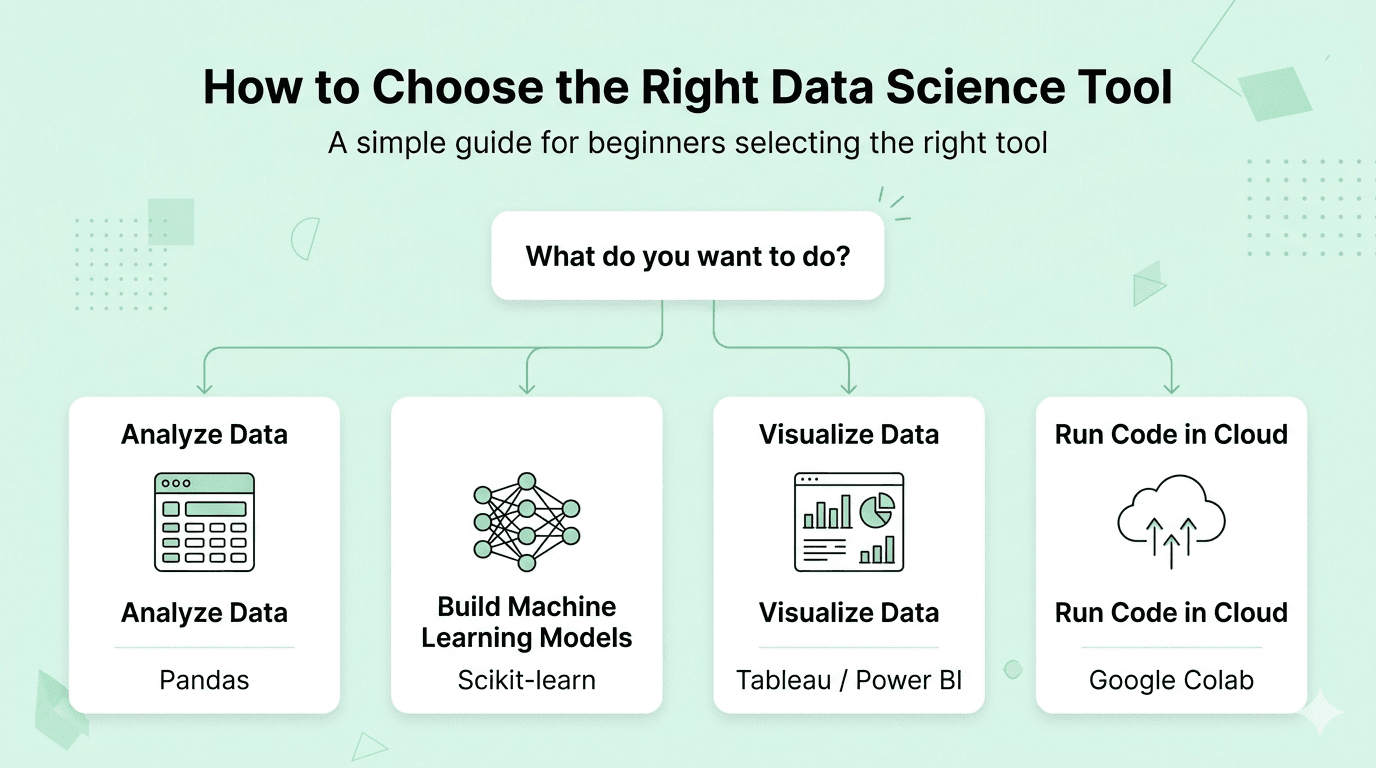
Not every tool is needed for every project. Choosing the right tool depends on several factors. Beginners should start with simpler tools like Excel and Python. Some projects require machine learning tools, while others require visualization tools. Different industries prefer different tools. Prefer tools as per industry. If your goal is machine learning, focus on Python and TensorFlow. If your goal is business analytics, focus on Power BI and Tableau.Your Skill Level
Type of Data Project
Industry Requirements
Learning Goals
FREE TO USE
8k+ SESSIONS92% FLUENCY4.9★ RATING
Speak With Confidence
Real Conversations. Real Scenarios. Speak until it feels natural.
- Real-Time Speaking Practice
- Guided Conversation Flows
- Instant AI Feedback
Beginner Roadmap for Learning Data Science Tools
Here is a simple roadmap beginners can follow. Start with Excel and SQL. Focus on Python and practice using Jupyter Notebook. Use tools like Tableau or Power BI. Explore libraries like Scikit-learn and frameworks like TensorFlow. Following this roadmap will make the learning process easier and more structured.Step 1: Learn Basic Tools
Step 2: Learn Programming
Step 3: Learn Data Visualization
Step 4: Learn Machine Learning Tools
Small Tips to Outrank Competitors For Your Data Science Career
Many people learn tools but struggle to stand out. These small tips can help you stay ahead. Create projects such as sales analysis or prediction models. Upload your projects to GitHub so employers can see your work. Practice with datasets from open sources. Data science evolves quickly, so staying updated is important. These small steps can make a big difference in your career growth. Read More: 10 Best Data Science Projects for BeginnersWork on Real Projects
Build a Portfolio
Use Real Datasets
Keep Learning New Tools
Conclusion
Data science is a powerful field that helps organizations make better decisions using data. Learning the right tools is the first step toward becoming a successful data professional. If you are just starting your journey, focus on learning one tool at a time and practice regularly. With consistent effort and real-world projects, you can build strong data science skills and open the door to exciting career opportunities in the future.